Daily movement
Orienting
A fundamental practice for self-regulation and nervous system modulation.
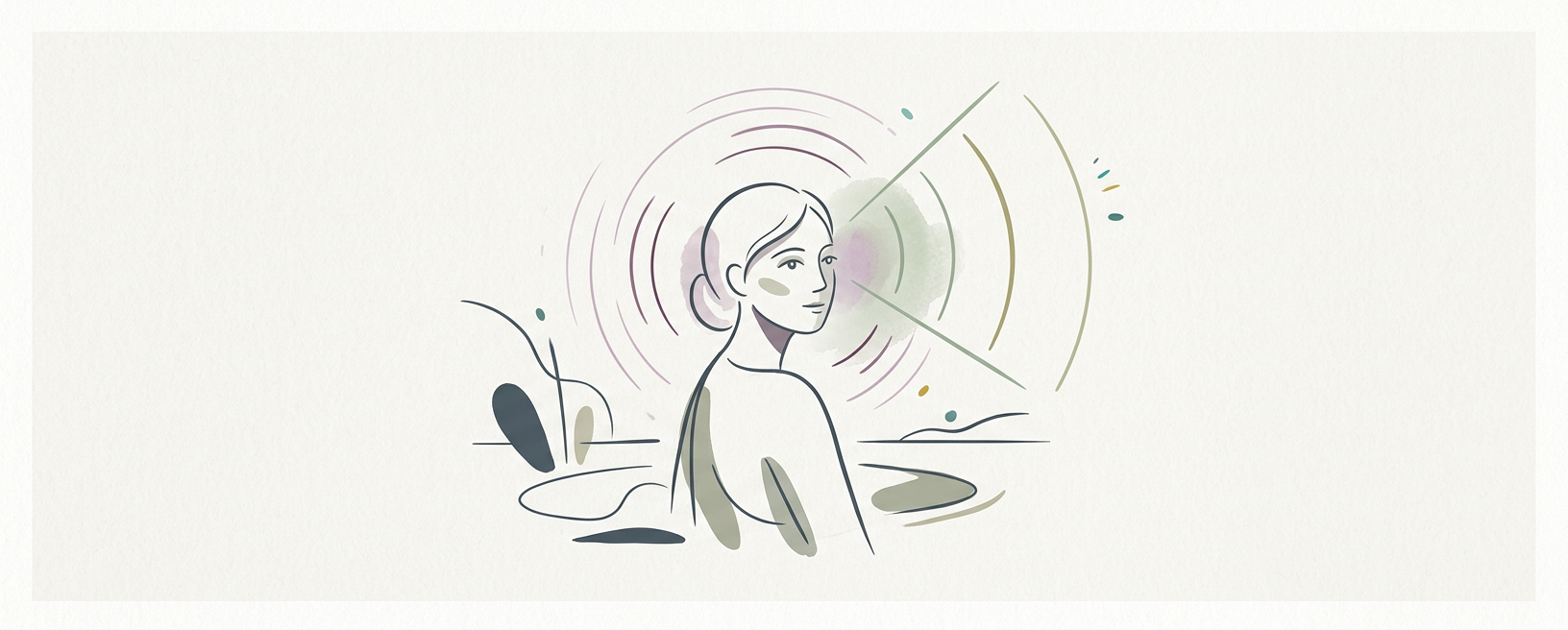
A fundamental practice for self-regulation and nervous system modulation.
Somatic Experiencing · Somatic Experiencing, developed by Peter A. Levine, Ph.D. · Feeling overwhelmed, disconnected, or experiencing diffuse anxiety. This practice establishes present moment awareness and internal capacity. · Practice for 3-5 minutes, 2-3 times per day, or whenever you feel a need to ground yourself. Can be done for longer durations as comfort and capacity increase.
Why it works
Orienting leverages the ancient, evolutionarily conserved "orienting response" of the nervous system. By deliberately engaging the senses to explore the environment, it helps to discharge excess activation and bring the ventral vagal complex online. This process creates a felt sense of safety and grounding, directly counteracting fight/flight/freeze responses. It broadens the attentional field, which can interrupt rumination and hypervigilance. The slow, deliberate scanning allows for gradual processing of sensory information, preventing the system from becoming overwhelmed, and promoting self-regulation.
How to practice
Preparation: Find a comfortable seated or standing position. Allow your eyes to be soft.
Initial Scan: Gently turn your head from side to side, allowing your eyes to follow naturally. Notice the periphery of your visual field. Do not focus intensely on any one object.
Sensory Engagement: Begin to slowly scan your environment with your gaze. Notice shapes, colors, textures, and distances. Allow your attention to linger briefly on objects that draw your curiosity, without judgment or analysis.
Auditory Awareness: Simultaneously, allow your ears to register sounds in your environment. Distant sounds, close sounds, sounds to your left, right, above, and below. Do not try to identify them, just notice their presence.
Somatic Check-in: Periodically, bring your awareness to your body. Notice any shifts in sensation, however subtle. This is not about fixing or changing, but simply observing. You might notice a softening, a settling, or a shift in breath.
Pacing: Move slowly. The aim is to allow your nervous system to register safety and presence, not to complete a task. Follow your own rhythm.
Preparation: Find a comfortable seated or standing position. Allow your eyes to be soft.
Initial Scan: Gently turn your head from side to side, allowing your eyes to follow naturally. Notice the periphery of your visual field. Do not focus intensely on any one object.
Sensory Engagement: Begin to slowly scan your environment with your gaze. Notice shapes, colors, textures, and distances. Allow your attention to linger briefly on objects that draw your curiosity, without judgment or analysis.
Auditory Awareness: Simultaneously, allow your ears to register sounds in your environment. Distant sounds, close sounds, sounds to your left, right, above, and below. Do not try to identify them, just notice their presence.
Somatic Check-in: Periodically, bring your awareness to your body. Notice any shifts in sensation, however subtle. This is not about fixing or changing, but simply observing. You might notice a softening, a settling, or a shift in breath.
Pacing: Move slowly. The aim is to allow your nervous system to register safety and presence, not to complete a task. Follow your own rhythm.