All movements
Loading…
Previous movements
Previous movements open for members. Today's movement is always free.
Daily movement
A brisk weighted carry to trigger lower leg venous return and clear heavy cognitive fog.
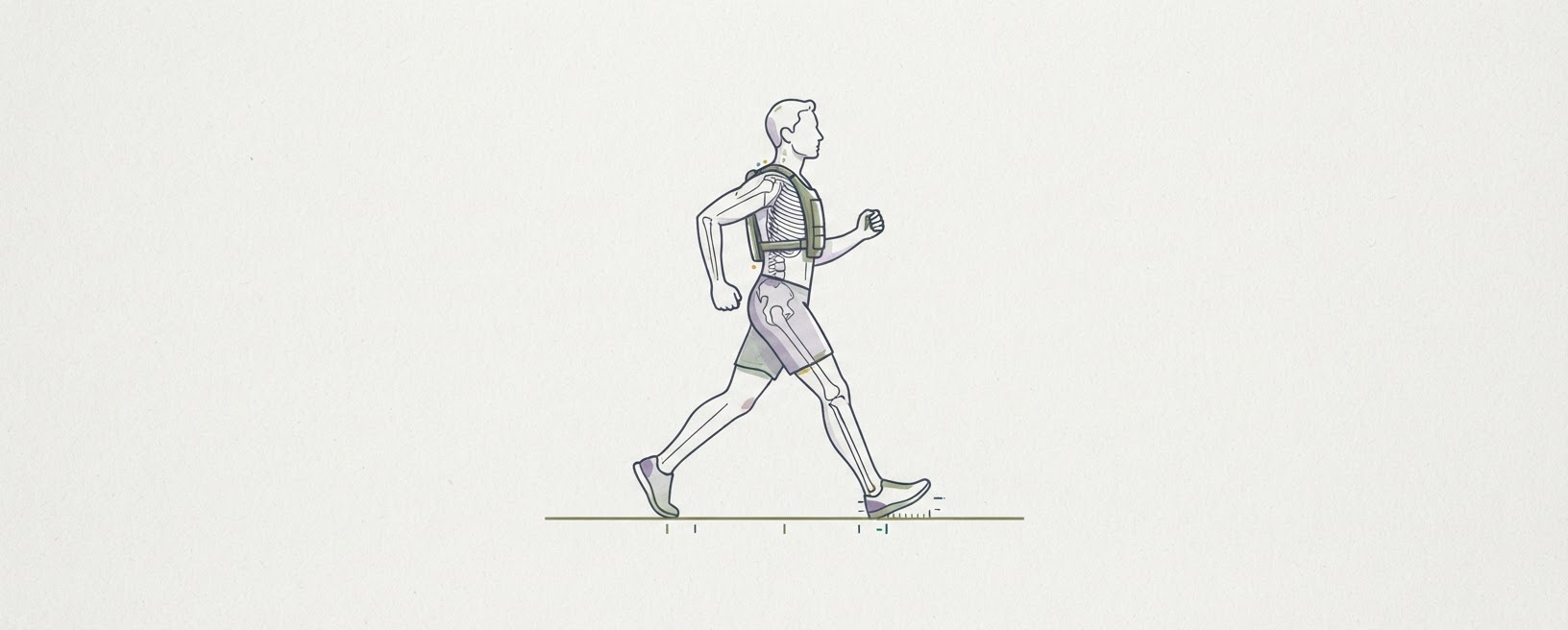
A brisk weighted carry to trigger lower leg venous return and clear heavy cognitive fog.
walking / rucking · Military rucking tradition as synthesized by Michael Easter (The Comfort Crisis) · Sluggish peripheral circulation and mental fog from sustained indoor sitting and shallow breathing. · 12 minutes, continuous nasal breathing
I spent years treating walking as an errand rather than a physiological intervention. Adding a modest 10% to 15% bodyweight load across your upper torso changes the mechanical demand of an ordinary stride. The weight pulls your center of mass backward, which forces your deep spinal erectors and rectus abdominis to stabilize the trunk without conscious bracing. At the same time, driving off the forefoot against an external load recruits the gastrocnemius-soleus complex with twice the muscular force of unweighted ambulation. The soleus acts as a peripheral muscular heart, compressing the deep posterior tibial and peroneal veins to pump pooled venous blood back up to the right atrium. Maintaining a cadence of roughly 120 steps per minute under this load stimulates mechanoreceptors in the plantar fascia and joint capsules, downshifting restless sympathetic static through steady bilateral proprioception. Nasal breathing keeps your heart rate pegged in low Zone 2, expanding capillary perfusion without triggering systemic panic.
Strap on a weighted pack or vest carrying 10% to 15% of your bodyweight. Keep the load snug against your upper back rather than sagging toward your lower spine.
Step onto flat pavement or an incline. Settle your gaze about fifteen feet ahead on the horizon. Let your jaw hang slightly loose.
Establish a steady marching tempo at roughly 120 steps per minute. Set a metronome app or count your strikes for thirty seconds to calibrate your rhythm.
Strike firmly through the center of your heel, roll along the outer edge of your foot, and drive directly off your big toe with every stride.
Keep your ribs anchored down over your pelvis. When the load pulls your head forward, draw your chin gently back to line your ears over your shoulders.
Breathe entirely in and out through your nose. If you find yourself gasping through your mouth, drop your pace by five steps a minute until your nasal rhythm returns.
Finish the twelve minutes, unclip the chest strap, and stand still for sixty seconds on two flat feet to register your baseline state.