All movements
Loading…
Previous movements
Previous movements open for members. Today's movement is always free.
Daily movement
A gentle lymphatic health bounce that flushes stagnant tissue fluid and settles autonomic static without lifting your feet.
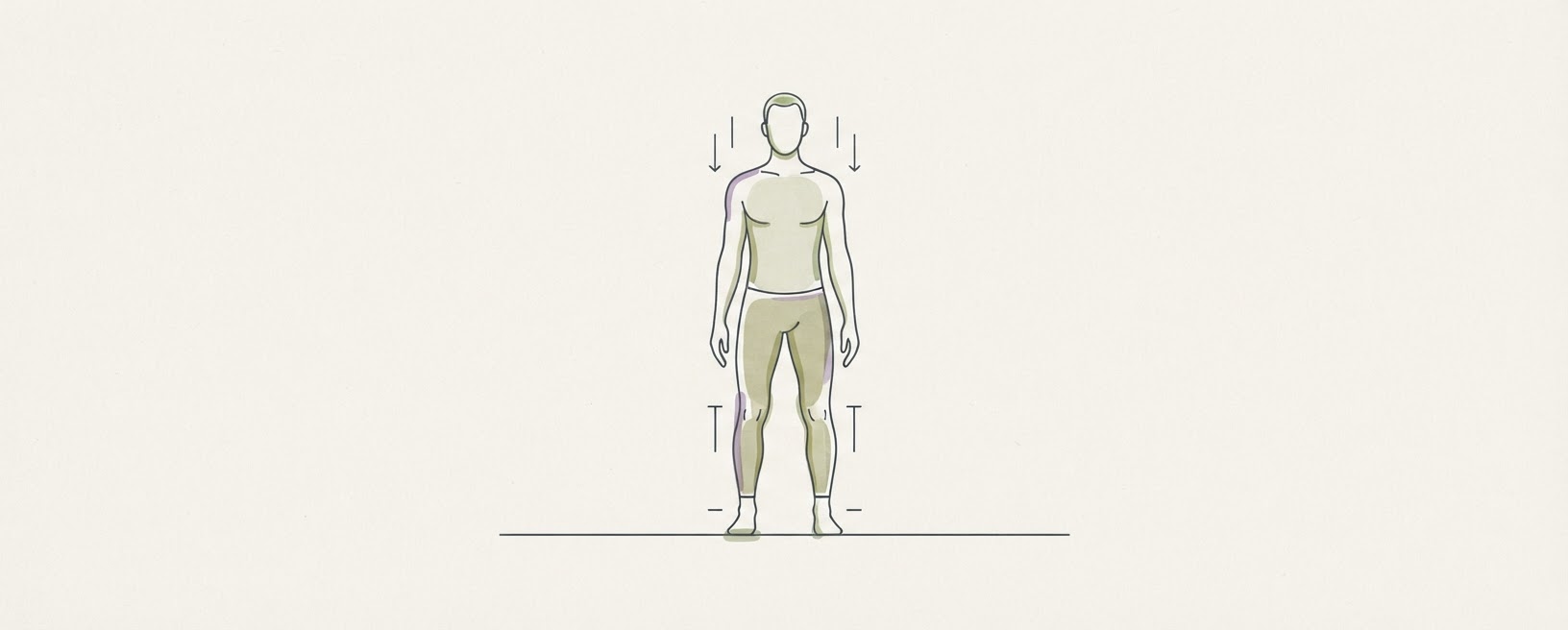
A gentle lymphatic health bounce that flushes stagnant tissue fluid and settles autonomic static without lifting your feet.
rebounding · Cellular exercise protocol (Albert Carter and NASA deconditioning research) · Heavy morning chest compression with a floaty, detached head state and stagnant leg circulation after restless sleep. · 3 rounds of 60 seconds, resting 30 seconds between rounds
I used to treat rebounding like aggressive indoor cardio until my calves locked up and my heart rate spiked. That missed the point of the mat entirely. In 1980, NASA researcher Dr. John Greenleaf looked at acceleration deceleration forces and found that rhythmic vertical loading works directly on fluid displacement without joint shear. The lymphatic system lacks a central pump; it depends on skeletal muscle contraction and one-way valves. When you keep your feet down and bounce at two hertz, you pull roughly 1.5 to 2 Gs at the bottom of the dip and near-zero at the crest. That alternating hydrostatic pressure milks the deep abdominal cisterna chyli and lower-extremity lymph vessels. Simultaneously, the steady vertical oscillation stimulates the otolith organs in your inner ear (the utricle and saccule). This signals downward postural grounding through the vestibulospinal tract, clearing the floaty, panicky static that pools in your throat and chest before 9 a.m.
Step onto the center of the mat with your feet hip-width apart and your arms hanging loose at your sides. Soften your knees by three degrees so your joints never lock out.
Pick a spot on the wall or floor about three feet in front of you. Keep your gaze resting there rather than watching your feet.
Begin pushing down into the mat through the midfoot and heel without letting your toes leave the surface. Your feet stay glued to the black fabric. The bounce comes entirely from ankle and knee compliance absorbing the rebound.
Establish an even, quiet rhythm of about two bounces per second (120 beats per minute). Let your shoulders drop away from your ears and allow your hands to dangle limp like wet ropes.
Inhale through your nose for three bounces, directing the air low into your back ribs. Exhale out through pursed lips or your nose for three bounces without forcing the air.
Maintain this subtle oscillation for 60 seconds. Stop smoothly, stand completely still on the mat for 30 seconds, and feel the downward drop through your feet before you start the next round.