Daily movement
Lotte Berk Standing Split
A controlled, sustained extension for hip flexibility and core stability, engaging deep postural muscles.
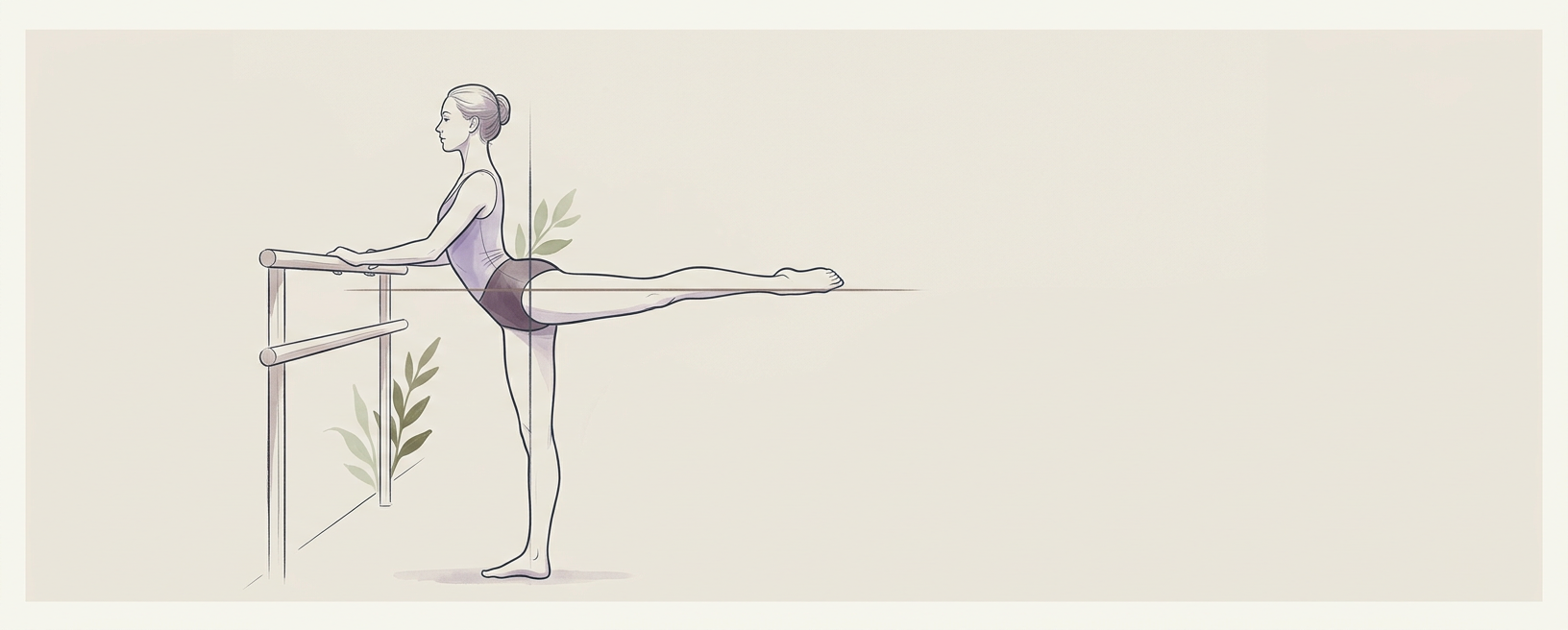
A controlled, sustained extension for hip flexibility and core stability, engaging deep postural muscles.
Lotte Berk Method · Developed by Lotte Berk, a German dancer who fled the Nazis and opened her London studio in 1959. Berk innovated a system integrating rehabilitative exercises with dance conditioning, focusing on deep muscle engagement and precise movement. · This movement addresses stiffness in the hip flexors and hamstrings, improving range of motion while simultaneously engaging the deep core and pelvic floor for stability and endurance. It targets individuals seeking to increase lower body flexibility without sacrificing core control and postural integrity. · Perform 2-3 sets, holding the extended leg for 20-30 seconds per side. Rest for 15-20 seconds between sets.
Why it works
The Lotte Berk Standing Split utilizes isometric contraction and sustained stretch to lengthen muscle tissue. By actively extending one leg while maintaining a stable torso, the nervous system receives signals to downregulate stretch reflexes in the hamstrings and hip flexors. The intentional engagement of the pelvic floor and deep abdominal muscles during the hold provides synergistic stability, promoting neuromuscular control. This static hold with active engagement enhances proprioception and strengthens the deep stabilizing muscles supporting the pelvis and spine, fostering improved postural endurance and pelvic floor tone.
How to practice
Starting Position: Stand facing a barre or sturdy support, approximately an arm's length away. Place both hands lightly on the barre for balance. Feet are parallel, hip-width apart.
Preparation: Shift your weight slightly onto your standing leg. Gently draw your naval towards your spine and subtly lift your pelvic floor, maintaining a neutral spine.
Extension: Slowly extend one leg directly behind you, keeping it straight but not locked. Aim to lift the leg only to a height where you can maintain a neutral spine and avoid arching your lower back. Your hips should remain level and square to the barre.
Engage and Hold: Once at your maximum controlled height, actively press through the heel of the extended leg as if reaching for the wall behind you. Simultaneously, deepen the engagement of your pelvic floor and lower abdominals. The sensation should be one of length through the extended leg and stability through the core.
Sustain: Hold this position for the prescribed duration, focusing on maintaining a steady breath and consistent muscle engagement. Avoid gripping the barre tightly; use it only for light support.
Release: Slowly and with control, return the extended leg to the starting position. Repeat on the opposite side.
Starting Position: Stand facing a barre or sturdy support, approximately an arm's length away. Place both hands lightly on the barre for balance. Feet are parallel, hip-width apart.
Preparation: Shift your weight slightly onto your standing leg. Gently draw your naval towards your spine and subtly lift your pelvic floor, maintaining a neutral spine.
Extension: Slowly extend one leg directly behind you, keeping it straight but not locked. Aim to lift the leg only to a height where you can maintain a neutral spine and avoid arching your lower back. Your hips should remain level and square to the barre.
Engage and Hold: Once at your maximum controlled height, actively press through the heel of the extended leg as if reaching for the wall behind you. Simultaneously, deepen the engagement of your pelvic floor and lower abdominals. The sensation should be one of length through the extended leg and stability through the core.
Sustain: Hold this position for the prescribed duration, focusing on maintaining a steady breath and consistent muscle engagement. Avoid gripping the barre tightly; use it only for light support.
Release: Slowly and with control, return the extended leg to the starting position. Repeat on the opposite side.