Daily movement
Lotte Berk Standing Parallel Plié
This movement integrates foundational plié mechanics with specific engagement cues to cultivate lower body strength, postural stability, and nuanced pelvic floor activation.
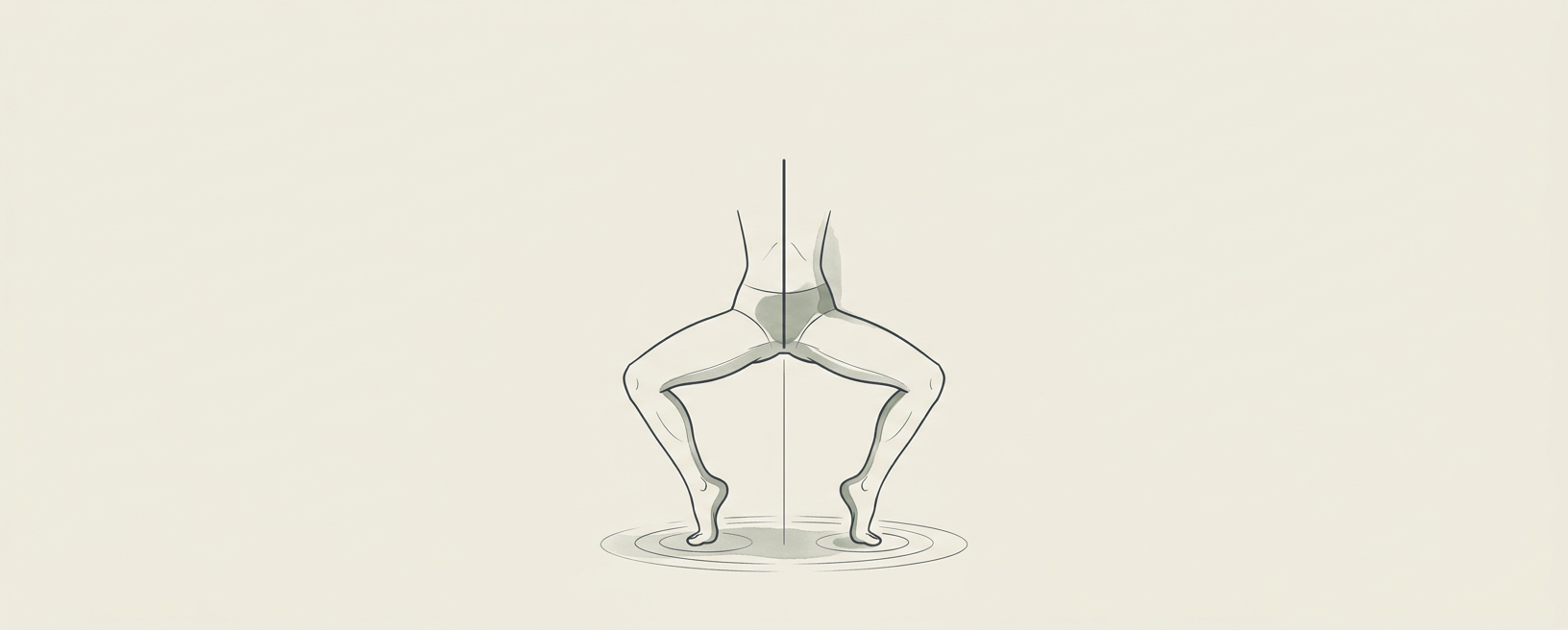
This movement integrates foundational plié mechanics with specific engagement cues to cultivate lower body strength, postural stability, and nuanced pelvic floor activation.
Lotte Berk Method (Barre) · Developed by Lotte Berk, a German-Jewish dancer who fled the Nazis and opened her first studio in London in 1959. Her method combined ballet conditioning, remedial exercise, and psychotherapy principles to create a system focused on strengthening and shaping the body, with a particular emphasis on core and pelvic floor engagement. · Fatigue, poor posture, desire for functional pelvic floor strength. · Perform 3 sets of 10-15 repetitions, focusing on control and precision rather than speed. Rest 30-60 seconds between sets.
Why it works
The controlled descent and ascent of the plié, executed in parallel, challenges the musculature of the quadriceps, glutes, and adductors concentrically and eccentrically. The simultaneous focus on spinal length optimizes lumbar curve, reducing compensatory patterns. Conscious pelvic floor engagement during the deepest point of the plié integrates core stabilization with lower limb mechanics, enhancing force transfer and proprioception. This dynamic engagement improves both endurance and reflexive responsiveness of the pelvic floor and surrounding fascial structures, contributing to improved postural control.
How to practice
Starting Position: Stand with feet hip-width apart, parallel. Ensure second toe aligns with the center of the heel. Distribute weight evenly through both feet. Lengthen the spine, drawing the crown of the head towards the ceiling. Shoulders are relaxed and down. Hands can rest lightly on a ballet barre or a stable surface for balance, or on the hips if no support is needed.
Inhale + Descent: Inhale deeply, allowing the breath to expand the rib cage three-dimensionally. As you exhale, slowly bend the knees, lowering the pelvis directly downwards as if sliding your back against a wall. Keep the heels grounded for as long as possible. The knees track directly over the second toe, avoiding inward or outward collapse.
Deepest Plié + Pelvic Floor Activation: Continue to descend until the deepest comfortable point is reached, ensuring the spine remains long and neutral. At this lowest point, gently engage the pelvic floor, imagining a gentle lift and drawing inward, as if holding back urination and gas simultaneously. This engagement should be subtle, not a forceful contraction.
Inhale + Ascent: Inhale, maintaining the pelvic floor engagement, and slowly press through the feet to return to the starting standing position. Continue to lengthen the spine throughout the ascent.
Release: Release the pelvic floor engagement at the top. This completes one repetition.
Starting Position: Stand with feet hip-width apart, parallel. Ensure second toe aligns with the center of the heel. Distribute weight evenly through both feet. Lengthen the spine, drawing the crown of the head towards the ceiling. Shoulders are relaxed and down. Hands can rest lightly on a ballet barre or a stable surface for balance, or on the hips if no support is needed.
Inhale + Descent: Inhale deeply, allowing the breath to expand the rib cage three-dimensionally. As you exhale, slowly bend the knees, lowering the pelvis directly downwards as if sliding your back against a wall. Keep the heels grounded for as long as possible. The knees track directly over the second toe, avoiding inward or outward collapse.
Deepest Plié + Pelvic Floor Activation: Continue to descend until the deepest comfortable point is reached, ensuring the spine remains long and neutral. At this lowest point, gently engage the pelvic floor, imagining a gentle lift and drawing inward, as if holding back urination and gas simultaneously. This engagement should be subtle, not a forceful contraction.
Inhale + Ascent: Inhale, maintaining the pelvic floor engagement, and slowly press through the feet to return to the starting standing position. Continue to lengthen the spine throughout the ascent.
Release: Release the pelvic floor engagement at the top. This completes one repetition.