Daily movement
Lotte Berk Standing Arabesque Tap
This movement, derived from the Lotte Berk method, cultivates postural endurance, gluteal strength, and subtle pelvic floor awareness through controlled leg articulation.
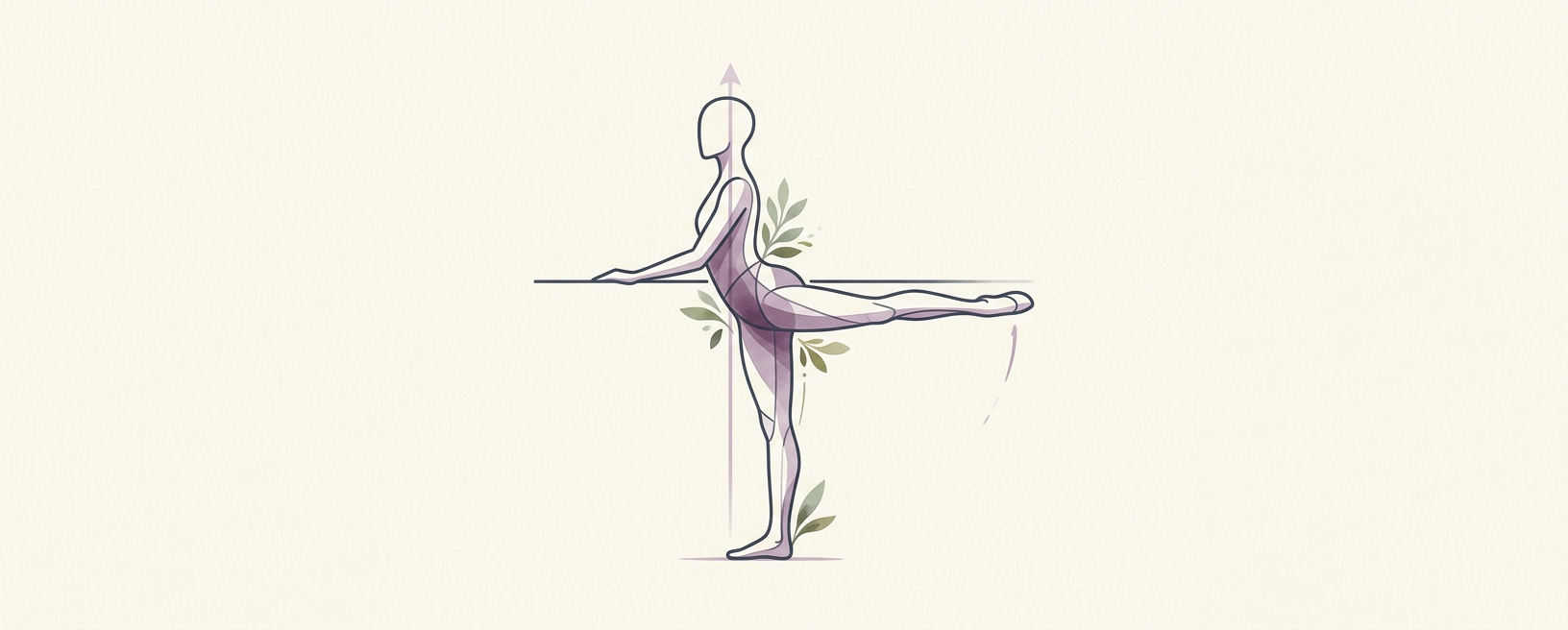
This movement, derived from the Lotte Berk method, cultivates postural endurance, gluteal strength, and subtle pelvic floor awareness through controlled leg articulation.
Lotte Berk Method · Developed by Lotte Berk, a German-born dancer, in London during the 1960s. Her method fused dance conditioning with rehabilitative exercises, emphasizing core strength and pelvic stability. · Fatigue, poor posture, lower back discomfort, and feelings of pelvic instability. This practice targets these by building endurance and proprioception. · Perform 2–3 sets of 15–20 repetitions per leg. Rest for 30–60 seconds between sets. Prioritize control and form over range of motion or speed.
Why it works
The standing arabesque tap engages the posterior chain, particularly the glutes and hamstrings, which are critical for hip extension and spinal support. The controlled leg movement, combined with focused abdominal engagement, challenges postural muscles. The subtle tapping motion provides a dynamic, yet low-impact, stimulus to the pelvic floor muscles without direct, overt contraction, promoting reflexivity and awareness.
How to practice
Starting Position: Stand tall, facing a barre or stable support. Place hands lightly on the support for balance. Feet are parallel and hip-width apart. Engage the abdominal muscles gently, drawing the navel towards the spine without tilting the pelvis.
Lift Leg: Shift weight onto the standing leg. Extend the working leg directly behind you, keeping the hip square and the leg straight. The foot remains aligned with the hip, not lifted excessively high, maintaining a neutral lumbar spine. Avoid overarching the lower back.
Tap Down: Lightly tap the toe of the extended foot to the floor, just behind the standing foot.
Tap Up: Immediately lift the extended leg back to its starting elevated position, approximately hip height, or as high as can be maintained without compromising pelvic stability or lumbar neutrality. The movement should be small and controlled, originating from the hip.
Repeat: Continue to tap the toe down and lift the leg up in a rhythmic, controlled manner.
Starting Position: Stand tall, facing a barre or stable support. Place hands lightly on the support for balance. Feet are parallel and hip-width apart. Engage the abdominal muscles gently, drawing the navel towards the spine without tilting the pelvis.
Lift Leg: Shift weight onto the standing leg. Extend the working leg directly behind you, keeping the hip square and the leg straight. The foot remains aligned with the hip, not lifted excessively high, maintaining a neutral lumbar spine. Avoid overarching the lower back.
Tap Down: Lightly tap the toe of the extended foot to the floor, just behind the standing foot.
Tap Up: Immediately lift the extended leg back to its starting elevated position, approximately hip height, or as high as can be maintained without compromising pelvic stability or lumbar neutrality. The movement should be small and controlled, originating from the hip.
Repeat: Continue to tap the toe down and lift the leg up in a rhythmic, controlled manner.