Daily movement
Lotte Berk Flat Back
A foundational barre movement that cultivates core strength, postural endurance, and integrated pelvic floor engagement.
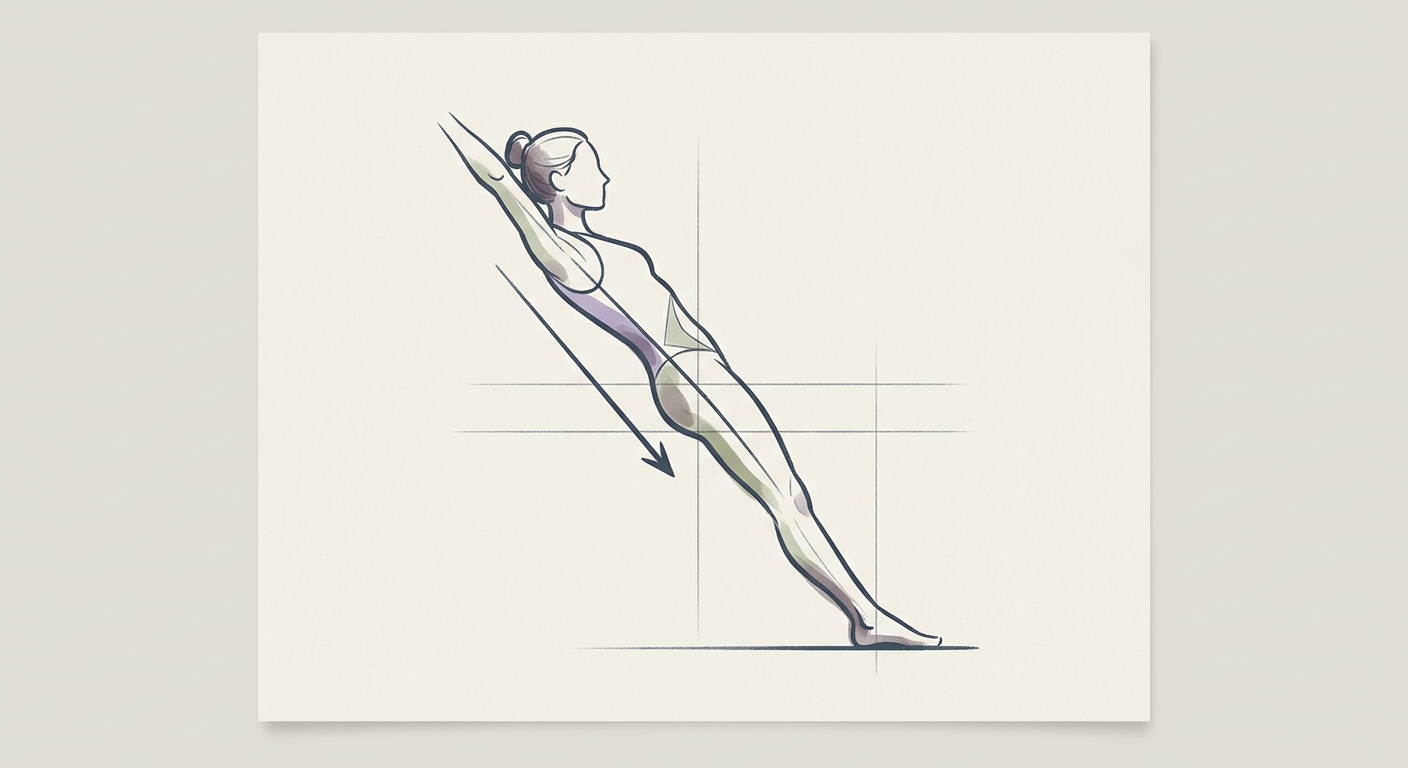
A foundational barre movement that cultivates core strength, postural endurance, and integrated pelvic floor engagement.
Lotte Berk Method (Barre) · Developed by Lotte Berk, a German-born dancer who fled the Nazis and opened her first studio in London in 1959. Her method combined her dance background with rehabilitative exercises learned during her own back injury recovery. · Fatigue, postural instability, lack of core integration, generalized weakness in the anterior and posterior kinetic chains. · Perform 3-5 repetitions, holding each Flat Back for 15-30 seconds. Repeat for 2-3 sets.
Why it works
The Flat Back targets the deep abdominal muscles, particularly the transversus abdominis, while simultaneously engaging the posterior chain stabilizers of the spine. The isometric hold under load creates sustained muscular tension, which enhances endurance and proprioception. Pelvic floor engagement is a natural consequence of proper deep core activation, improving intra-abdominal pressure regulation and lumbo-pelvic stability. This integrated activation pattern supports spinal health and efficient movement mechanics.
How to practice
Starting Position: Sit upright on the floor with legs extended forward, knees slightly bent, and heels pressing down. The spine is long, and the shoulders are relaxed down away from the ears. Imagine a straight line from the crown of your head to your tailbone.
Engagement: Draw your navel gently towards your spine, engaging the lower abdominal muscles. Feel the pelvic floor lift subtly.
Flat Back Lower: Maintaining the length in your spine and the engagement in your core, slowly recline backward a few inches, as if your back is a solid, flat board. Avoid rounding your lower back or allowing your ribs to splay. The movement should originate from a controlled pivot at the hips, not a collapse of the spine.
Hold: Hold this reclined position, focusing on sustained core contraction and maintaining a neutral pelvis. You should feel intense work in your abdominals and potentially your quadriceps. Resist the urge to slouch or compensate with your neck and shoulders.
Return: Slowly return to the upright starting position, leading with your core and maintaining spinal length.
Starting Position: Sit upright on the floor with legs extended forward, knees slightly bent, and heels pressing down. The spine is long, and the shoulders are relaxed down away from the ears. Imagine a straight line from the crown of your head to your tailbone.
Engagement: Draw your navel gently towards your spine, engaging the lower abdominal muscles. Feel the pelvic floor lift subtly.
Flat Back Lower: Maintaining the length in your spine and the engagement in your core, slowly recline backward a few inches, as if your back is a solid, flat board. Avoid rounding your lower back or allowing your ribs to splay. The movement should originate from a controlled pivot at the hips, not a collapse of the spine.
Hold: Hold this reclined position, focusing on sustained core contraction and maintaining a neutral pelvis. You should feel intense work in your abdominals and potentially your quadriceps. Resist the urge to slouch or compensate with your neck and shoulders.
Return: Slowly return to the upright starting position, leading with your core and maintaining spinal length.