Daily movement
Levator Scapulae Release: Neck-Shoulder Tension
Targeted release for the levator scapulae muscle, addressing chronic tension at the junction of the neck and shoulder.
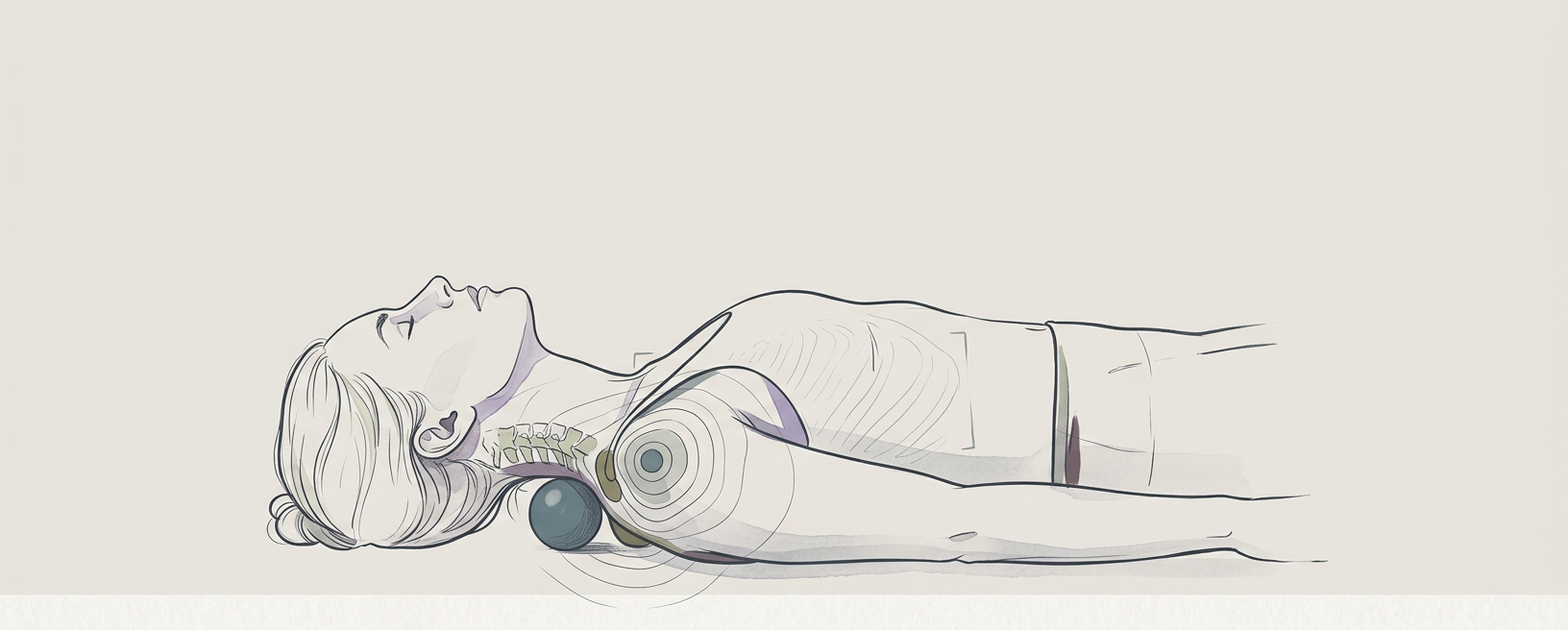
Targeted release for the levator scapulae muscle, addressing chronic tension at the junction of the neck and shoulder.
Myofascial Release / Structural Integration · This myofascial release technique aligns with principles espoused by practitioners in the lineage of Tom Myers' Anatomy Trains, focusing on releasing fascial restrictions within specific muscle slings. Its application to the levator scapulae is a common focus in practices aiming to alleviate cervicothoracic junction tension. · Neck stiffness, upper trapezius discomfort, limited head rotation, and persistent tension at the superior angle of the scapula. · 1-2 sets per side. Hold each trigger point for 60-90 seconds. Perform daily, or as needed for tension.
Why it works
The levator scapulae muscle connects the cervical spine to the top of the scapula. Chronic contraction or fascial adhesion in this muscle restricts neck movement and elevates the shoulder, contributing to tension headaches and localized pain. Applying sustained, direct pressure to trigger points within the muscle encourages mechanotransduction, signaling fibroblasts to reduce stiffness and improve tissue hydration. The concurrent deep breathing down-regulates the sympathetic nervous system, reducing guarding and allowing for deeper tissue release. This process facilitates the viscous flow of ground substance within the fascial matrix, improving tissue extensibility and restoring resting muscle length.
How to practice
Positioning: Lie on your back on a firm surface. Place a small, firm ball (e.g., lacrosse ball or therapy ball) against the upper back, slightly medial to the superior angle of your shoulder blade. This area will be near the base of your neck, but on your back.\n2. Locate the Muscle: Gently adjust your position until you feel palpable tenderness or a taut band, indicating a potential trigger point within the levator scapulae. You may need to slightly protract or retract your shoulder to refine placement.\n3. Sustained Pressure: Once a tender spot is located, allow your body weight to exert sustained, consistent pressure onto the ball. Avoid immediate, aggressive pressure. The sensation should be intense but tolerable, not sharp or excruciating.\n4. Controlled Movement (Optional): While maintaining pressure, you may gently and slowly rotate your head side to side, or tilt your ear towards your opposite shoulder. This active movement, while the tissue is under pressure, can enhance the release by creating controlled shear forces within the fascial layers.\n5. Hold: Maintain the pressure and any optional gentle movement for 60-90 seconds, or until the intensity of the sensation diminishes by at least 50%.
Positioning: Lie on your back on a firm surface. Place a small, firm ball (e.g., lacrosse ball or therapy ball) against the upper back, slightly medial to the superior angle of your shoulder blade. This area will be near the base of your neck, but on your back.\n2. Locate the Muscle: Gently adjust your position until you feel palpable tenderness or a taut band, indicating a potential trigger point within the levator scapulae. You may need to slightly protract or retract your shoulder to refine placement.\n3. Sustained Pressure: Once a tender spot is located, allow your body weight to exert sustained, consistent pressure onto the ball. Avoid immediate, aggressive pressure. The sensation should be intense but tolerable, not sharp or excruciating.\n4. Controlled Movement (Optional): While maintaining pressure, you may gently and slowly rotate your head side to side, or tilt your ear towards your opposite shoulder. This active movement, while the tissue is under pressure, can enhance the release by creating controlled shear forces within the fascial layers.\n5. Hold: Maintain the pressure and any optional gentle movement for 60-90 seconds, or until the intensity of the sensation diminishes by at least 50%.