Daily movement
Hardstyle Kettlebell Swing for Posterior Power
This movement builds explosive hip power and refines autonomic rhythm, helping reset your baseline static load.
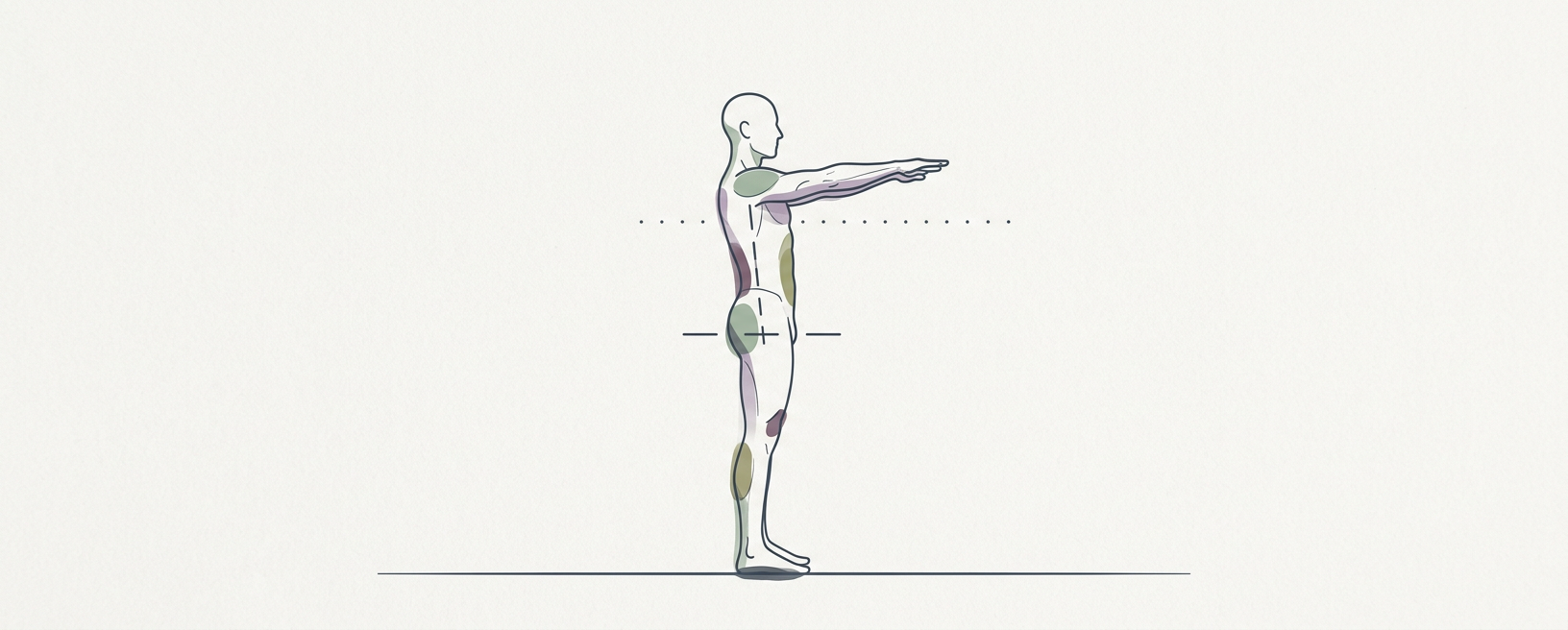
This movement builds explosive hip power and refines autonomic rhythm, helping reset your baseline static load.
kettlebell · StrongFirst (Pavel Tsatsouline) · When feeling static, heavy, or disconnected from dynamic power, this restores a sense of grounded propulsion. · 5-10 repetitions, 3-5 sets. Rest 60-90 seconds between sets.
Why it works
The Hardstyle Kettlebell Swing is a ballistic hip hinge that directly trains the posterior chain – glutes, hamstrings, and erectors – for explosive power. This powerful, rhythmic movement creates a rapid neurological feedback loop. The forceful exhalation at the top of the swing, synchronized with the hip drive, engages the vagus nerve, initiating a parasympathetic response. This resets the autonomic baseline, moving the system away from sympathetic overdrive. Mechanically, the swing acts as a dynamic stretch and release for the hamstrings and glutes under load, improving tissue elasticity and fascial hydration while coordinating the entire posterior fascial line, from heels to occiput. This rhythmic exertion and recovery pattern modulates heart rate variability, signaling safety and capability to the nervous system.
How to practice
Set up: Place a kettlebell about a foot in front of you. Stand with feet slightly wider than shoulder-width, toes angled slightly out. Hinge at your hips, keeping a straight spine, and grasp the handle with both hands. Shoulders back, down, and packed. Your gaze should be a few feet in front of you on the floor.
Hike pass: With a quick, powerful movement, "hike" the kettlebell between your legs, aiming for your groin. Your forearms should make contact with your inner thighs. This is not a squat; your chest stays relatively high, and your hips hinge back.
Explode forward: Immediately, and with a powerful hip extension, drive your hips forward. Imagine jumping forward, but your feet stay planted. Allow the kettlebell to float up to chest height. Do not pull it up with your arms; the power comes entirely from your hips.
Inhale and hinge: As the kettlebell begins to descend, inhale sharply. Allow it to pull you back into the hip hinge position, letting it fall naturally between your legs. Keep your spine neutral.
Exhale and drive: Just before the kettlebell reaches its lowest point between your legs, exhale forcefully through pursed lips, then explode your hips forward again. Think of actively pushing your feet into the floor as you stand tall. This coordinated breath and power generation is key.
Catch and repeat: Allow the bell to swing back naturally. Maintain tension at the top for a moment, then let it fall and repeat the cycle. Focus on crisp, strong hip drives and controlled breathing.