All movements
Loading…
Previous movements
Previous movements open for members. Today's movement is always free.
Daily movement
Drop your post-workout heart rate and clear lower-limb pooling with five minutes of wall-supported venous drainage.
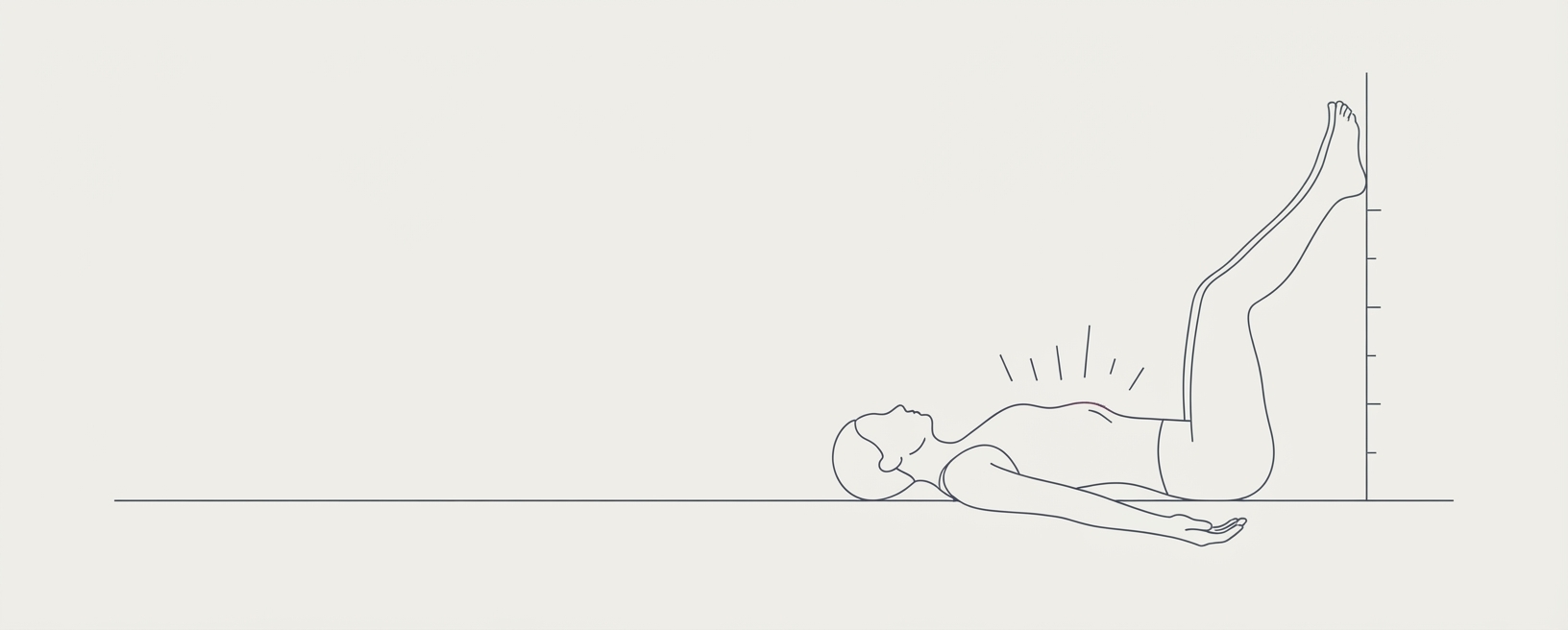
Drop your post-workout heart rate and clear lower-limb pooling with five minutes of wall-supported venous drainage.
athlete recovery / readiness · Recovery physiology and autonomic conditioning (Shona Halson, Stephen Seiler) · Systemic autonomic arousal and lower-body heaviness after high-intensity intervals or a long threshold session. · 5 to 8 minutes, unbroken nasal breath
I used to finish track intervals and immediately pace around the car park checking my watch, wondering why my resting heart rate stayed stuck in the high eighties for hours. In athlete recovery research, particularly the autonomic monitoring work of Dr. Shona Halson, the post-exercise window determines how fast you exit sympathetic dominance. Placing the lower limbs above the level of the pelvis uses hydrostatic pressure to assist venous return. It drains pooled deoxygenated blood and interstitial fluid from the soleus and gastrocnemius capillary beds back toward the vena cava. This reduces cardiac workload by increasing stroke volume without requiring arterial pressure. Simultaneously, pairing this passive inversion with a nasal exhale extended to 1.5 times the length of the inhale stimulates the vagus nerve via baroreceptor signaling. Your heart rate variability climbs, mechanical tone in the calves drops, and your system downshifts out of survival gear before you sit down to work.
Lie on your back on a firm mat and bring your hips roughly 12 inches away from an unadorned wall.
Swing your legs up so your heels rest flat against the wall, knees softly bent around 20 degrees. Let your arms fall open to your sides at 45 degrees, palms facing the ceiling.
Close your mouth. Inhale through your nose for 4 counts, directing the air into your back ribs rather than puffing your chest.
Exhale smoothly through your nose for 6 counts. Feel your lower ribs sink down toward the pelvis without forcing your spine flat.
Soften your jaw and let your tongue sit on the roof of your mouth behind your front teeth. Keep your gaze quiet toward the ceiling.
Stay here for 5 minutes. If your hamstrings pull, slide your hips another four inches back from the wall.