Daily movement
Crab Reach: Unwinding the Front Line and Restoring Extension
Crab Reach opens the entire front of the body, fostering spinal extension and shoulder mobility.
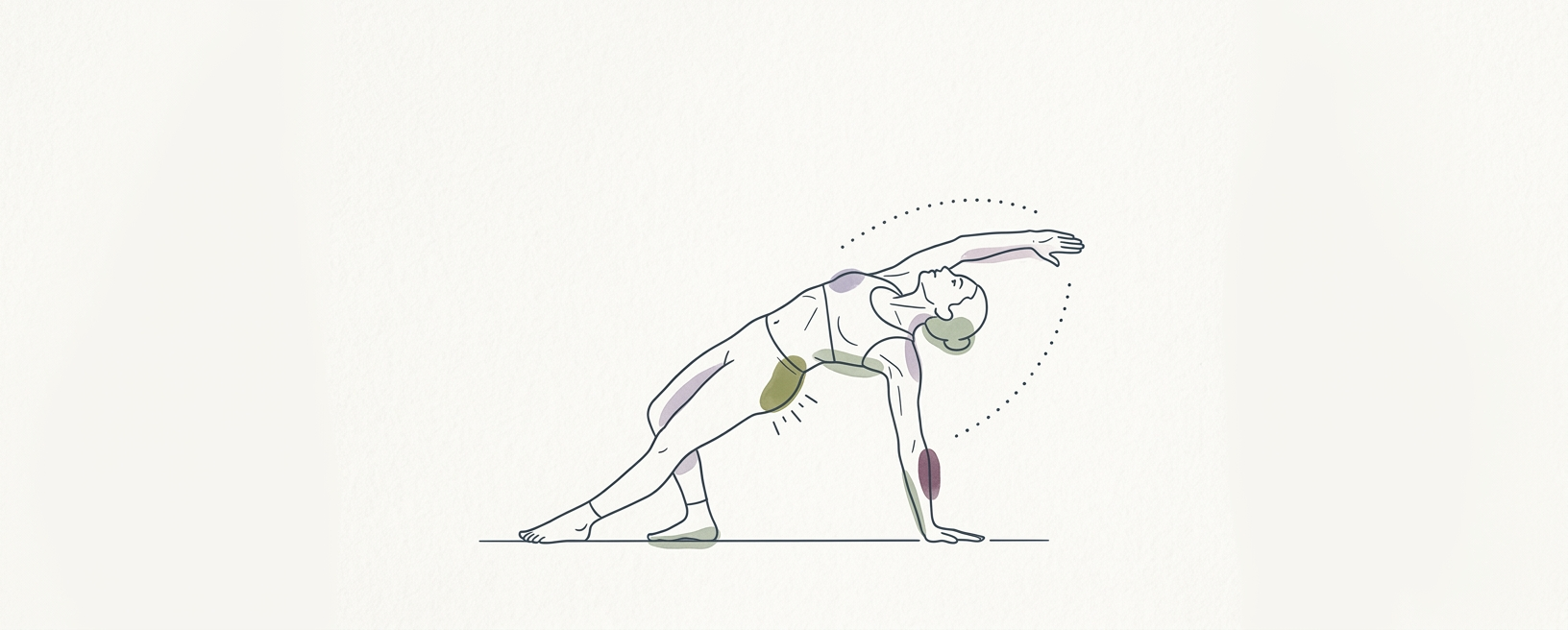
Crab Reach opens the entire front of the body, fostering spinal extension and shoulder mobility.
animal flow / ground movement · Animal Flow (Mike Fitch) · This movement meets the pervasive forward-flexed posture many of us maintain, offering a counterbalance to desk work and driving. · 3–5 reaches per side, flowing with your breath
Why it works
'C'rab Reach addresses both nervous system and tissue mechanisms by leveraging contralateral movement patterns. Neurologically, the cross-body reach stimulates cerebellar activity, enhancing coordination and proprioception. As you extend and rotate, it activates the vestibular system through head movement, which can help recalibrate spatial awareness. On the tissue front, this movement specifically targets the superficial front line of fascia, as described by Thomas Myers. It gently lengthens the rectus abdominis, hip flexors, and pectorals, which often become shortened and stiff from prolonged sitting. The reach encourages thoracic extension, freeing up the rib cage and allowing for deeper, more efficient respiration. It also promotes scapular upward rotation, improving shoulder health and range of motion. This active unwinding helps restore the body's natural elastic recoil and reduces chronic tension in the anterior chain.
How to practice
Start in Crab position. Sit on the floor, feet flat and hip-width apart, knees bent. Place your hands behind you, fingers pointing away from your body, roughly shoulder-width apart. Lift your hips a few inches off the floor.
Initiate the reach. From your Crab, shift your weight slightly onto your left hand and right foot. As you do, begin to reach your right arm up and over your head, towards the floor behind you. Your gaze follows your reaching hand.
Lift and extend. Simultaneously, press through your left hand and right foot, lifting your hips higher. Imagine a long diagonal line from your right fingertips down to your right knee and foot. Your body forms an arc.
Breathe into the opening. Inhale deeply as you reach and extend, feeling the stretch across your entire front line—from your hip flexor through your abdomen, chest, and arm. Your hips should be as high as you can comfortably get them.
Return with control. Exhale as you slowly reverse the movement, bringing your right hand back to the floor and lowering your hips to the starting Crab position. Maintain control; don’t collapse.
Repeat on the other side. Perform the same sequence, reaching with your left arm, shifting weight to your right hand and left foot. Alternate sides, moving fluidly.