Daily movement
Child's Pose (Balasana) with Forehead Pressure
A restorative posture that gently compresses the forehead, stimulating the parasympathetic nervous system for profound calm.
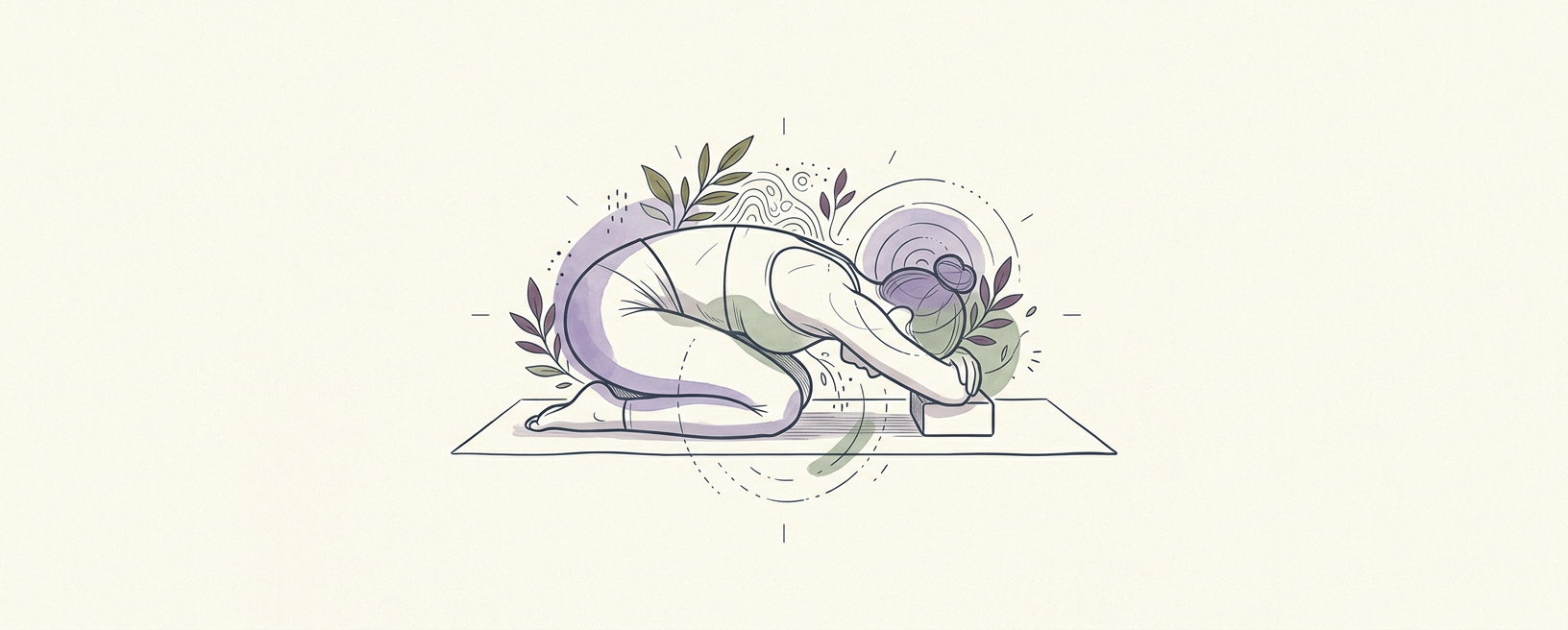
A restorative posture that gently compresses the forehead, stimulating the parasympathetic nervous system for profound calm.
Yoga · Hatha Yoga; popularized for its restorative applications by teachers like Judith Hanson Lasater. · Anxiety, overwhelm, heightened sympathetic nervous system activation, desire for grounding and introspection. · Hold for 3-5 minutes, or up to 10 minutes if comfortable. Can be practiced multiple times throughout the day as needed for immediate grounding.
Why it works
The gentle pressure on the forehead in Child's Pose stimulates the trigeminal nerve and the vagus nerve endings, both of which are central to parasympathetic nervous system activation. This initiates a relaxation response, lowering heart rate and blood pressure. The mild inversion and flexion of the spine also create an introspective 'cocoon' that limits external stimuli, aiding in internal regulation and a sense of safety. The mild compression of abdominal organs can also stimulate digestion and further parasympathetic tone.
How to practice
Begin on your hands and knees in a tabletop position. Your big toes can touch, or your knees can be hip-width apart or wider, depending on comfort.
Gently sink your hips back towards your heels. You can place a blanket or bolster between your hips and heels for support if needed.
Extend your torso forward, resting your forehead on the mat or a prop (like a block or cushion). The key is to ensure the forehead is comfortably supported with gentle pressure.
Your arms can be extended forward with palms down, or swept back alongside your body with palms facing up, resting by your feet. Choose the arm position that feels most restful.
Allow your breath to deepen and soften, observing the gentle expansion and contraction of your back body with each inhalation and exhalation.
Focus on the sensation of your forehead against the support, and the subtle rhythm of your breath.
Begin on your hands and knees in a tabletop position. Your big toes can touch, or your knees can be hip-width apart or wider, depending on comfort.
Gently sink your hips back towards your heels. You can place a blanket or bolster between your hips and heels for support if needed.
Extend your torso forward, resting your forehead on the mat or a prop (like a block or cushion). The key is to ensure the forehead is comfortably supported with gentle pressure.
Your arms can be extended forward with palms down, or swept back alongside your body with palms facing up, resting by your feet. Choose the arm position that feels most restful.
Allow your breath to deepen and soften, observing the gentle expansion and contraction of your back body with each inhalation and exhalation.
Focus on the sensation of your forehead against the support, and the subtle rhythm of your breath.