Daily movement
Buteyko Control Pause
A diagnostic and practice tool to assess and improve breath-holding capacity, reflecting overall breathing efficiency.
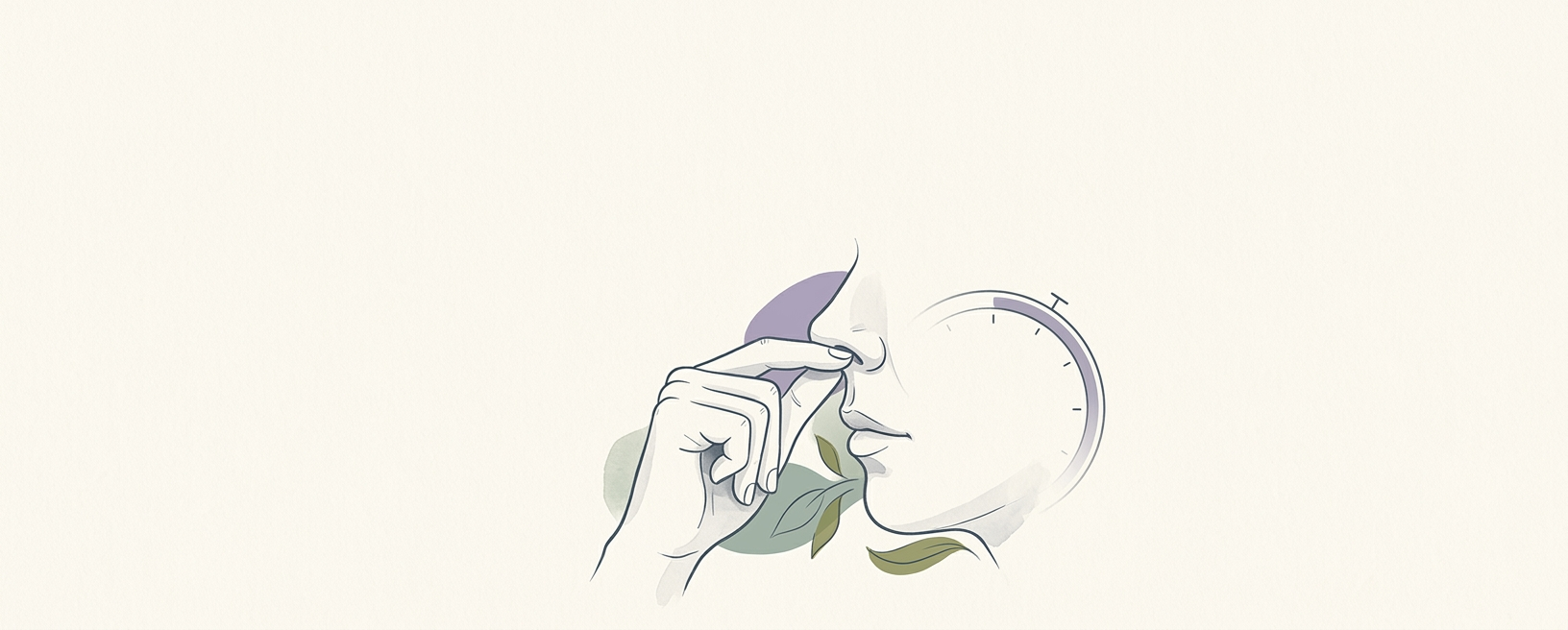
A diagnostic and practice tool to assess and improve breath-holding capacity, reflecting overall breathing efficiency.
Buteyko Method; Konstantin Buteyko · Developed by Ukrainian physician Konstantin Buteyko in the 1950s. · To assess baseline breathing patterns and improve the body's tolerance to carbon dioxide, thereby reducing hyperventilation. · Perform 3-5 repetitions, 3-4 times per day. Regularly track your Control Pause time to observe progress. As a diagnostic, perform once daily.
Why it works
The Control Pause measures how long one can comfortably hold their breath after an exhalation. A shorter Control Pause often indicates chronic hyperventilation, where the body expels too much CO2. By practicing gentle breath holds, the body gradually adjusts to slightly higher CO2 levels, optimizing oxygen release from hemoglobin (Bohr effect) and calming the respiratory center.
How to practice
Preparation: Sit upright in a comfortable position, ensuring your airways are clear.
Gentle Exhale: Take a small, silent breath in through your nose, then a relaxed, passive exhale through your nose. Do not force the exhale.
Hold: Gently pinch your nose closed to prevent air from entering. Start a timer.
Observe: Hold your breath until you feel the first definite desire to breathe. This is not a struggle, but a clear sensation of wanting to inhale. You should be able to resume normal breathing immediately without a deep, compensatory breath.
Release & Resume: Release your nose and breathe normally through it. The first breath upon release should be calm and consistent with your breathing before the hold.
Record: Note the duration of the hold in seconds.
Preparation: Sit upright in a comfortable position, ensuring your airways are clear.
Gentle Exhale: Take a small, silent breath in through your nose, then a relaxed, passive exhale through your nose. Do not force the exhale.
Hold: Gently pinch your nose closed to prevent air from entering. Start a timer.
Observe: Hold your breath until you feel the first definite desire to breathe. This is not a struggle, but a clear sensation of wanting to inhale. You should be able to resume normal breathing immediately without a deep, compensatory breath.
Release & Resume: Release your nose and breathe normally through it. The first breath upon release should be calm and consistent with your breathing before the hold.
Record: Note the duration of the hold in seconds.