Daily movement
Bodyweight Squat to Chair for Grounded Strength
This movement recalibrates movement patterns for foundational strength and nervous system regulation.
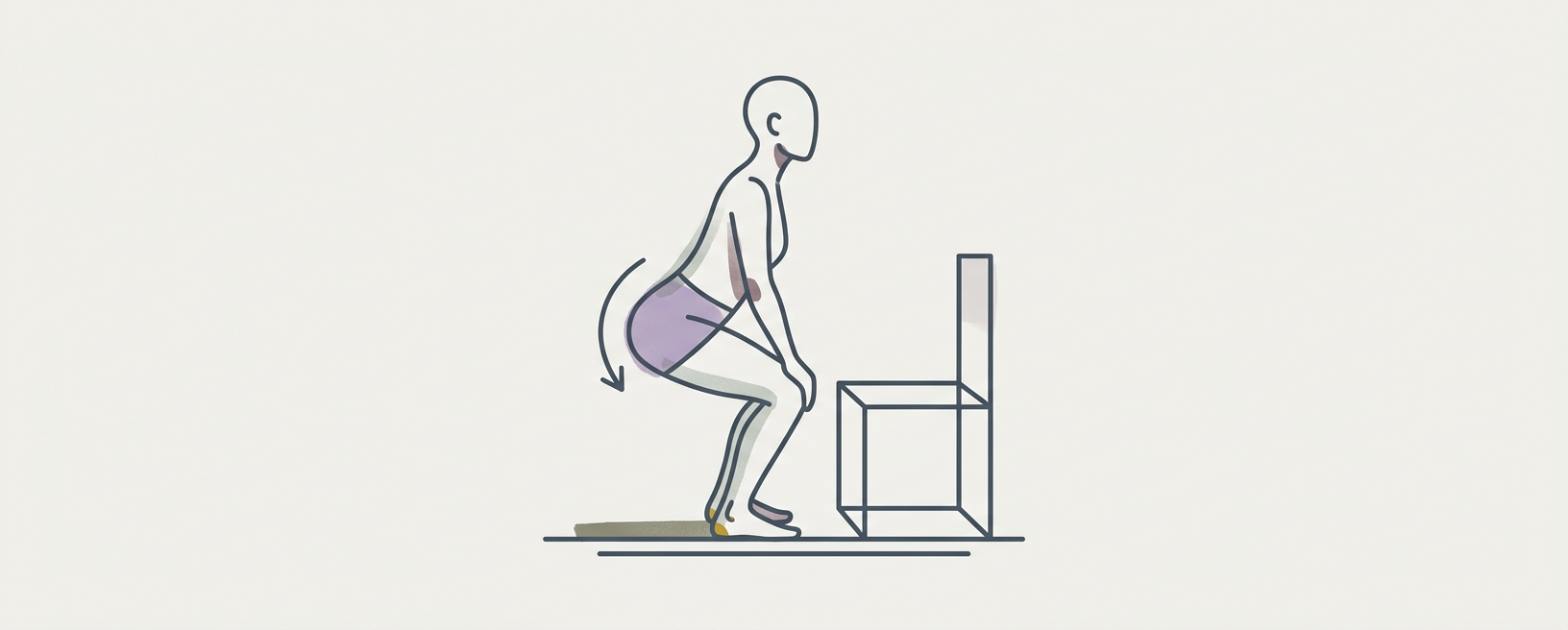
This movement recalibrates movement patterns for foundational strength and nervous system regulation.
functional strength · Functional strength principles (Dan John, Pavel Tsatsouline) · It addresses a baseline feeling of instability or general ungroundedness, improving the capacity to bear personal load and respond to environmental stressors. · 3 sets of 8-12 repetitions, with a 60-second rest between sets.
Why it works
The bodyweight squat, when performed deliberately, engages the deep core stabilizers and intrinsic foot muscles. This creates a proprioceptive rich input, informing the brain about the body’s position in space and enhancing kinesthetic awareness. From a nervous system perspective, controlled loading of major joints and activation of large muscle groups sends strong afferent signals to the central nervous system. This type of input, especially when paired with conscious diaphragmatic breathing and bracing, helps to downregulate sympathetic tone and promote a feeling of safety and stability. The act of sitting and standing with control strengthens the foundational movement patterns that contribute to a resilient physiological baseline, improving load-bearing capacity and reducing static tension.
How to practice
Stand with your feet roughly hip-width apart, toes pointing slightly out. I like to imagine my feet are glued to the floor, spreading them slightly without moving them. Keep your gaze neutral, about six feet in front of you.
Place a sturdy chair behind you. Begin to hinge at your hips, pushing your glutes back as if you're about to sit down. Maintain a long spine, keeping your chest lifted and shoulders relaxed.
Descend slowly, continuing to push your hips back and allowing your knees to track over your toes. Focus on a controlled, deliberate descent until your glutes lightly tap the chair. Keep your core braced, drawing your navel towards your spine.
Pause briefly upon contact with the chair, feeling the stability through your feet. Avoid collapsing into the chair.
Exhale powerfully as you drive through your heels and the outside edges of your feet to return to a standing position. Maintain your core brace throughout, stacking your joints one on top of the other as you rise. I try to feel my whole foot pressing into the floor.
Stand with your feet roughly hip-width apart, toes pointing slightly out. I like to imagine my feet are glued to the floor, spreading them slightly without moving them. Keep your gaze neutral, about six feet in front of you.
Place a sturdy chair behind you. Begin to hinge at your hips, pushing your glutes back as if you're about to sit down. Maintain a long spine, keeping your chest lifted and shoulders relaxed.
Descend slowly, continuing to push your hips back and allowing your knees to track over your toes. Focus on a controlled, deliberate descent until your glutes lightly tap the chair. Keep your core braced, drawing your navel towards your spine.
Pause briefly upon contact with the chair, feeling the stability through your feet. Avoid collapsing into the chair.
Exhale powerfully as you drive through your heels and the outside edges of your feet to return to a standing position. Maintain your core brace throughout, stacking your joints one on top of the other as you rise. I try to feel my whole foot pressing into the floor.