Daily movement
Adho Mukha Svanasana (Downward-Facing Dog)
A foundational inversion that facilitates axial decompression and proprioceptive input, promoting nervous system modulation.
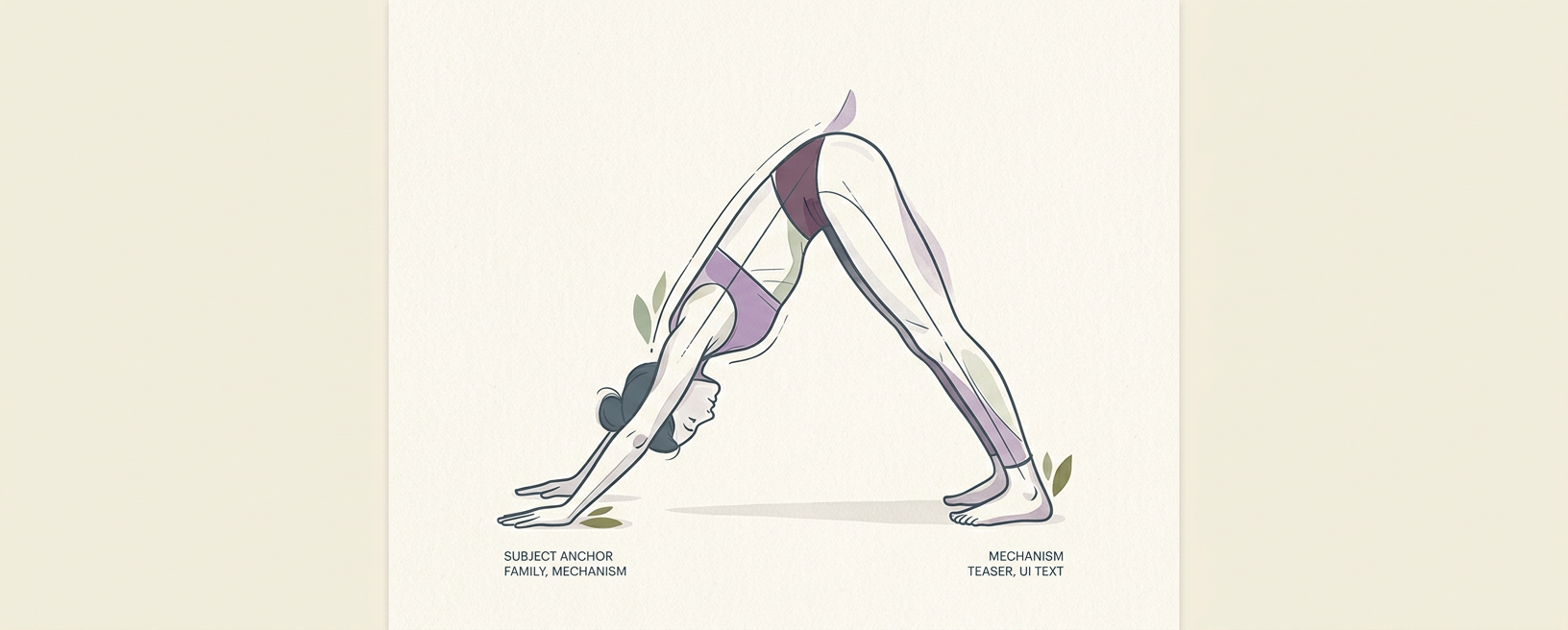
A foundational inversion that facilitates axial decompression and proprioceptive input, promoting nervous system modulation.
Yoga · Hatha Yoga, codified by B.K.S. Iyengar · Diffuse tension, mental overactivity, or a need for grounding and spatial reorientation. · Hold for 5-10 breath cycles. Repeat 2-3 times as a standalone practice or integrated into a sequence.
Why it works
Adho Mukha Svanasana inverts the normal gravitational pull on the spine, promoting decompression of the vertebral discs and lengthening of the posterior fascial chain. The sustained weight-bearing through the hands and feet provides significant proprioceptive input, stimulating the mechanoreceptors in the joints and soft tissues. This input is relayed to the central nervous system, contributing to a sense of embodied presence and downregulating sympathetic nervous system activity. The inverted position also alters blood flow distribution, which can impact baroreceptor activity and vagal tone.
How to practice
Starting Position: Begin on hands and knees, with wrists directly under shoulders and knees under hips. Spread fingers wide, rooting through the base of the index finger and thumb.
Lift Hips: On an exhalation, press firmly through palms and feet, lifting hips towards the ceiling. Straighten legs as much as comfortable, maintaining a micro-bend in the knees if hamstrings are tight.
Spinal Elongation: Focus on lengthening the spine from the base of the skull to the tailbone. Allow the head to hang freely, releasing neck tension. Draw shoulder blades down the back.
Weight Distribution: Distribute weight evenly between hands and feet. Externally rotate upper arms slightly, softening inner elbows. Press heels towards the floor without straining.
Alignment Refinement: Hips remain high, creating an inverted "V" shape. Gaze towards the navel or thighs to maintain cervical spine neutrality.
Starting Position: Begin on hands and knees, with wrists directly under shoulders and knees under hips. Spread fingers wide, rooting through the base of the index finger and thumb.
Lift Hips: On an exhalation, press firmly through palms and feet, lifting hips towards the ceiling. Straighten legs as much as comfortable, maintaining a micro-bend in the knees if hamstrings are tight.
Spinal Elongation: Focus on lengthening the spine from the base of the skull to the tailbone. Allow the head to hang freely, releasing neck tension. Draw shoulder blades down the back.
Weight Distribution: Distribute weight evenly between hands and feet. Externally rotate upper arms slightly, softening inner elbows. Press heels towards the floor without straining.
Alignment Refinement: Hips remain high, creating an inverted "V" shape. Gaze towards the navel or thighs to maintain cervical spine neutrality.