Daily movement
Supine Pelvic Curl for Core Integration
This movement integrates the deep core and pelvic floor for improved spinal stability.
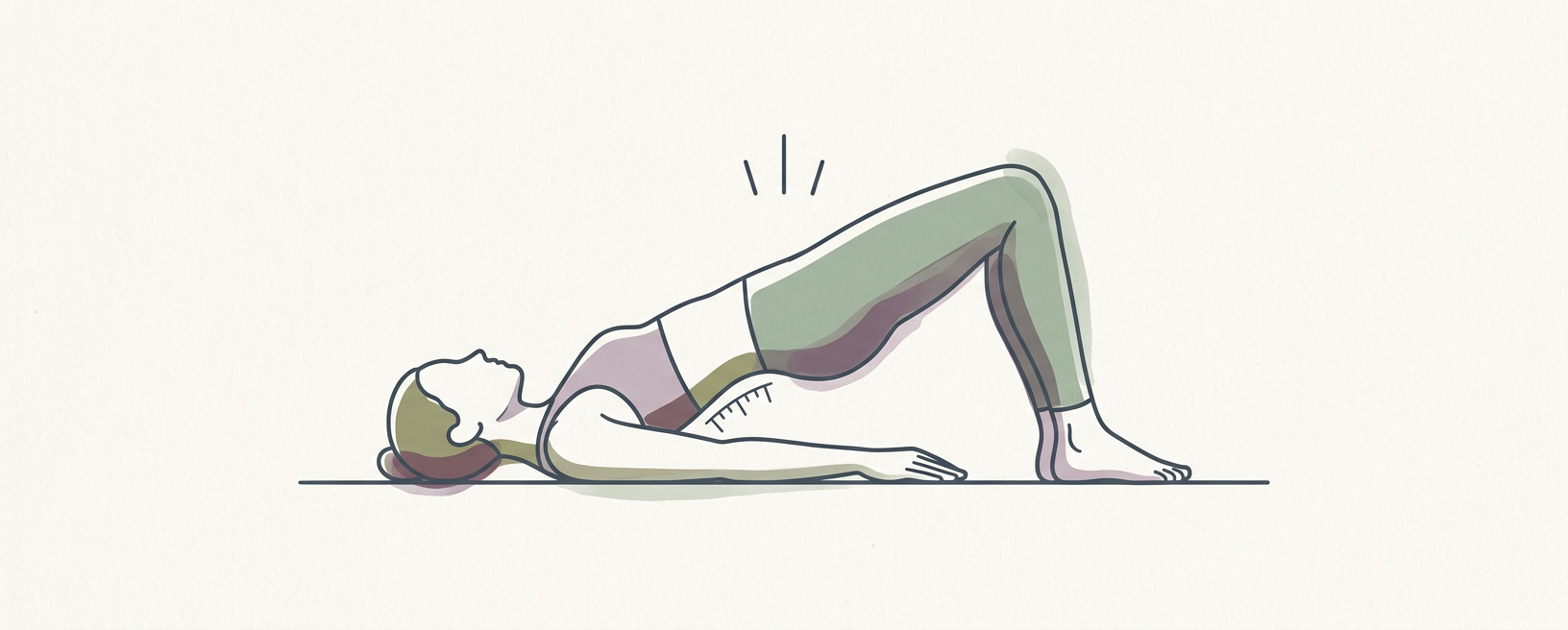
This movement integrates the deep core and pelvic floor for improved spinal stability.
healing pilates · Classical Pilates (Joseph Pilates) · When I feel disconnected from my core, or my lower back feels unsupported, this practice helps re-establish intrinsic stability. · 5–8 repetitions, controlled breath per movement
Why it works
The Pelvic Curl engages the transversus abdominis and multifidus muscles, crucial for lumbopelvic stability, while coordinating with the pelvic floor. As you articulate the spine segment by segment, it stimulates proprioceptors along the vertebral column, sending precise feedback to the central nervous system. This enhances motor control and somatosensory awareness. Simultaneously, the rhythmic undulation of the spine, paired with breath, mobilizes the thoracolumbar fascia and deep spinal ligaments, improving hydration and elasticity. This reduces static load on spinal structures and fosters a sense of integrated support, dampening sympathetic nervous system arousal and promoting a regulated state.
How to practice
Lie supine, knees bent: Place your feet flat on the floor, hip-width apart, parallel, about a hand's distance from your glutes. Arms rest by your sides, palms down. Gaze is soft, towards the ceiling.
Inhale to prepare: Allow your breath to fill your lower ribs, noticing a subtle expansion in your back against the mat. Feel your sacrum heavy on the floor.
Exhale, begin to peel: Gently imprint your lower back into the mat as you exhale, initiating a subtle pelvic tilt. Continue to exhale as you peel your tailbone, then sacrum, then each vertebra off the mat, one by one. Imagine a string pulling your knees away from you, lengthening the spine.
Inhale at the top: Pause briefly at the apex of the curl, forming a long diagonal line from your knees to your shoulders. Feel the engagement of your hamstrings and glutes, and a deep connection through your core.
Exhale, articulate down: Slowly reverse the movement, articulating each vertebra back onto the mat, pressing down from the upper back, then mid-back, then lower back, until your sacrum gently settles back to the starting position. Maintain length through the spine.
Repeat with intention: Focus on the sequential movement of your spine and the smooth coordination with your breath. I try to feel each bony segment.
Lie supine, knees bent: Place your feet flat on the floor, hip-width apart, parallel, about a hand's distance from your glutes. Arms rest by your sides, palms down. Gaze is soft, towards the ceiling.
Inhale to prepare: Allow your breath to fill your lower ribs, noticing a subtle expansion in your back against the mat. Feel your sacrum heavy on the floor.
Exhale, begin to peel: Gently imprint your lower back into the mat as you exhale, initiating a subtle pelvic tilt. Continue to exhale as you peel your tailbone, then sacrum, then each vertebra off the mat, one by one. Imagine a string pulling your knees away from you, lengthening the spine.
Inhale at the top: Pause briefly at the apex of the curl, forming a long diagonal line from your knees to your shoulders. Feel the engagement of your hamstrings and glutes, and a deep connection through your core.
Exhale, articulate down: Slowly reverse the movement, articulating each vertebra back onto the mat, pressing down from the upper back, then mid-back, then lower back, until your sacrum gently settles back to the starting position. Maintain length through the spine.
Repeat with intention: Focus on the sequential movement of your spine and the smooth coordination with your breath. I try to feel each bony segment.