Daily movement
Ruck March with Cadence for Metabolic Health
This ruck march protocol improves metabolic markers by optimizing load, duration, and cadence.
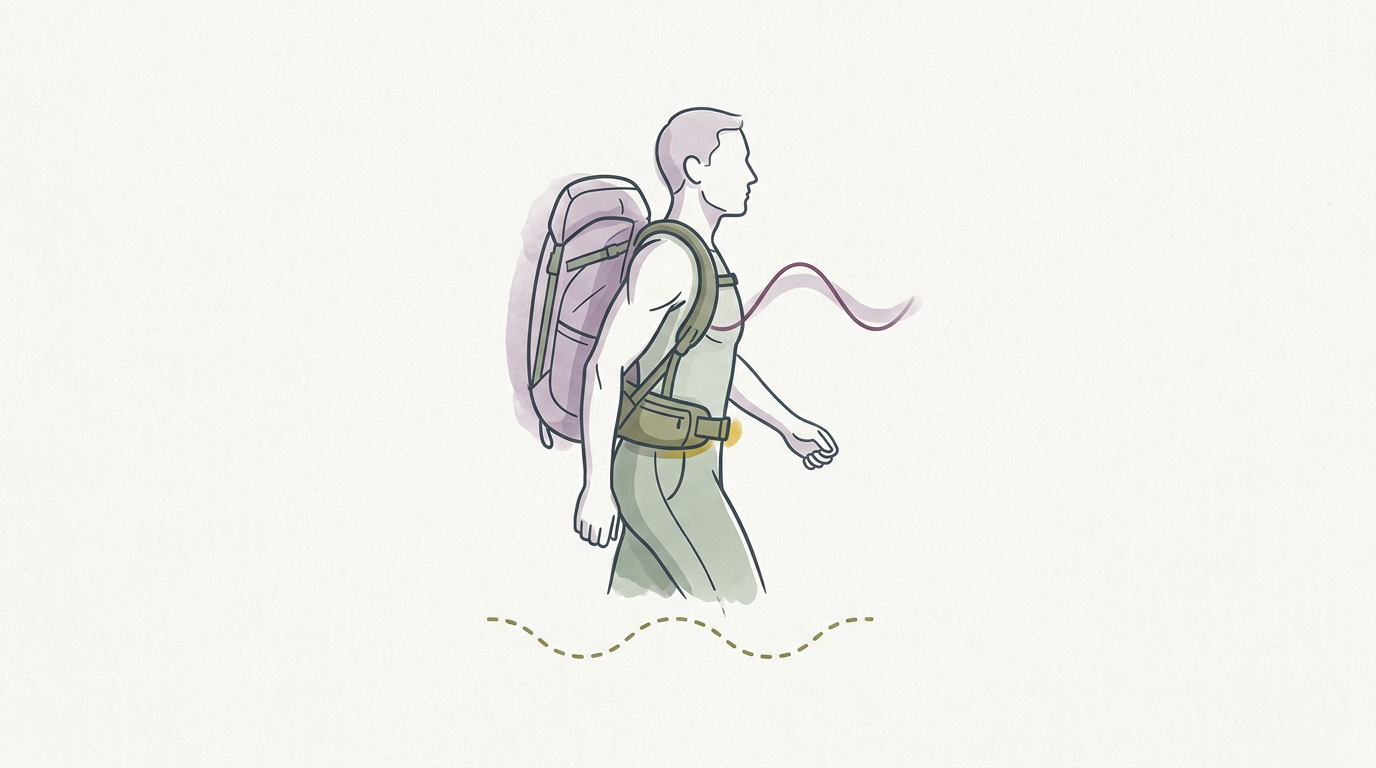
This ruck march protocol improves metabolic markers by optimizing load, duration, and cadence.
walking / rucking · Michael Easter, "The Comfort Crisis" · This meets the feeling of physical stagnation, where the body seeks an effective, yet accessible, cardiovascular and strength challenge beyond typical gym routines. · 30-60 minutes, 2-3 times per week
Why it works
Rucking engages large muscle groups across the legs, core, and back, demanding a systemic metabolic response that burns calories and improves insulin sensitivity. The sustained load, equivalent to 10-20% of your body weight, acts as a low-impact resistance training stimulus, building muscular endurance and bone density without excessive joint stress. From a nervous system perspective, the rhythmic, repetitive nature of walking, combined with a focused cadence, promotes a parasympathetic shift post-activity, despite the initial physical exertion. Michael Easter notes this type of sustained effort cultivates a mental toughness that spills over into everyday resilience. It’s a purposeful stressor that, when recovered from, increases baseline capacity.
How to practice
Select your load. I usually start with 10% of my body weight. For me, that’s 15 lbs. Place it in a backpack, ensuring the weight is high and close to your back. Distribute it evenly to avoid uneven load on your shoulders or spine. Use a pack with a hip belt if available to transfer some load to your pelvis.
Find your cadence. Aim for a pace that elevates your heart rate but allows you to maintain a conversation. For most, this means 120-130 steps per minute. A metronome app on your phone can help establish this rhythm initially. You’re not trying to sprint; you’re sustaining a challenging walk.
Engage your core. Pull your navel slightly towards your spine without holding your breath. Keep your shoulders relaxed and down, not hunched. Your gaze should be forward, about 10-15 feet ahead of you, maintaining a neutral neck position.
Breathe rhythmically. Coordinate your breath with your steps. Try a 2-in, 2-out pattern (inhale for two steps, exhale for two steps) to regulate oxygen intake and carbon dioxide expulsion. This controlled breathing reinforces a steady pace.
Maintain posture. Keep your spine long, avoiding excessive leaning forward or backward. Let your arms swing naturally, contributing to forward momentum rather than creating tension in your upper body.
Walk the distance. Aim for a minimum of 30 minutes. You’re building endurance here, not speed. Focus on maintaining that steady pace and controlled breath for the entire duration. This isn't about covering ground fast.
Select your load. I usually start with 10% of my body weight. For me, that’s 15 lbs. Place it in a backpack, ensuring the weight is high and close to your back. Distribute it evenly to avoid uneven load on your shoulders or spine. Use a pack with a hip belt if available to transfer some load to your pelvis.
Find your cadence. Aim for a pace that elevates your heart rate but allows you to maintain a conversation. For most, this means 120-130 steps per minute. A metronome app on your phone can help establish this rhythm initially. You’re not trying to sprint; you’re sustaining a challenging walk.
Engage your core. Pull your navel slightly towards your spine without holding your breath. Keep your shoulders relaxed and down, not hunched. Your gaze should be forward, about 10-15 feet ahead of you, maintaining a neutral neck position.
Breathe rhythmically. Coordinate your breath with your steps. Try a 2-in, 2-out pattern (inhale for two steps, exhale for two steps) to regulate oxygen intake and carbon dioxide expulsion. This controlled breathing reinforces a steady pace.
Maintain posture. Keep your spine long, avoiding excessive leaning forward or backward. Let your arms swing naturally, contributing to forward momentum rather than creating tension in your upper body.
Walk the distance. Aim for a minimum of 30 minutes. You’re building endurance here, not speed. Focus on maintaining that steady pace and controlled breath for the entire duration. This isn't about covering ground fast.