Daily movement
Mini-Trampoline Sequence for Lymphatic Flow
This rebounding sequence stimulates lymphatic circulation and recalibrates your vestibular system, bringing a felt sense of presence.
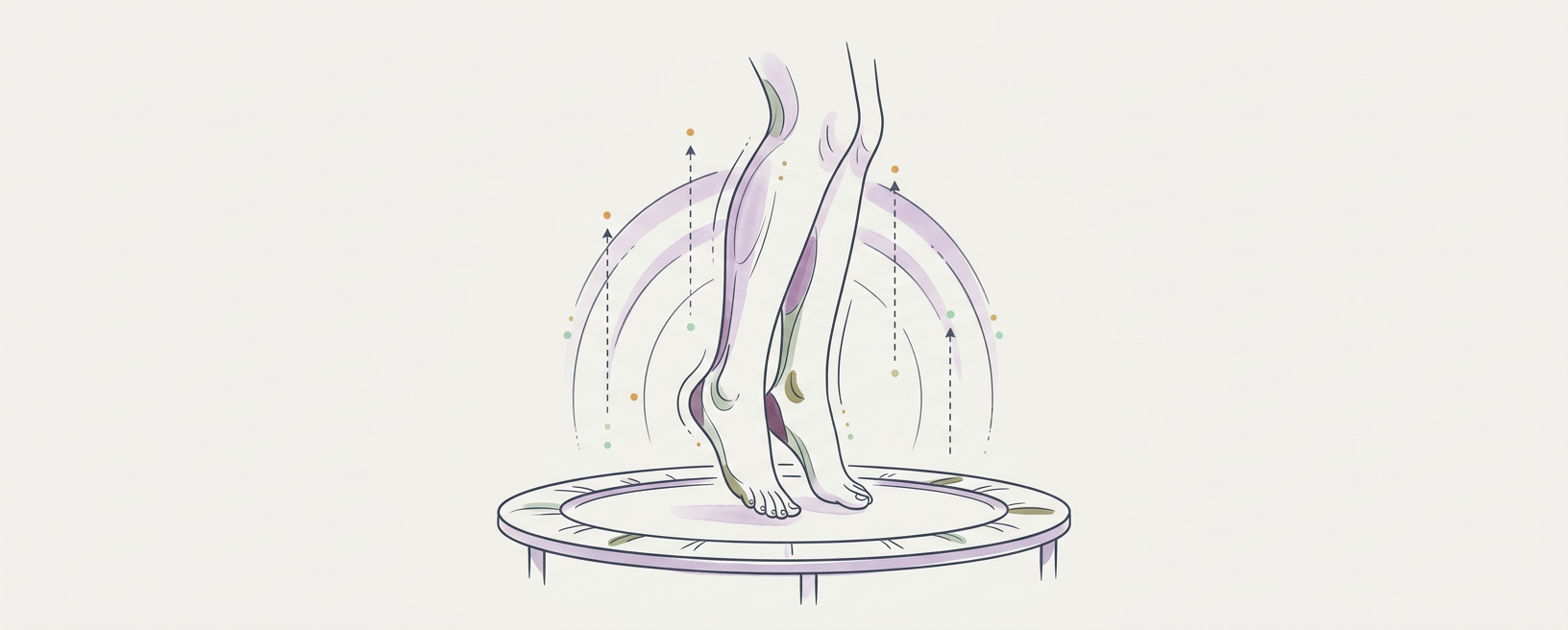
This rebounding sequence stimulates lymphatic circulation and recalibrates your vestibular system, bringing a felt sense of presence.
rebounding · Nasa research on exercise in space, Al Carter popularized health bouncing · When I feel sluggish, cognitively foggy, or physically stagnant from prolonged sitting, this sequence clears the static. · 2-3 minutes of health bounce, 1 minute jog, 1 minute jumping jacks, 1 minute cool-down health bounce.
Why it works
Rebounding addresses systemic stagnation by leveraging gravitational forces and rhythmic oscillation. The vertical acceleration and deceleration during the bounce create a pumping action on the one-way valves of the lymphatic system, encouraging fluid movement away from tissues and towards filtering nodes. This mechanical flushing enhances cellular detoxification and immune function. Concurrently, the repeated, yet gentle, impact stimulates the otolith organs in the inner ear, which are critical for processing linear acceleration and head tilt. This vestibular input helps recalibrate spatial orientation and improves balance, directly influencing the vagal nerve and promoting a more regulated nervous system state. The rhythmic nature of rebounding further supports parasympathetic activation, shifting the body from a "tired but wired" state toward calm alertness.
How to practice
Start with the Health Bounce: Stand on the mini-trampoline with feet hip-width apart, knees soft. Keep your feet in contact with the mat. Begin a gentle, rhythmic bounce, focusing on the vertical motion. Your heels might lift slightly, but your toes stay down. Let your arms hang loosely or swing gently. Breathe deeply, allowing the exhale to deepen the bounce. Gaze softly forward.
Transition to a Gentle Jog: Gradually lift your feet higher off the mat, alternating legs as if you're jogging in place. Keep the knees soft, landing midfoot with each step. Maintain an upright posture, shoulders relaxed, and arms pumping gently. Coordinate your breath with the movement: inhale for 2-3 steps, exhale for 2-3 steps.
Add in Jumping Jacks: Open your legs wide as your arms sweep up to meet overhead, then bring your legs together as your arms return to your sides. Land softly on the midfoot. Keep the movement fluid and controlled. Avoid locking your knees at any point. Breathe consistently, letting the movement dictate the rhythm.
Cool Down with Health Bounce: Return to the gentle health bounce, progressively reducing the height of your bounces. Allow your heart rate to slowly come down. Finish with a few deep, diaphragmatic breaths while standing still on the mat.
Start with the Health Bounce: Stand on the mini-trampoline with feet hip-width apart, knees soft. Keep your feet in contact with the mat. Begin a gentle, rhythmic bounce, focusing on the vertical motion. Your heels might lift slightly, but your toes stay down. Let your arms hang loosely or swing gently. Breathe deeply, allowing the exhale to deepen the bounce. Gaze softly forward.
Transition to a Gentle Jog: Gradually lift your feet higher off the mat, alternating legs as if you're jogging in place. Keep the knees soft, landing midfoot with each step. Maintain an upright posture, shoulders relaxed, and arms pumping gently. Coordinate your breath with the movement: inhale for 2-3 steps, exhale for 2-3 steps.
Add in Jumping Jacks: Open your legs wide as your arms sweep up to meet overhead, then bring your legs together as your arms return to your sides. Land softly on the midfoot. Keep the movement fluid and controlled. Avoid locking your knees at any point. Breathe consistently, letting the movement dictate the rhythm.
Cool Down with Health Bounce: Return to the gentle health bounce, progressively reducing the height of your bounces. Allow your heart rate to slowly come down. Finish with a few deep, diaphragmatic breaths while standing still on the mat.