All movements
Loading…
Previous movements
Previous movements open for members. Today's movement is always free.
Daily movement
Melt deep epigastric tension and soften upper belly guarding through gentle visceral contact.
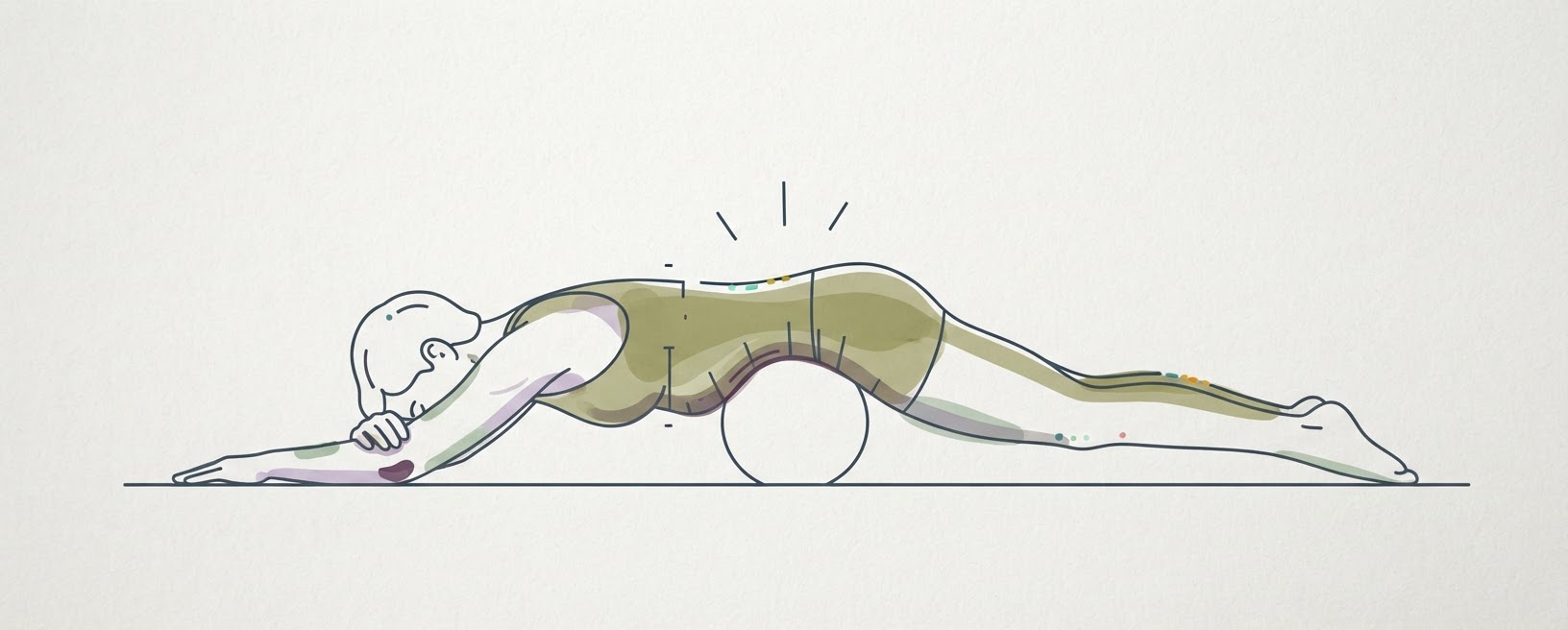
Melt deep epigastric tension and soften upper belly guarding through gentle visceral contact.
fascia / myofascial release · Fascia research and manual release lineage of Robert Schleip · High abdominal guarding, shallow apical breathing, and epigastric tension that locks your diaphragm. · 3 minutes total, spending 90 seconds on each side of the upper abdomen
When you brace through your upper stomach, your diaphragm locks against the transverse abdominis and the fascial sheath of the rectus abdominis. I used to dig hard massage balls into my belly hoping to force the tissue to surrender, which only triggered protective guarding. Robert Schleip's research at Ulm University demonstrates that deep fascia contains thousands of low-threshold mechanoreceptors, specifically Ruffini endings and free nerve endings. Sustained, gentle shear deforms the ground substance between visceral layers, restoring fluid hydration and interstitial sliding. Mechanically, low-load sustained pressure triggers a parasympathetic downshift by stimulating vagal afferents around the celiac plexus. This shifts your nervous system away from sympathetic splinting, dropping resting tone in the respiratory diaphragm and widening your breathing baseline.
Lie prone on an unrolled mat on your living room floor, resting your forehead on your stacked hands. Take two quiet breaths through your nose to register the weight of your pelvis.
Slide a soft, squishy rubber ball—about the size of an orange—under your left upper abdomen, just below the front rim of your ribcage and two inches lateral to your navel. Keep your lower ribs clear.
Let your body weight drape over the sphere without bracing against it. If your stomach muscles push back or tense up, prop your chest on a thin pillow to dial back the downward pressure.
Draw a slow four-second breath through your nose directly into your middle back and flanks. Notice the ball gently resisting the front wall of your belly.
Exhale softly through parted lips for six seconds, letting your abdominal wall sink around the rubber curve. Stay here for five slow breath cycles, keeping your glutes slack.
Roll the ball across to the right side of your upper abdomen, settle your torso down, and repeat the five slow breath cycles. Slide the ball out and lie flat for thirty seconds before standing.