All movements
Loading…
Previous movements
Previous movements open for members. Today's movement is always free.
Daily movement
Release pelvic bracing and restore reciprocal abdominal breath mechanics through articulated spinal bridging.
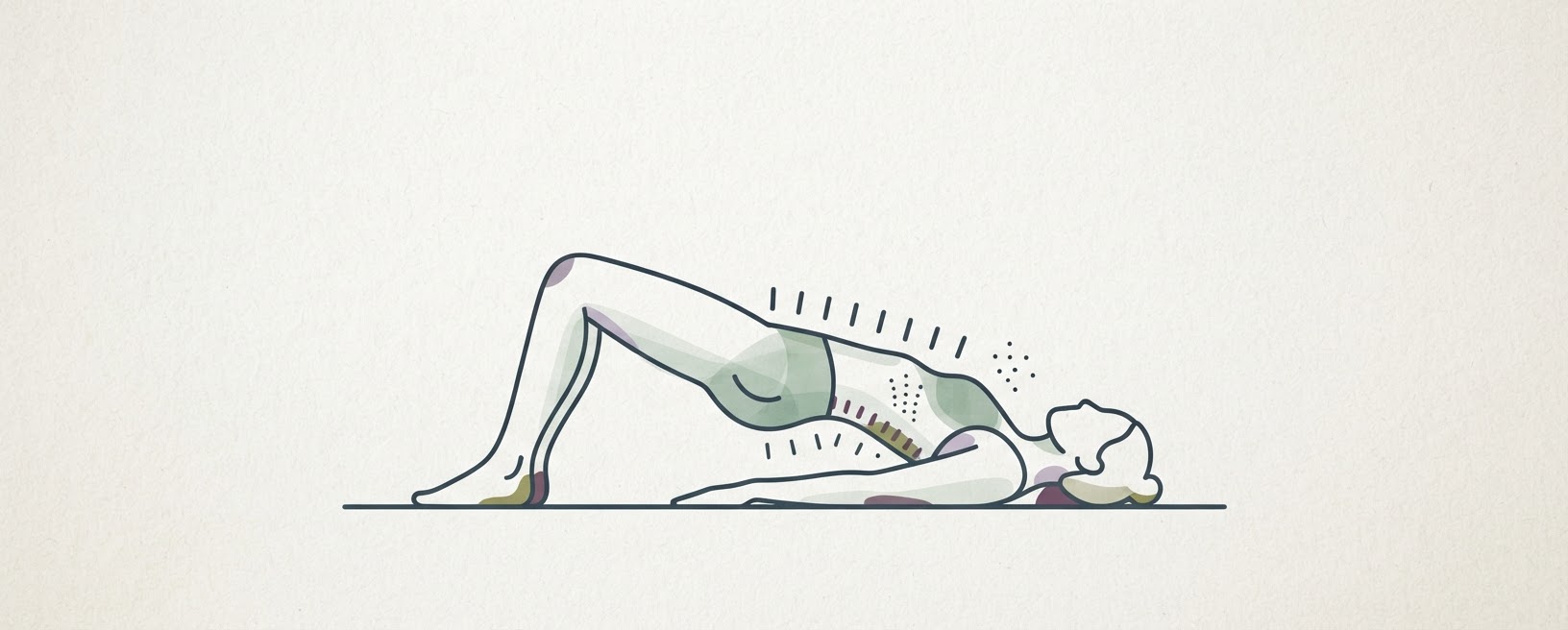
Release pelvic bracing and restore reciprocal abdominal breath mechanics through articulated spinal bridging.
healing pilates · Polestar Pilates (Brent Anderson) and Eve Gentry rehabilitation lineage · Midline guarding, shallow apical breathing, and persistent pelvic floor or lower back tension following conflict or alert states. · 5 slow repetitions, pausing 1 breath at the top
When adrenaline surges, the body defaults to anterior guarding: the rectus abdominis clamps, the pelvic floor contracts upward in defensive tone, and breathing migrates into the upper chest. In this state, segmental control of the lumbar spine vanishes, leaving the lower back locked into rigid extension.
The articulated pelvic curl breaks that grip by coupling slow mechanical articulation with reciprocal breathing. As you peel the spine up segment by segment, you load the hamstrings and intrinsic pelvic stabilizers while placing the superficial spinal extensors on stretch. Moving the pelvis through posterior tilt fires the transversus abdominis and obliques on the exhale, which directly mobilizes the thoracolumbar fascia. Simultaneously, lateral costal inhalation expands the lower ribcage against the floor, gently eccentric-loading the diaphragm and stimulating parasympathetic motor neurons via the vagus nerve. The result is a drop in resting autonomic tone and an immediate decrease in axial compressive force across the lumbosacral junction.
Lie on your back on a firm floor or mat with your knees bent and feet flat, placed hip-distance apart and roughly 15 cm away from your seat. Rest your arms along your sides, palms facing down.
Inhale through your nose into the back and sides of your ribcage, allowing the belly and pelvic floor to soften completely without pushing your lower back into the floor.
Exhale softly through pursed lips, draw the front hip points toward each other, and gently tuck the pelvis so your lower back lengthens flat against the floor.
Press evenly through your heels and big toes, then peel your spine off the mat one vertebra at a time until your hips, knees, and shoulders form a straight diagonal line. Keep your neck long and your eyes pointed straight at the ceiling.
Hold the high position for a full, calm nasal inhale, filling the lateral ribcage while keeping your glutes and deep abdominals active without clenching your gluteus medius or tightening your throat.
Exhale slowly as you lower back down, melting the sternum first, then the mid-back, lower back, and sacrum onto the mat in sequence. Allow the pelvis to return to neutral before beginning the next repetition.