Nervous System
Nervous System Regulation Vs Mindfulness
People often use 'mindfulness' and 'nervous system regulation' interchangeably. The wellness industrial complex has sold them as a two-for-one deal, like a shampoo-conditioner combo for the soul. This is a tidy and marke
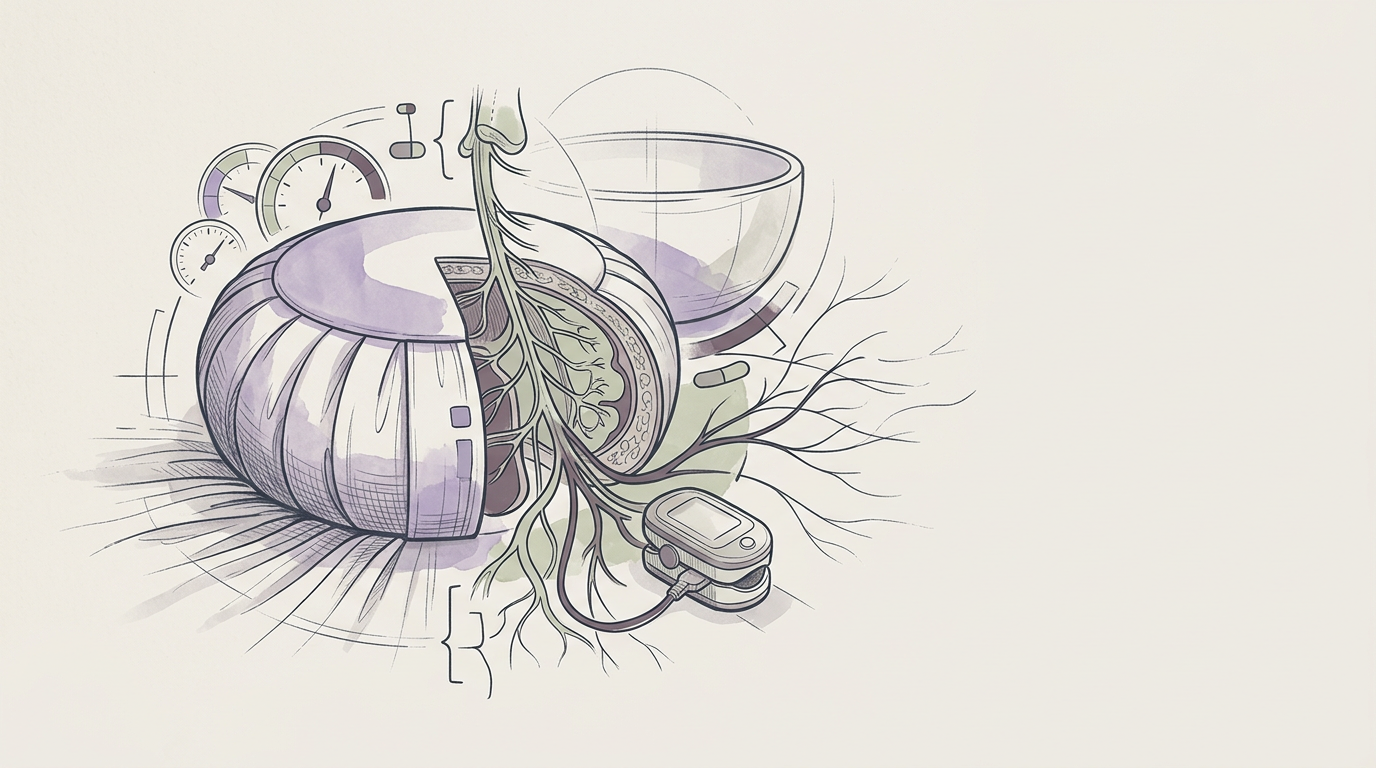
People often use 'mindfulness' and 'nervous system regulation' interchangeably. The wellness industrial complex has sold them as a two-for-one deal, like a shampoo-conditioner combo for the soul. This is a tidy and marketable idea. It is also fundamentally wrong. The ongoing debate over nervous system regulation vs mindfulness isn’t just semantics; confusing the two can leave you feeling stuck, or worse, make things feel more chaotic. Mindfulness is an act of observation. Regulation is the physiological state of the system being observed. They are not the same thing.
Common Questions
What's the main difference between nervous system regulation and mindfulness?
Nervous system regulation is the balanced, flexible state of your autonomic nervous system—your body’s capacity to handle stress and return to calm. Mindfulness is a mental skill of paying attention to the present moment without judgement. You can be mindfully aware that you are completely, utterly dysregulated. One is the weather, the other is reading the forecast.
Can mindfulness actually make anxiety worse?
For some people, absolutely. If your system is already in a high state of threat, sitting still and turning your attention inward can feel profoundly unsafe. It can amplify overwhelming sensations and confirm the body's narrative that something is deeply wrong, a phenomenon that can be particularly acute for those with trauma histories.
Is one more important than the other?
They aren't in competition; they have different jobs. Regulation is the non-negotiable foundation for health, performance, and connection. Mindfulness is a powerful tool, but it's one of many. Starting with physiological regulation first often makes mindfulness practices more accessible and effective later on. Trying to meditate your way out of a physiological panic state is often a losing battle.
Related anchors: vagal tone anchor · gut-immune anchor · HRV anchor
Observation Is Not Intervention
The core promise of pop-mindfulness is that awareness is curative. Notice your anxiety without judgment, and it will magically dissipate. Sometimes, that works. Often, it doesn't. Being exquisitely aware of the sensations of a panic attack is like being a very mindful passenger on a crashing plane. The view is interesting, but it doesn't solve the core problem.
Your nervous system doesn't operate on narrative goodwill. It operates on neuroception—a constant, subconscious scan for cues of safety and danger. When its threat-detection circuits are screaming, telling your prefrontal cortex to "just notice" the fire alarm is a category error. The alarm is a signal that requires an action, not just quiet contemplation. True nervous system regulation is about learning which levers actually turn the alarm off.
Allostatic Load vs Your Meditation Streak
When stress is chronic, the system pays a biological price. Bruce McEwen, a foundational researcher in this field, called this "allostatic load"—the cumulative wear and tear on the body from being stuck in a state of high alert (McEwen, 2019). Your hypothalamic-pituitary-adrenal (HPA) axis—the command chain for your primary stress hormone, cortisol—starts to run hot, leading to inflammation, metabolic disruption, and cognitive fog.
Your HPA axis doesn't have an opinion on your mindfulness streak in an app. It responds to physiological data. This is why interventions that directly target the body’s state, like specific breathing patterns or temperature changes, can be more effective than purely cognitive approaches when the system is overloaded. Paying attention is a fine skill, but it doesn't, by itself, clear out excess cortisol or dial down systemic inflammation. You can't observe your way out of high allostatic load.
Mindfulness is an excellent tool for describing the fire. Regulation is what puts the fire out.
The Architecture of State: Your Interoceptive GPS
Let's get nerdy for a moment. Your brain’s ability to know what’s happening inside your body is a specific sense called interoception. It's carried by a dedicated neural pathway that terminates in a region of the brain called the insular cortex (Craig, 2002). This is your internal GPS. It tells you if you're hungry, tired, safe, or in danger. Mindfulness practice is, in essence, a workout for your interoceptive circuits. It teaches your brain to listen more closely to the body's signals.
This is incredibly useful. But it's only half the picture. Regulation is what happens downstream from that signal. For example, heart rate variability (HRV), the beat-to-beat variation in your heart rhythm, is a direct readout of your vagal tone (the activity of the vagus nerve, a primary brake on the stress response). According to recent research, practices like resonant frequency breathing directly increase HRV by mechanically stimulating the vagus nerve (Lehrer, 2020). You are not just noticing calm; you are actively building it by changing the very rhythm of your physiology. This is engineering, not just observation. You can track this data in a dedicated practice like the Kokorology Journal.
When Stillness Feels Threatening
There's a reason many people with a history of trauma or severe anxiety say "I can't meditate." It's not a personal failing. As Bessel van der Kolk has exhaustively documented, trauma is stored in the body as dysregulated autonomic states (van der Kolk, 2014). For a system primed for threat, stillness can be interpreted as the precursor to being attacked—a state of frozen, helpless terror.
Asking someone in this state to sit still and "be with their sensations" is like asking someone with a broken leg to just "be with" the feeling of walking it off. It can feel invalidating and even re-traumatising. In these cases, the entry point to regulation isn't mindfulness; it's physiology. It’s movement. It’s shaking, paced breathing, cold exposure, or rhythmic activities that discharge stored survival stress from the tissues. These are the kinds of tools we curate inside our library of Hacks for exactly this reason. Regulation must be earned in the body first. Awareness can follow.
What to do this week
Trying to build mindfulness on a foundation of dysregulation is like polishing the brass on the Titanic. The effort is noted, but perhaps misdirected. Build the hull first.
- Stop trying to "feel calm". For three days, give yourself permission to not meditate or practice formal mindfulness. Instead, focus on noticing one simple, neutral physical sensation three times a day. The feeling of your feet on the floor. The weight of your phone in your hand. The temperature of the water as you wash your hands. No judgment, no goal. Just data.
- Introduce a physiological shift. Once a day, try a 'physiological sigh'. Inhale deeply through your nose, and just before you reach the top, sneak in another sharp sip of air to fully inflate the lungs. Then, exhale slowly and passively through your mouth for as long as possible. This is one of the fastest ways to down-regulate the HPA axis. Do it twice.
- Notice the aftermath. After the physiological sigh, then practice a minute of mindfulness. Notice the new internal landscape. Is there more space? Is your jaw less tight? Is your breathing slower? You're using mindfulness not to force a state, but to register the effects of a physiological intervention you just ran.
TL;DR
The ongoing discussion of nervous system regulation vs mindfulness is really about sequence. Regulation is the physiological state of your body’s stress systems; mindfulness is the skill of awareness. While mindfulness can be a tool for regulation, it can also amplify distress if your system lacks the capacity to feel safe in stillness (van der Kolk, 2014). A more effective approach is to first use physiological tools—like deliberate breathing patterns (Lehrer, 2020) or movement—to interrupt the stress response driven by allostatic load (McEwen, 2019), and then use mindfulness to notice and anchor that new, more regulated state.
Where this fits in the Kokorology system
This distinction is central to our entire approach. Start by understanding the principles of nervous system regulation as the foundation. Then, when you’re ready to address the direct drivers of stress, begin with a targeted protocol like the Cortisol Anchor.
Closing
Don't let the wellness world sell you a false equivalence. Learn to separate the act of looking from the thing being looked at. Your capacity to sit with yourself starts with building a self that feels safe to sit with. The first step is always architectural, not aspirational.
- Start with a structured on-ramp: The 7-Day Reset.
- Learn the skill from the ground up: The Regulation (L1) course.
- Get a free tool to start right now: The Free Guide to Your Nervous System.
Sources
- Craig, A. D. (2002). How do you feel? Interoception: the sense of the physiological condition of the body. Nature Reviews Neuroscience.
- Lehrer, P. M., et al. (2020). Heart rate variability biofeedback improves emotional and physical health and performance: A systematic review and meta-analysis. Applied Psychophysiology and Biofeedback.
- McEwen, B. S. (2019). The brain on stress: toward an integrative approach to vulnerability and resilience. The American Journal of Psychiatry.
- van der Kolk, B. A. (2014). The Body Keeps the Score: Brain, Mind, and Body in the Healing of Trauma. Viking.