Nervous System
Nervous System Regulation Vs Mindfulness
People often use 'mindfulness' and 'nervous system regulation' interchangeably. The wellness industrial complex has sold them as a two-for-one deal, like a shampoo-conditioner combo for the soul. This is a tidy and marke
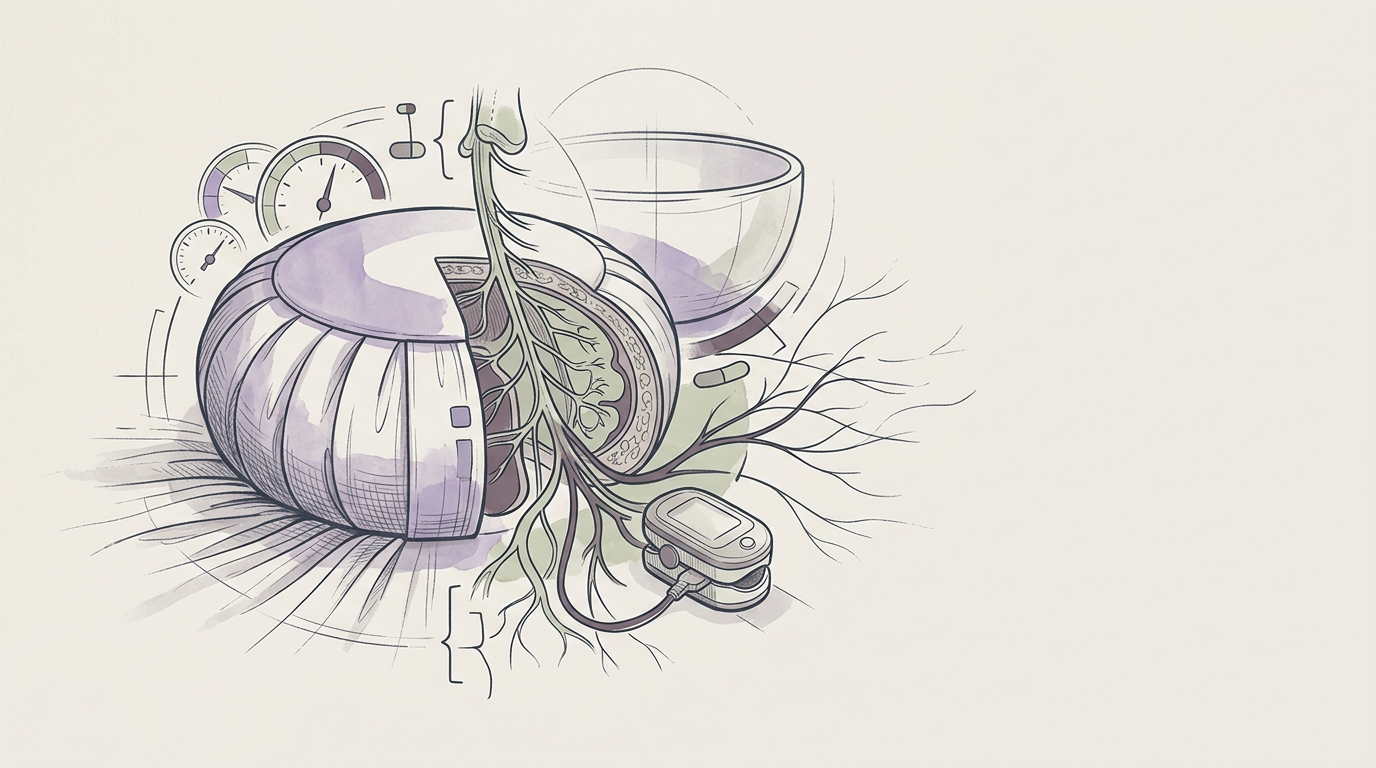
A client sat in my studio last week, gesturing at her rigidly raised shoulders, explaining she was on day forty of a meditation streak to cure her panic attacks. The wellness industry sells nervous system regulation vs mindfulness as the exact same product, prescribing cognitive observation as a biological intervention. Sitting completely still to watch your threat-detection circuitry redline just makes you a highly attentive witness to your own biological alarm bells.
You already know what it feels like when the physical systems get stuck in the on position. It’s the 3pm jaw clench that gives you a headache by dinner, the open fridge with absolutely no hunger, and the doom-scroll at 11:47pm because your brain is hunting for a threat to justify the adrenaline in your bloodstream. You’re tired but wired, staring at the ceiling and doing the math on how many hours you have left before the alarm goes off. You try to meditate, but the silence just amplifies the ringing in your ears. When you are exhausted but can't rest, sitting quietly doesn't bring peace. You just get a front-row seat to the sensation of being anxious for no reason, while your shoulders refuse to drop in the shower and your breath gets trapped somewhere around your collarbones.
Common Questions
What is the main difference between regulation and mindfulness?
Regulation dictates the physical weather system inside your body, governing your capacity to handle stress and return to baseline. Mindfulness is your cognitive ability to accurately read the forecast. You can be exquisitely mindful of the fact that you are entirely physically dysregulated.
Can mindfulness make anxiety worse?
Yes. If your physiology is trapped in a high-threat state, turning your attention inward feels profoundly unsafe to the brain. Focusing intensely on an elevated heart rate or a tight chest amplifies the overwhelming sensations and confirms your internal suspicion that you are in active danger.
Do I need to stop meditating?
Sequence dictates success here. Physiological regulation must arrive before cognitive awareness. Using physical levers to quiet the body makes mental observation accessible. Trying to out-think a physiological panic state usually just results in a more frustrating panic state.
The Observation Trap
The core promise of app-based mindfulness claims that noticing a feeling makes it dissipate. Your nervous system operates on neuroception, constantly scanning the environment for cues of safety and danger long before your conscious mind gets involved. When those threat-detection circuits scream, your prefrontal cortex asking you to calmly label your thoughts is a comically mismatched response. The physical alarm requires a physical action. True nervous system regulation relies on physiological levers that actually force the hardware to power down.
The Hormone Loop
Chronic stress creates a biological toll called allostatic load. Your hypothalamic-pituitary-adrenal (HPA) axis—the command chain running from your brain to your adrenal glands—starts running constantly hot. This dumps cortisol into your bloodstream, alters your metabolic baseline, and degrades your cognitive focus. I used to think I could out-observe this state, until I tracked my own resting heart rate after weeks of ignoring my physical limits.
Your HPA axis doesn't care about your meditation streak. It responds exclusively to physical data. Interventions targeting the body's state directly alter this loop.
Mindfulness perfectly describes the internal fire. Physiology actually puts it out.
Interoceptive Data
Interoception is the specific neural pathway that carries sensory data from your viscera to your insular cortex. It tells you if you're hungry, safe, or actively in danger. Mindfulness acts as a workout for these interoceptive circuits, teaching your brain to listen closely. That is a useful skill.
Regulation happens entirely downstream from that signal. Heart rate variability (HRV) is a direct readout of your vagal tone. You increase HRV by mechanically stimulating the vagus nerve through specific respiration patterns, changing the very rhythm of your biology. You can track this shift inside a dedicated practice like the Kokorology Journal.
The Stillness Threat
Many of the people I work with confess they fail at meditating. For a physiology primed for threat, stillness is interpreted as a precursor to an attack. It registers as a state of frozen, helpless terror. Asking a highly activated body to sit with its sensations feels deeply invalidating.
The immediate entry point requires movement. Shaking, paced breathing, and rhythmic activities discharge that survival energy from the tissues. Kokorology curate these specific tools inside the Hacks library because shifting the physical state must happen before you try to observe it.
What to do this week
- Drop the stillness requirement. For the next three days, give yourself permission to skip the meditation cushion. Instead, notice one neutral physical sensation while you are actively moving. The temperature of the water as you wash your hands, or the weight of your keys. Just collect the data.
- Run a physiological sigh. Inhale deeply through your nose, take a second sharp sip of air at the top to fully expand the lungs, and exhale passively through your mouth. This mechanically forces the HPA axis to down-regulate. Do this twice in a row when you feel your jaw tighten.
- Track the aftermath. After you run that breathing pattern, practice your minute of mindfulness. Notice the new internal state. You're using observation to register the effects of an intervention you just completed.
Where this fits in the Kokorology system
Understanding this sequence drives the entire clinical approach. You learn the raw mechanisms of state change in the Regulation (L1) course. When you're ready to address the direct physical drivers of chronic stress, you apply a targeted protocol like the Cortisol Anchor.
Closing
The wellness market sells a comfortable illusion that awareness alone creates safety. Your capacity to sit quietly with yourself begins by cultivating a physical state that feels safe to inhabit. Once the physiology calms down, the mind can finally rest.
- Start with a structured on-ramp: The 7-Day Reset.
- Learn the specific mechanisms: The Regulation (L1) course.
- Grab a quick tool for today: The Free Guide to Your Nervous System.
TL;DR
The ongoing debate over nervous system regulation vs mindfulness comes down to sequence. Regulation governs the physiological state of your autonomic nervous system; mindfulness is the cognitive skill of awareness. While observation is useful, it amplifies distress if your biology lacks the capacity for stillness. The most effective approach uses physiological tools to interrupt the HPA axis stress response first, and then relies on mindfulness to anchor that newly regulated state.
Sources
- Craig, A. D. (2002). How do you feel? Interoception: the sense of the physiological condition of the body. Nature Reviews Neuroscience.
- Lehrer, P. M., et al. (2020). Heart rate variability biofeedback improves emotional and physical health and performance: A systematic review and meta-analysis. Applied Psychophysiology and Biofeedback.
- McEwen, B. S. (2019). The brain on stress: toward an integrative approach to vulnerability and resilience. The American Journal of Psychiatry.
- van der Kolk, B. A. (2014). The Body Keeps the Score: Brain, Mind, and Body in the Healing of Trauma. Viking.