Nervous System
Wired but Tired What it Really Means
It’s 10 p.m. and you should be winding down, but your brain is running a hamster wheel of tomorrow’s anxieties and half-finished thoughts. It’s 7 a.m. and you should be rested, but peeling yourself out of bed feels like
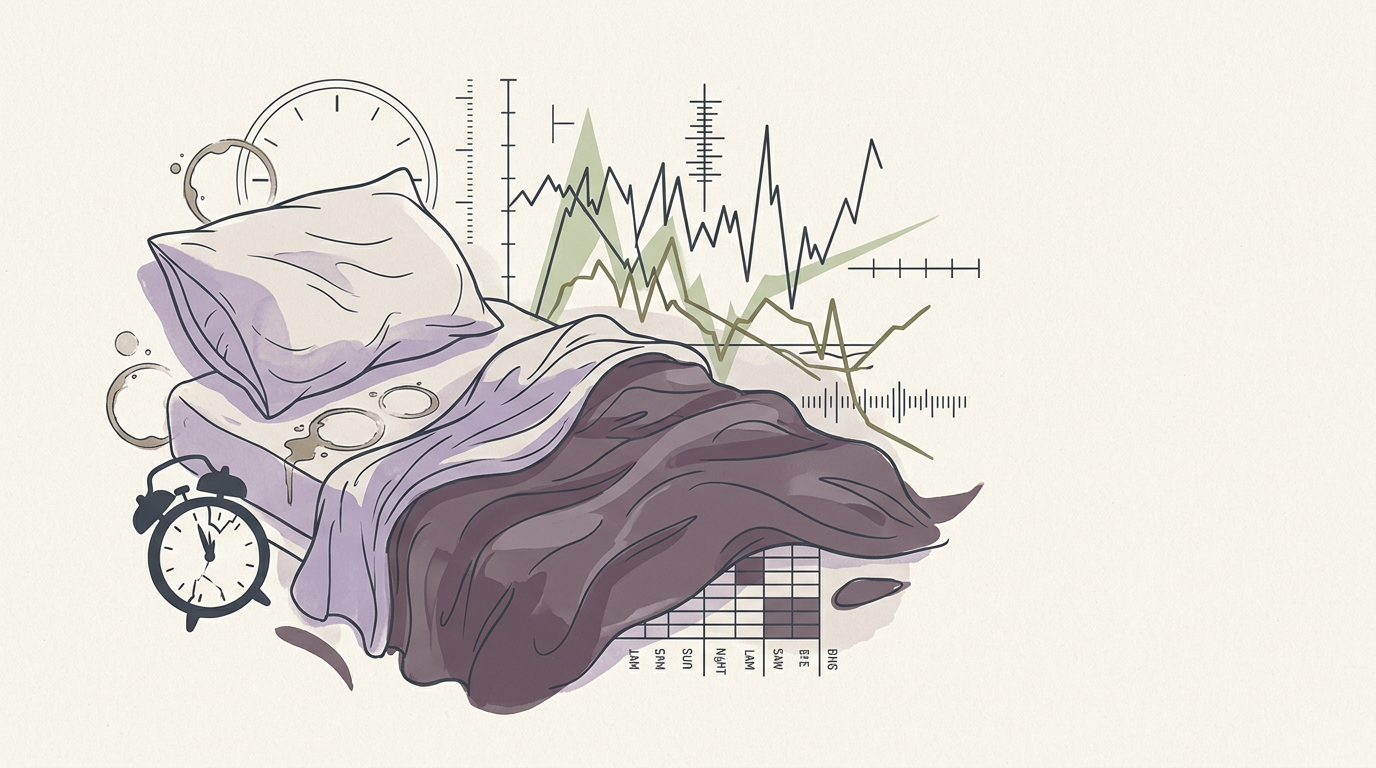
I used to believe that lying awake at 2 a.m. meant I just wasn't tired enough. The entire sleep hygiene industry runs on the premise that if you can't drift off, you simply haven't relaxed hard enough. I'm calling it. The sensation of being wired but tired is a biological distress signal indicating your cortisol rhythm has inverted.
You know exactly how this feels before you have a clinical name for it. It's 10 p.m., and instead of winding down, you're mentally cataloguing a conversation from three years ago. You feel exhausted but can't rest. Your body is heavy, yet there's a distinct, vibrating buzz right behind your eyes. You find yourself staring at the open fridge without any actual hunger. The shoulders that wouldn't drop in the shower still haven't dropped. You finally get into bed, completely depleted, but your heart starts racing the moment you lie down. You wake up at 3am every night like clockwork, completely alert to a non-existent emergency, entirely tired but wired. The fatigue is deep in your bones, but your brain is running a diagnostic check on tomorrow's anxiety.
Common Questions
What is the wired but tired feeling?
This is the paradoxical state of feeling mentally overstimulated and buzzy while being physically and emotionally drained. You can't switch off to sleep at night, and you can't properly switch on to feel awake during the day.
What causes you to be wired but tired?
The primary driver is a dysfunctional cortisol rhythm. Instead of peaking in the morning to wake you up and dropping at night to let you rest, your cortisol levels remain too low in the morning and surge in the evening.
Is it the same as burnout?
It is a core symptom of the burnout process. Burnout is the total system failure that occurs when you ignore this state for too long, leading to excessive allostatic load and chronic physical wear and tear.
Can it be fixed?
Yes. Rebuilding a healthy cortisol pattern involves specific, consistent physiological inputs around light, food, and movement. This requires sending clear safety signals to your nervous system to re-anchor your circadian clock.
The Daily Wave
The wellness space loves to treat sleep as a distinct event that begins when you brush your teeth. In reality, your ability to sleep was decided twelve hours earlier. The HPA axis—the brain-body loop governing your stress response—is designed to deliver a sharp spike of cortisol within thirty minutes of waking. That morning spike clears the brain fog. It's the mechanism that starts the countdown timer for melatonin production later that night. When this rhythm works, you don't even think about it.
The Inverted Rhythm
When you spend months marinating in chronic stress, that predictable wave flattens out. You get a pathetic little blip of cortisol in the morning, which leaves you dragging yourself through the day. Then, precisely when you need to wind down, your HPA axis panics and dumps a fresh surge of stress hormones into your bloodstream.
That evening second wind is a biological survival protocol running on faulty data. Your body senses an unresolved threat and pumps out cortisol to keep you alert, actively blocking the melatonin you need for deep rest. Most advice on this tells you to take a warm bath, as if your hypothalamus can be reasoned with by a candle. It never works.
The Desensitised Brain
Let's look at the actual machinery behind why the system gets stuck here. Prolonged exposure to high cortisol physically alters the glucocorticoid receptors in your hippocampus and prefrontal cortex. These are the specific brain areas responsible for telling the HPA axis to stand down once a threat has passed.
When they sit in a bath of stress hormones for too long, they lose their sensitivity. The brain is screaming for the adrenal glands to stop, but the off switch is completely broken. This receptor fatigue drives the excessive allostatic load that keeps you hovering in a state of high alert. I track this exact pattern with clients inside the Kokorology Journal because seeing the raw data is the only way to begin reshaping it.
The Perimeter Alarm
This dysregulation doesn't stay neatly contained inside your skull. The HPA axis has outposts everywhere, including your skin. Chronic cortisol elevation degrades your skin barrier and triggers inflammatory responses. That sudden patch of eczema or random breakout is your physical boundary broadcasting your internal state of emergency. It's a clear data point telling you the system is overloaded. You don't need another expensive serum. You need to pull the parking brake on your nervous system. Every protocol I teach around this starts with re-establishing physical safety in the body.
What to do this week
This requires giving your body clear, undeniable signals so it can find its rhythm again.
- Morning Light, Immediately. Within 5-10 minutes of waking, get 10 minutes of direct, unfiltered morning sunlight in your eyes. No sunglasses. This is the master signal that sets your circadian clock for the entire day.
- Eat Protein First. Have a protein-rich breakfast within 60-90 minutes of waking. This stabilises blood sugar and provides raw materials, preventing an energy crash your system might interpret as a crisis.
- Discharge the static. When that 9 p.m. cortisol surge hits, do more than lie in bed vibrating. Use specific 60-second exercises to physically discharge that errant energy.
- Dim the World. An hour before bed, kill the overhead lights. Use lamps. Signal to your brain that the day is actually over.
Where this fits in the Kokorology system
The feeling of being stuck on high alert is a classic indicator that your biology needs structural support. Reshaping your daily rhythm is a core practice inside the pillar on Nervous System Regulation, and it's the exact focus of the foundational Reset curriculum.
Closing
Your body is doing its absolute best with the erratic inputs it's been given. The work now is to give it better, clearer information so it can return to baseline. Start with morning light. It's the simplest move on the board, and it's highly effective. Notice what shifts.
- Start with the protocol: Master your daily rhythm with the Cortisol Anchor.
- Practice it daily inside: Track your energy and symptoms with the Kokorology Journal.
- Start with the free guide: Get the 7 essential practices for nervous system regulation with the Free Guide.
TL;DR
The sensation of being wired but tired is a physiological signal of a dysregulated cortisol rhythm. Chronic stress flattens your natural hormone pattern, leaving you with low cortisol in the morning and a stress-hormone surge at night. This inverted curve is a core marker of allostatic load and receptor fatigue in the brain. Retraining your HPA axis requires consistent signals from light, food, and targeted nervous system regulation to restore your body's natural clock.
Sources
- Adam, E. K., et al. (2017). Diurnal cortisol slopes and mental and physical health outcomes: A systematic review and meta-analysis. Psychoneuroendocrinology.
- Chen, Y., & Lyga, J. (2014). Brain-skin connection: stress, inflammation and skin aging. Inflammation & Allergy - Drug Targets.
- Ungurianu, A., et al. (2025). The biological clock influenced by burnout, hormonal dysregulation and circadian misalignment: a systematic review. Clocks & Sleep.
- McEwen, B. S. (1998). Stress, adaptation, and disease: Allostasis and allostatic load. Annals of the New York Academy of Sciences.