Nervous System
Wired and Tired Explained by Your Vagus Nerve
The sensation of being exhausted but unable to sleep is a physiological conflict where your nervous system is mobilized and shut down at the same time.
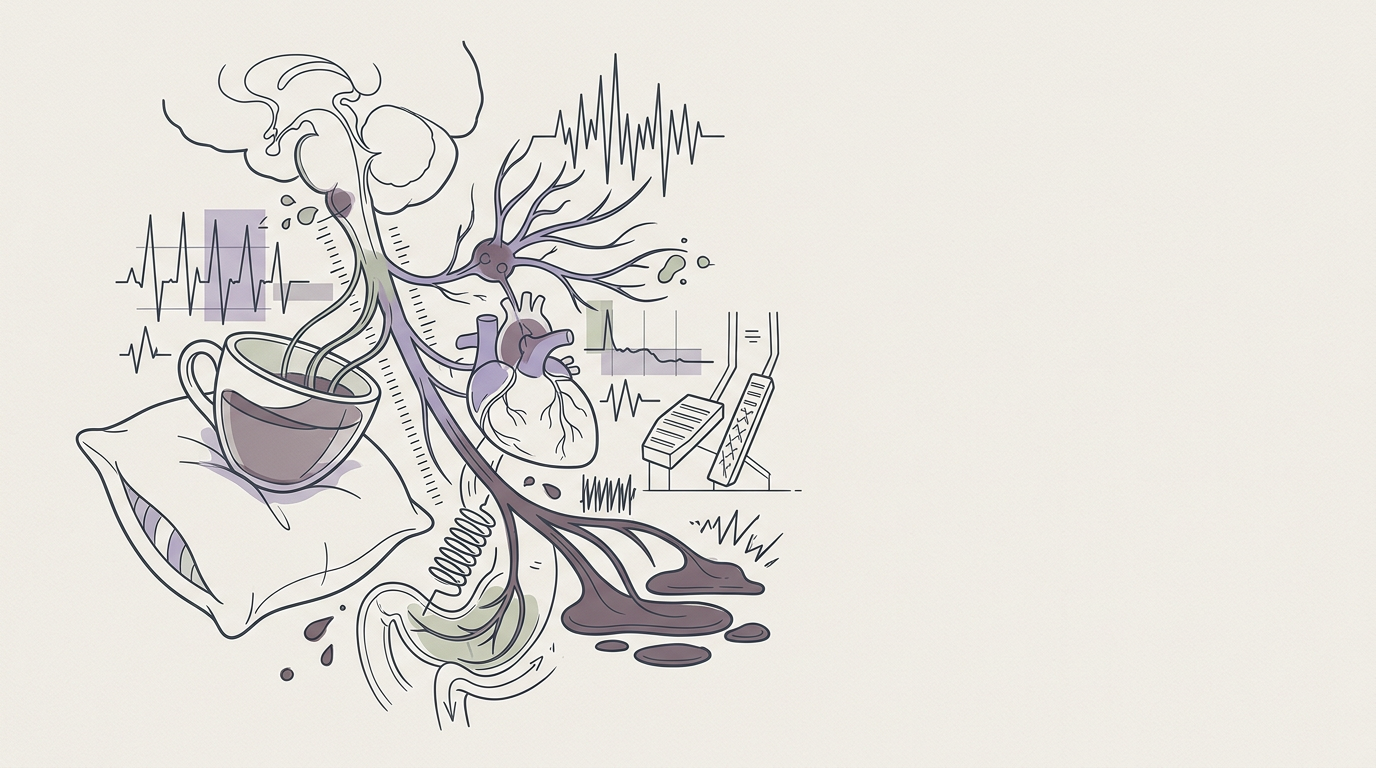
The supplement aisle wants you to believe that a 300mg capsule of magnesium will fix your sleep. I used to recommend sleep hygiene routines to clients whose eyes were vibrating at 4pm, thinking a darker room would force their nervous system to power down. The standard advice treats exhaustion like a drained battery, assuming rest is simply the absence of movement. The true mechanism behind being wired and tired is a simultaneous collision of two opposing nervous system states.
You stare at the ceiling at 2am, absolutely exhausted but can't rest. The fatigue is heavy in your bones, yet there is a frantic, low-grade electricity buzzing behind your eyes. You find yourself standing in front of the open fridge at 3pm with no actual hunger, just looking for something to break the static. It's the specific sensation of your shoulders refusing to drop in the hot shower. You are entirely depleted, but your heart races when you lie down. People tell you to take a nap, which sounds like a threat, because closing your eyes just makes the mental spinning louder. You are tired but wired, living in a contradictory state where you have zero capacity to answer another email, yet your system remains locked in high alert.
Common Questions
What does being "wired and tired" physically mean?
It is a mixed autonomic state. Your sympathetic nervous system is highly active, flooding your bloodstream with cortisol to meet a perceived threat. Simultaneously, your dorsal vagal pathway initiates a freeze response, creating a sensation of heaviness and immobilization. You are mobilized and shut down at once.
Why does more sleep fail to fix it?
Sleep requires a baseline of physiological safety to initiate. When cortisol remains high and your brain is scanning the room for danger, deep rest is biologically locked out. You can't force a highly activated nervous system into restorative sleep just by lying in a dark room.
How does the vagus nerve control this?
The vagus nerve acts as the primary sensory highway between your organs and your brain. When it detects chronic stress, it alters its signalling. Instead of promoting digestion and rest, it shifts into defense modes, leaving your body suspended between high alert and total collapse.
The physiological conflict
The wellness industry treats the nervous system like a volume dial that just requires turning down. A wired and tired state is much messier. The sympathetic nervous system drives arousal, pushing adrenaline into the bloodstream so you can outrun a threat. The dorsal branch of the vagus nerve triggers a profound immobilization when a threat feels inescapable. When you experience both simultaneously, the result is physiological gridlock. The tank is not empty. The pipe is narrower. You burn immense amounts of energy just holding the tension of these two opposing commands. I spent years trying to meditate my way out of this state before I realized the breathing exercises were barely making a dent in the underlying biology.
You cannot talk your physiology out of a biological imperative.
The interoceptive mismatch
Here is the actual machinery. Your brain relies on a constant stream of sensory data from your organs to know what's happening inside the body. This is called interoception. It's how you feel a full bladder, a racing heart, or the drop in body temperature that signals bedtime. In a chronically stressed state, this signalling pathway gets corrupted. The brain receives a massive influx of sympathetic noise alongside the heavy, flatline signal of vagal withdrawal. It can't tell the difference between the physical exhaustion of a twelve-hour workday and the immobilising freeze of a predator attack. It simply makes a guess based on bad data. The fidelity of these signals determines your resilience. When the map is scrambled, your brain keeps the alarms blaring just in case. If you want the deep literature on this, Kokorology keep it in the Library.
The failed interventions
And Kokorology respond with chamomile tea. Kokorology see the fatigue and throw a 9pm bedtime at it, then wonder why Kokorology wake up at 3am every night drenched in sweat. Kokorology see the brain fog at 2pm and throw a double espresso at it, hoping to shock the system into focus. The inbox hasn't ever been impressed by your heart rate. The extra caffeine just prolongs the state of high arousal, ensuring a sharper crash later. To fix this, you have to work with the body in its own language, shifting the state before you ask it to perform. This is the foundation of the entire Nervous System Regulation methodology.
The temperature lever
You couldn't think your way out of a physiological trap if you tried. The brain takes its cues from the body, which means the intervention has to be entirely physical. One of the most reliable ways to force a shift in this mixed state is thermal. Cooling the face activates the mammalian dive reflex, which forcefully engages the vagus nerve to slow the heart rate and drop sympathetic arousal. I was reading a recent breakdown of why cold-water immersion reliably works for stress relief, and the mechanism is purely autonomic. The sudden cold bypasses your worrying mind and speaks directly to the vagal pathways, breaking the static. You don't need an expensive ice bath to do this. A bowl of tap water in your kitchen works exactly the same way and costs nothing. Kokorology use this principle heavily inside Anchors.
What to do this week
- Change the thermal input. When the 3pm static hits, fill a bowl with cold water. Hold your breath and submerge your face, focusing on the area around your eyes and cheeks, for ten seconds. It forces a vagal response that halts the sympathetic spin.
- Lengthen the exhale. The physiological sigh works, but any breathing pattern where the exhale is twice as long as the inhale will do. Try inhaling for four counts and exhaling for eight. This mechanically slows the heart. Find more 60-second tools like this in Hacks.
- Stop the 2pm caffeine. If you're already buzzing with nervous energy, the third coffee won't give you focus. It only increases your circulating adrenaline. Drink a glass of water and do five minutes of low, slow movement instead.
Where this fits in the Kokorology system
This state of being simultaneously highly aroused and deeply exhausted is the core challenge of modern capacity. Kokorology teach the mechanical skills to untangle it inside the Regulation L1 course. If you need a more structured physical practice to move the needle today, start tracking your daily state shifts in the Journal.
Closing
You can't command a deeply activated system to simply rest. You have to signal safety to it first, using the physiological levers it actually understands.
- Work with the daily practices to rebuild your baseline inside Regulation L1.
- Start with targeted state-shifting tools in Anchors.
- Get the foundational map of your nervous system in the free guide.
TL;DR
The sensation of feeling wired and tired represents a physiological conflict of mixed autonomic states. It occurs when the sympathetic nervous system drives high arousal while the dorsal vagal pathway simultaneously triggers an immobilization response. Your brain receives corrupted interoceptive data, mistaking chronic stress for immediate danger. Treating this with more caffeine or forced sleep fails because it ignores the autonomic state. The solution requires gentle, bottom-up physical interventions—like thermal shifts and extended exhales—to regulate vagal tone and signal safety to the body.
Sources
- Critchley, H. D. (2023). Interoception and Autonomic Regulation in Stress. Journal of Neuroscience.
- Khalsa, S. S. et al. (2018). Interoception and Mental Health: A Roadmap. Biological Psychiatry: Cognitive Neuroscience and Neuroimaging.
- Balban, M. Y. et al. (2023). Brief structured respiration practices enhance mood and reduce physiological arousal. Cell Reports Medicine.
- Craig, A. D. (2002). How do you feel? Interoception: the sense of the physiological condition of the body. Nature Reviews Neuroscience.