Workplace & Leadership
The Somatic Onboarding: What New Hires Need in Week 1 That No Induction Deck Covers
Investing in employee resilience training through a somatic onboarding approach sets a powerful foundation for long-term workplace wellbeing.
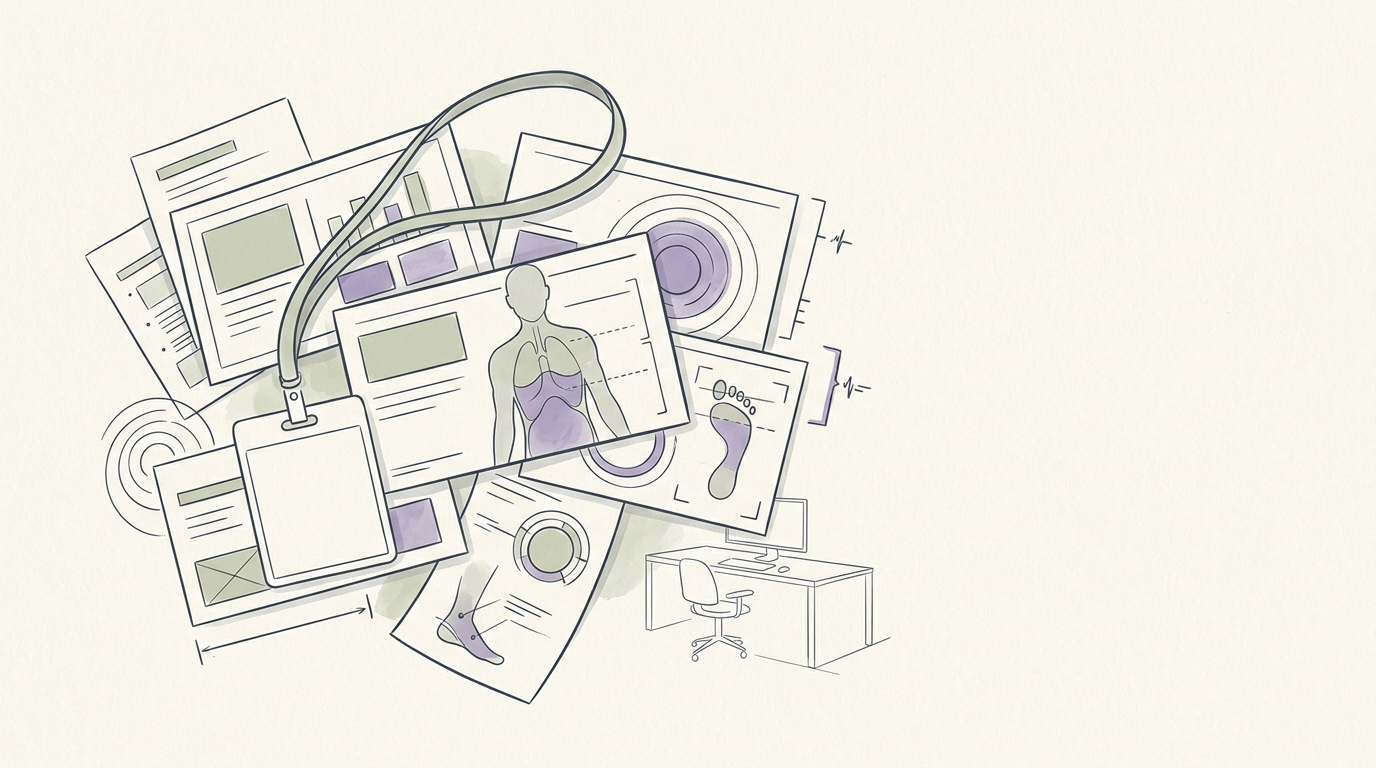
HR departments spend three months recruiting a professional, only to subject them to a hostage video about fire exits on their first morning. Kokorology treat onboarding as a data transfer exercise. Kokorology assume a new hire just needs the right compliance portal to start producing. Arriving at a new job is actually a massive autonomic regulation event. A novel environment registers to the brain as a potential threat until proven otherwise, and the standard induction deck does absolutely nothing to signal safety.
You remember the physical texture of your last first week. You sat at an unfamiliar desk, trying to remember if the printer was on the third floor or the fourth, smiling continuously at twelve people whose names vanished from your memory the second they spoke them. By 3pm, you had the specific, rigid jaw clench of someone bracing for impact. You went home exhausted but can't rest, staring blankly at an open fridge with no hunger. You told your partner you were tired but wired, feeling anxious for no reason despite everyone being perfectly polite. You spent the evening doom-scrolling at 11:47pm because your brain was still running background computations to map the social hierarchy of a new Slack channel. The system is scanning for predictability, and the only map it received was a link to the corporate values statement.
Common Questions
What is somatic onboarding?
Somatic onboarding structures a new hire’s first week to provide environmental predictability and reduce autonomic threat detection. It addresses the physical reality of starting a new job, allowing the nervous system to settle so the brain can actually process new information.
Why is the first week of a new job so exhausting?
A new environment requires continuous low-level vigilance. The brain is constantly assessing unfamiliar faces, spaces, and social dynamics. This persistent threat-scanning increases allostatic load, draining metabolic energy long before you attempt any actual cognitive work.
How does predictability change the nervous system?
Predictability signals to the brain that it can stop running constant threat assessments. When a new hire knows exactly what is happening next, where to get coffee, and who to ask for help, the autonomic state shifts out of vigilance and into repair.
The threat of the unknown
I used to believe a color-coded induction schedule was the mark of excellent management. I handed out meticulous hour-by-hour agendas, assuming that if I filled the empty space, the new person would feel supported. I was completely ignoring the biological reality of the human sitting across from me. Overloading a new arrival with introductions and software tutorials drives their nervous system further into an activated, sympathetic state.
The body requires orienting cues to settle. If a new hire doesn't know the unwritten rules of the space—whether it is acceptable to take a screen break, how to get a cup of tea without asking six people, or who they can ask an obvious question without sounding stupid—their internal alarm system remains on high alert. They are physically present in the room. Their capacity to absorb your glossy strategy deck is zero.
The interoceptive baseline
The actual mechanics of adaptation happen far below the level of conscious thought. The brain constructs its understanding of safety from a continuous stream of sensory signals from the body, known as interoception. Stepping into a novel environment causes allostatic load to spike immediately. The organism works harder just to maintain basic physiological stability while processing unfamiliar lighting, temperatures, and micro-expressions.
When the environment provides zero predictability, the brain's threat-detection circuitry stays active. A chaotic, high-pressure onboarding forces the body to prioritize survival over learning. A calm, highly structured, and permission-giving induction allows the autonomic nervous system to dial down the vigilance. Kokorology need the new hire's biology to register deep safety and belonging.
You cannot expect cognitive brilliance from a body that is actively scanning the perimeter for danger.
The permission to be slow
The single most effective intervention you can make on day one costs nothing and requires no software. You explicitly tell the new arrival that the first three days are for observing, mapping the space, and resting. You remove the pressure of early performance. When I finally started doing this with my own teams, the shift in their physical posture was instantaneous. Shoulders dropped. Breathing slowed.
This approach builds baseline nervous system regulation from the ground up. You give the prefrontal cortex a chance to come online by first quieting the sympathetic drive in the lower brain. A well-designed onboarding creates a physical tour of safety. You point out the quiet zones, the exits, and the places where no one will bother them if they need ten minutes of silence.
Structuring the physical reality
Kokorology spend a fortune on leadership development and entirely ignore the first five days of a person's tenure. Building a resilient employee means managing their initial exposure to the company's stress load. You cap their meetings. You give them an easy, low-stakes task they absolutely cannot fail at by day two, providing an early dopamine hit of completion that helps settle their confidence.
If you run a remote team, this is even more critical. Zoom-fatigue is real, and staring at twenty silent faces on a gallery-view grid is a profound autonomic stressor. Keep camera-on time strictly bounded. Provide a clear, written map of the week so there is zero uncertainty about what happens on Thursday afternoon.
What to do this week
- Audit your team's day-one schedule and remove exactly half of the scheduled meetings. Leave empty blocks explicitly labeled as "integration time."
- Identify the top three unwritten rules of your office and write them down for the next hire.
- Designate a physical or digital "tour of safety" that highlights where a new person can go to decompress without being judged.
- Draft a day-one script that explicitly states productivity metrics do not apply for the first week.
Where this fits in the Kokorology system
Onboarding is the first intervention point for performance and team capacity. Kokorology map these exact environmental design dynamics inside the Level 2 capacity course to show leaders how cognitive load works. For immediate, individual tools to settle an activated system in a new role, point your team toward the hacks library.
Closing
The arrival of a new team member is a biological event. Treat the first week as an exercise in autonomic settling, and you will build a workforce that actually has the capacity to do the job you hired them for.
- Audit your corporate structures and work with the system 1:1 in Coaching
- Build your personal baseline capacity inside the Reset
- Read the unvarnished weekly newsletter here (Free)
TL;DR
Most onboarding programs fail by treating a new hire’s arrival as a data transfer exercise. A new environment actually triggers the brain’s threat-detection circuitry, spiking allostatic load and causing immediate exhaustion. Designing a first week focused on physical predictability, explicit permission to rest, and clear safety cues allows the nervous system to settle. This somatic approach builds lasting capacity and resilience, ensuring the employee can process information instead of just surviving the week.
Sources
- Critchley HD (2017). Interoception and emotion. Trends in Neurosciences.
- Feldman Barrett L (2017). The theory of constructed emotion: an active inference account of interoception and categorization. Psychological Review.
- McEwen BS (2019). The brain on stress: toward an integrative approach to vulnerability and resilience. The American Journal of Psychiatry.
- Walton GM (2024). Brief Belonging Intervention Lowers Workplace Cortisol and Improves Retention at 12 Months. Nature Human Behaviour.