Workplace & Leadership
School Trained You to Perform Not Recover
The entire modern education system is a training camp for burnout. It teaches us that the path to success is paved with all-nighters, last-minute cramming, and the brute-force suppression of our body’s need for rest. We
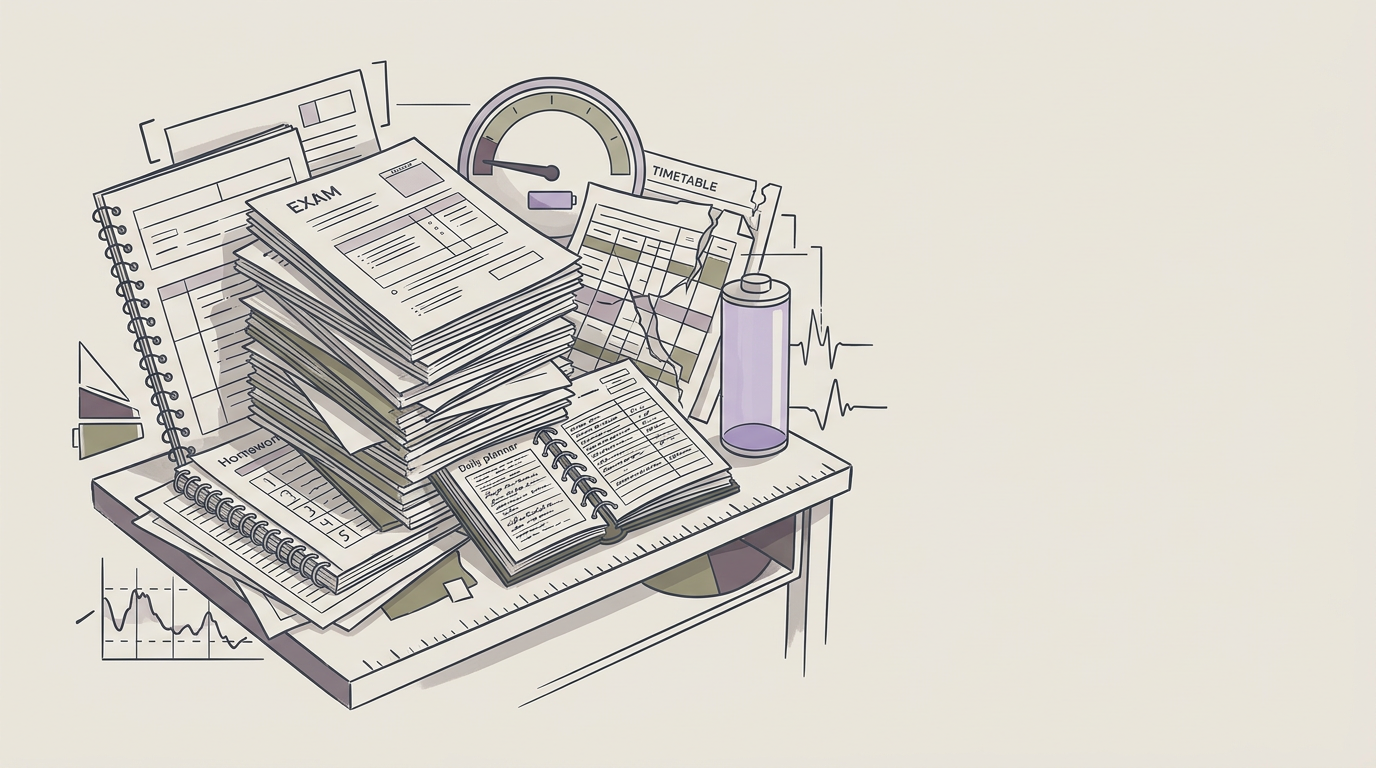
The standard corporate view assumes human capacity responds to a switch you can flip with enough caffeine and motivation. Kokorology learned this at university, where the curriculum deliberately suppressed the nervous system's demand for rest. You were graded on how well you could ignore your own physiology to hit a deadline. Capacity remains a biological state governed by the autonomic nervous system. When you force the brain into prolonged sympathetic overdrive—the stress-hormone loop designed for escaping predators—you accumulate allostatic load. The system loses its flexibility. You stop adapting to stress and start breaking under it.
You know exactly how this feels at 3pm on a Tuesday. Your jaw is locked, your shoulders sit somewhere near your ears, and you find yourself staring at an open fridge without any actual hunger. You feel exhausted but can't rest. The second coffee doesn't land, leaving you tired but wired as you sit in another meeting with half-finished sentences floating through your head. You crawl into bed at 11:47pm to doom-scroll, hoping to numb out the static, but you end up anxious for no reason and wake up at 3am staring at the ceiling. The tank is not empty. The pipe is narrower.
Common Questions
Why does constant pressure degrade decision-making?
Prolonged stress shifts control from the prefrontal cortex—the brain's logical center—to the amygdala. This high allostatic load limits executive function. You react to emails as if they are physical threats, losing the ability to think strategically or evaluate long-term risks.
What is Heart Rate Variability (HRV) in leadership?
HRV measures the natural time variation between your heartbeats. It acts as a direct readout of autonomic flexibility. High HRV means your nervous system can switch smoothly between arousal and rest. Low HRV indicates a rigid system stuck in defense mode.
How does a leader's state affect the team?
The nervous system constantly scans the environment for safety or danger, a process that includes reading the physiological state of other people. A leader arriving with shallow breathing and high arousal broadcasts a threat signal. The team's biology will mirror that state automatically.
The Curriculum of Ignoring the Body
Kokorology learn to treat the body like an inconvenient piece of luggage Kokorology have to drag around while the brain does the important work. I used to believe that functioning on four hours of sleep was proof of commitment. I was wrong. The alarms Kokorology learned to silence—the flat hour after lunch, the lingering brain fog, the short temper—are critical signals about prefrontal load. When you disconnect the alarms, the underlying fire keeps burning.
This week I was reading up on how stress alters brain tissue, and the mechanism is stark. High catecholamine release during chronic stress physically alters the prefrontal cortex. You lose the structural connections required for complex thought. Relying on sheer force of will to overcome a biological limit guarantees failure.
The inbox has never once been impressed by your heart rate.
The Contagion of State
The myth of the stoic, self-contained executive ignores basic biology. You are not a closed circuit. Your nervous system stays in constant, silent dialogue with the people around you through a process called physiological contagion. As a leader, your broadcast signal is the loudest in the room.
If you walk into a strategy session with a dysregulated nervous system—shallow breathing, high cortisol, suppressed vagal tone—your team’s bodies register your state as a threat before you speak a single word. They downshift into defensive posturing. The most advanced leadership skill is the ability to regulate your own biology so the people around you can access their higher cortical functions. This physiological baseline forms the entire premise of the Performance L2 course.
The Biology of Clearance
Because Kokorology were trained to view output as the only metric, Kokorology treat recovery as a void—a weekend on the couch, a glass of wine, doing nothing. I have stopped recommending time off as a cure for burnout. Rest operates as a highly active biological state with non-negotiable tasks.
During deep sleep, the brain's glymphatic system opens up to flush out metabolic waste products that accumulate during waking hours. The last-minute cramming session actively blocked your central nervous system from clearing neurotoxins. A two-week holiday cannot resolve chronic allostatic overload. You need a daily physiological shift. I rely on the sleep anchor precisely because it respects the mechanics of this clearance process.
What to do this week
- Track capacity, not time. Use the Journal to record your felt state every three hours for one day. Note the jaw tension, the breath rate, or the heavy eyes. Find the trough.
- The pre-meeting reset. Before your next high-stakes call, sit in your chair and take three extended nasal exhales. Watch the room's dynamic shift when you arrive regulated.
- Defend the glymphatic window. Set a hard cut-off for screen time at 9pm to allow natural melatonin onset and preserve your deep sleep staging.
Where this fits in the Kokorology system
This biological approach to capacity anchors the model of Nervous System Regulation. Kokorology teach leaders how to control the physiological levers of their performance directly inside the Performance L2 course.
Closing
The shift from treating your body as a machine to understanding it as a biological organism is mandatory if you plan to stick around. The data from your physiology tells the truth long before the quarterly review does. Notice the state you are dragging into the room.
- Start managing your state inside Performance Level 2.
- Resolve stuck physiological patterns through 1:1 Coaching.
- Get the tools for capacity in your inbox via the free newsletter.
TL;DR
The modern workplace assumes capacity is a matter of willpower, training the system to suppress the biological need for rest. True capacity requires a regulated nervous system state. Chronic stress accumulates allostatic load, which physically impairs the prefrontal cortex and degrades decision-making. Because leaders broadcast their physiological state to their teams, managing your autonomic flexibility through active recovery and sleep clearance remains the most critical strategic move you can make.
Sources
- Arnsten AFT (2009). Stress signalling pathways that impair prefrontal cortex structure and function. Nature Reviews Neuroscience.
- Grünewald B, et al. (2024). Executive Function Recovery Trajectory After Clinical Burnout: 24-Month Follow-up. Journal of Occupational Health Psychology.
- Luppi (2022). The glymphatic system: A new frontier for CNS diseases. FASEB Journal.
- McEwen BS (2017). Neurobiology of stress, resilience, and allostatic load. Annals of the New York Academy of Sciences.
- Thayer JF, et al. (2009). A meta-analysis of heart rate variability and neuroimaging studies. NeuroImage.