Journal Practice
A chronic pain journal is for prediction errors, not tissue damage
Grading your pain on a ten-point scale simply trains the nervous system to scan for threats. The ache is a prediction error rather than mechanical damage.
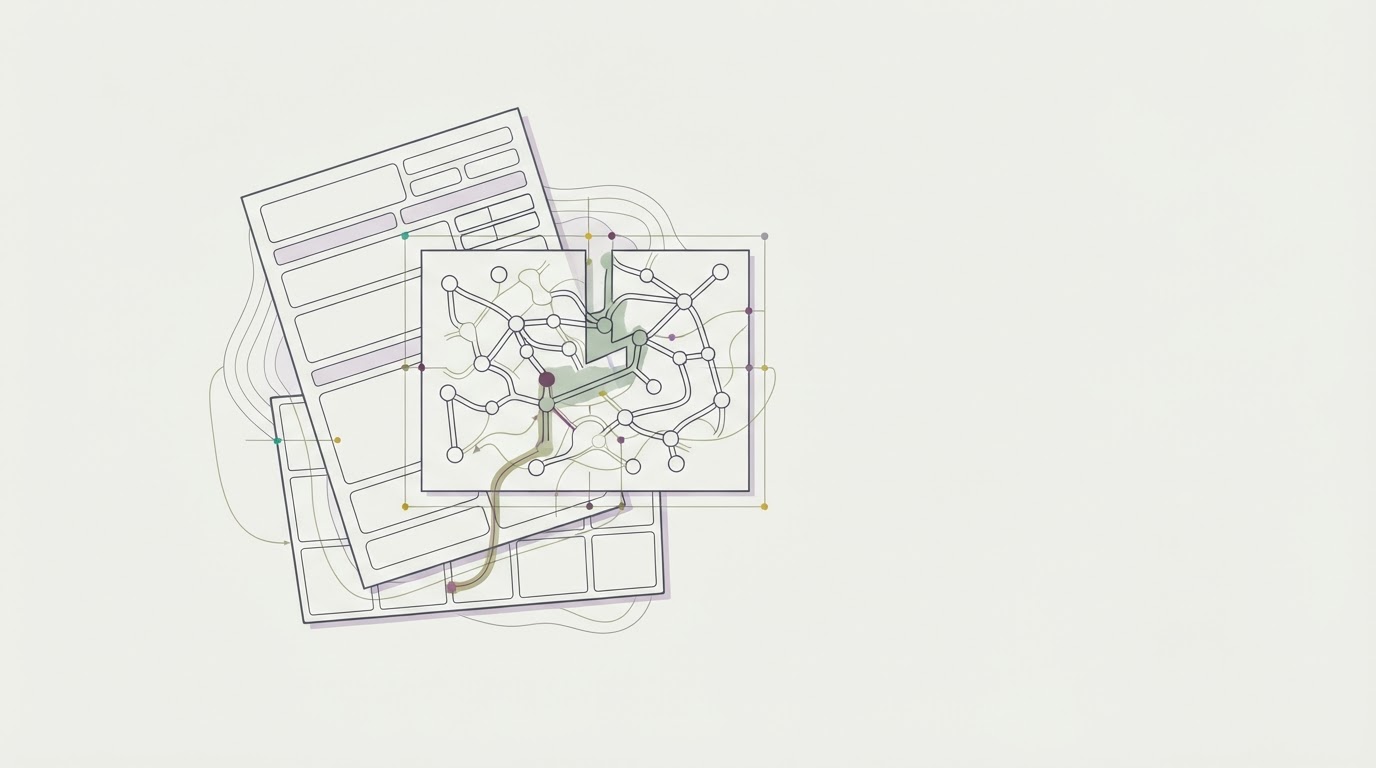
The medical establishment directs you to record the location and severity of every flare-up on a one-to-ten scale, assuming the data will eventually reveal a mechanical trigger. You are looking for a somatic pain journaling technique because logging your daily symptoms this way has only amplified the ache. Tracking chronic pain by grading its severity trains the central nervous system to scan for threat. It turns your body into a hostile environment that you have to constantly audit.
It's the first week of December in Dubai, and the UAE National Day fireworks are echoing off the glass of your apartment building. You have the day off, the temperature has dropped to twenty-four degrees, and you're sitting on the sofa doing absolutely nothing. Suddenly, the familiar ache in your lower back flares up with the intensity of a fresh injury. You reach for your notebook to log the event, trying to calculate what you lifted to justify the sensation. You write down the time and the severity. You assume your lumbar spine is actively degrading. The reality is that your tissue is perfectly intact. The sudden noise of the celebrations, the shift in routine, and the ambient social expectation of the long weekend have overloaded your sensory gating. Your brain predicted a threat, and it used pain as the output to force you to stay still.
How the insula gates nociception
An analysis of direct intracranial brain recordings mapped exactly how expectation blocks or amplifies pain. Neuroscientists looked at fifteen years of data across dozens of patients to isolate four distinct functional zones within the human insula. They found the specific top-down circuit where emotional context and expectation modify pain signals before they ever reach conscious awareness.
When the brain expects a high-demand environment, it lowers the threshold for nociception (the sensory nervous system's response to harmful or potentially harmful stimuli). The sensation you feel is a prediction error. Think of it like a weather radar calibrated too sensitively. The brain models what it thinks is about to happen, compares it to the sensory input arriving from the periphery, and generates pain to alter your behaviour if the two don't match. Your lumbar tissue isn't tearing. The software running the alarm system is just throwing an error code because the fireworks outside and the disruption to your Thursday routine broke the predictive model. The pain is a measure of the brain's certainty that you are unsafe.
Why symptom tracking amplifies the signal
Most pain diaries ask you to rate the severity of the sensation at the end of the day. This requires you to cast your attention backward and actively search your memory for physical discomfort. The nervous system is highly efficient. If you repeatedly ask the brain to locate and quantify a threat, it'll upregulate the receptors required to find it. You're essentially practising pain.
For years, I directed clients to keep meticulous logs of their flare-ups. I genuinely believed that if a person could just map their symptoms accurately enough, the process would reveal the mechanical culprit—a bad chair, a weird sleeping position, a specific food. I was entirely wrong. Every time they sat down to grade their pain out of ten, they were forcing their central nervous system to rehearse the exact neural pathway they were trying to dismantle. They weren't solving the problem; they were paving a superhighway for it.
When you assign a number to a sensation, you give it validity. You tell the insula that it was right to sound the alarm. A somatic pain journaling technique must do the exact opposite. It must uncouple the sensory prediction error from the mechanical tissue damage. Instead of asking how bad the back feels, the practice asks what the environment was demanding of the system immediately before the brain decided to intervene.
The environmental context over the physical symptom
Your nervous system is constantly running a budget. It allocates resources based on what it anticipates you will need to survive the next hour. When the ambient noise is high, the light is fluorescent, and your inbox is full, the system registers a high metabolic cost. If it decides you don't have the capacity to meet that cost, it will deploy a protective mechanism to force you to withdraw. Pain is the ultimate withdrawal command.
If you only track the output (the physical ache), you completely miss the input (the environmental load). You end up treating the check-engine light instead of looking at the engine. To actually down-regulate the sympathetic response, you have to prove to the brain that you see the environmental load. You have to log the temperature, the noise, the social friction, and the cognitive demands. Once the brain registers that the conscious mind is aware of the context, it often stops needing to use pain as a megaphone. The alarm bell stops ringing because you finally answered the door.
Tonight's practice
To stop reinforcing the threat response, you have to change the data you collect. You must stop asking the body to perform a damage assessment and start asking it for an environmental readout.
What exactly was the environment demanding of me ten minutes before the sensation spiked, and what did my body predict was about to happen?
Run this five-minute protocol the next time the sensation flares up. It shifts the brain's processing from the emotional centres of the insula to the objective, observing prefrontal cortex.
- Sit in a chair with both feet flat on the floor and look at a fixed point across the room to anchor your visual field.
- Notice the exact perimeter of the pain. Trace its edges in your mind without trying to change the intensity, treating it as a shape rather than a threat.
- Open your notebook and write down the sensory inputs from the ten minutes prior to the flare-up. Note the noise level, the temperature, the lighting, and the people present.
- Write down one thing you were expecting to have to do in the next hour that felt like a heavy cognitive or emotional lift.
- Close the notebook, stand up, and deliberately walk into a different room to physically break the context loop.
Common Questions
Does this mean the pain is not real?
The pain is entirely real and physiologically measurable. The distinction is that the sensation is being generated by the brain's predictive models rather than acute mechanical damage at the site of the ache. The alarm is ringing, but there is no fire in the building.
How often should I use this journaling technique?
Use the prompt immediately after a flare-up begins, rather than waiting for a scheduled evening review. Capturing the environmental context in real-time prevents the brain from rewriting the memory of the event later.
What if I cannot identify any environmental trigger?
That's completely normal in the first few weeks. The goal is to build interoceptive awareness slowly. Simply logging the temperature, the time of day, and your posture is enough to start shifting the brain's focus away from the tissue.
Closing
Here is where you can access the tools to rebuild your interoceptive baseline.
- Kokorology Journal — Subscribe to the daily somatic journaling practice (€25/mo) to uncouple prediction errors from physical pain.
- The Hacks — Access the complete library of physiological interventions to down-regulate sympathetic arousal in real time.
- Weekly Dispatch — Read the free weekly breakdown of nervous-system mechanics and applied research.
TL;DR
You are looking for a somatic pain journaling technique because logging daily symptoms on a numerical scale amplifies the ache. Chronic pain is often a prediction error generated by the insular cortex, relying on expectation rather than acute tissue damage. A traditional symptom diary trains the brain to scan for threat. To break the loop, use a journaling prompt that maps the environmental demands and sensory inputs present ten minutes before the flare-up, uncoupling the pain signal from the physical tissue.
Sources
- Balban MY (2023). Brief structured respiration practices enhance mood and reduce physiological arousal. Cell Reports Medicine.
- Patel S (2024). Time to look beyond the tissues: a new lens for understanding pain in female athletes. British Journal of Sports Medicine.
- Khalsa SS (2018). Interoception and mental health: a roadmap. Biological Psychiatry: Cognitive Neuroscience and Neuroimaging.
- Tracey KJ (2007). The inflammatory reflex. Nature.
- Neuroscience News (2026). Brain recordings across 87 patients map how expectation blocks pain.