Nervous System
How I Stopped Fighting Inflammation — and Started Feeding It Out
Chronic inflammation quiets down when you stop restricting food and start giving the nervous system the biological safety and physical drainage it needs.
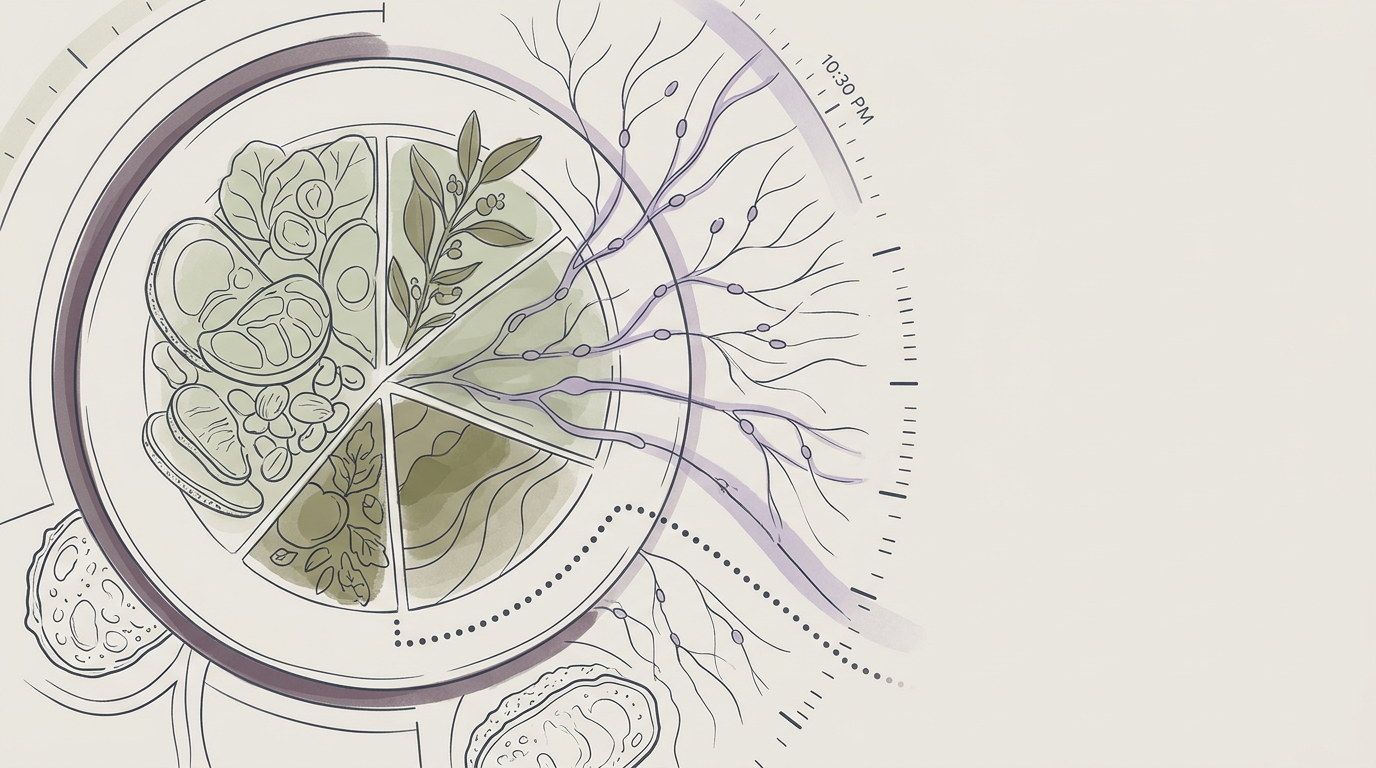
I used to think shrinking my grocery list was the only way to heal. The wellness industry loves to sell elimination diets for systemic issues, slowly whittling your permitted foods down to plain water and ice. That approach actively triggers the nervous system's threat detection loop. When you drastically cut calories and train six days a week, the HPA axis registers a famine. Cortisol spikes, and your body hoards everything. I've stopped recommending restriction. Inflammation quiets down when you feed it out and drain the waste, signaling biological safety instead of survival panic.
You wake up at 3am every night with your mind racing, calculating how many hours of rest you're missing. You feel tired but wired all afternoon, staring into an open fridge with zero hunger but a vague desperation for energy. Your jaw won't unclench while you type emails, and your shoulders live permanently around your ears. You're exhausted but can't rest. The second coffee doesn't land, leaving a buzzy static behind your eyes instead of focus. You end up doom-scrolling at 11:47 PM because you're too agitated to actually turn off the lamp. You have brain fog after eating and feel completely disconnected from your body, wondering why a supposedly healthy lifestyle leaves you feeling so brittle.
Common Questions
What is the HPA axis?
It is the control loop connecting your hypothalamus, pituitary, and adrenal glands. It manages your physiological stress response. When activated by physical or emotional strain, it alters hormone output and drives systemic inflammation until the environment signals safety again.
Why does under-eating cause inflammation?
Caloric restriction reads to the body as environmental scarcity. The brain elevates stress hormones to keep you alert enough to find food. That chronic elevation suppresses immune regulation and spikes inflammatory markers.
Does walking really lower inflammation?
Yes. Muscle contraction immediately clears glucose from the bloodstream without requiring insulin. Keeping that postprandial spike flat stops the downstream inflammatory cascade that happens when the liver struggles to process sudden sugar loads.
The famine signal
Restricting food panics an inflamed system. I used to believe that if I just ate less, the puffiness would disappear, but the exact opposite happened. The food noise quiets down entirely on its own once the body has adequate minerals and micronutrients.
Chronic restriction raises ghrelin and disrupts thyroid output. Inflammatory signaling often stems from nutritional insufficiency rather than excess. Poor sleep and insufficient protein drive systemic inflammatory markers higher than almost anything else. If you're surviving on green juice and punishing workouts, your nervous system is trapped in sympathetic overdrive. Add grass-fed butter, properly fermented sourdough, and adequate protein.
The lymphatic swamp
Skeletal muscle contraction and manual stimulation are the only ways lymph drains. The lymphatic system has no heart to pump it. Without movement, inflammatory by-products just sit in the tissues, accumulating like dirty bathwater.
Daily exhaustion is the actual threat Kokorology're trying to manage. Three structured training sessions a week, plus a five-minute manual lymphatic drainage flow, changes the state of the tissues. When you physically move the fluid, the body can finally process the waste through the liver and kidneys.
The body cannot heal in the same sympathetic state that broke it.
The vagal walking shift
Post-meal walking is the single most underrated tool for physiological regulation, and it's completely free. Even ten minutes outside alters the entire metabolic response to a meal.
The mechanism is straightforward. Walking uses glucose in the legs, blunting the postprandial spike. Less glucose crashing around the bloodstream means less work for the liver. I've found that walking outside also provides optic flow, which down-regulates the amygdala and gently stimulates vagal tone. It pumps the lymphatic system at the exact moment digestion creates waste.
The glymphatic wash cycle
Sleep is a highly active state of tissue repair and glymphatic clearance. I used to negotiate my bedtime down to midnight, convincing myself I was getting ahead on work. I was just making myself dumber and puffier.
When sleep pressure builds and you actually go to bed by 10:30 PM, cortisol drops and the glymphatic system literally washes inflammatory debris from the brain. Miss that window, and ghrelin rises, leptin fractures, and cravings for high-sugar foods take over. A disrupted circadian rhythm guarantees an inflamed morning.
What to do this week
- Eat protein and a solid fat source before 10 AM to signal safety to the HPA axis.
- Walk for ten minutes outside after your largest meal of the day.
- Manually massage your neck and collarbones in the shower to open the lymphatic drains.
- Turn off overhead lights by 9 PM to allow melatonin to naturally suppress cortisol.
Where this fits in the Kokorology system
Managing systemic inflammation is a core piece of the Regulation foundations. When you restore the metabolic and nervous system baselines, the static clears. Kokorology map the exact food upgrades and sleep staging tools inside the Inflammation Reset Protocol — Anchor 18, designed to shift the body out of threat detection.
Closing
Stop fighting the body and start giving it an exit route for the waste. Feed it properly, move the fluid, and go to sleep.
- Start with the exact daily sequence in the Inflammation Reset Anchor.
- If you're wired-but-tired underneath the puffiness, run the Cortisol Anchor.
- To map this onto a complicated travel or executive schedule, work with me in 1:1 coaching.
TL;DR
Chronic inflammation is often driven by a nervous system stuck in a threat response due to under-eating, over-training, and lack of sleep. Caloric restriction signals famine, spiking stress hormones and halting waste clearance. By upgrading food quality, walking after meals to flatten glucose spikes, moving the lymph manually, and sleeping early for glymphatic repair, you signal biological safety. This shifts the body out of survival mode and allows it to process and drain inflammatory by-products naturally.
Sources
- Irwin, M.R. (2016). Sleep disturbance, sleep duration, and inflammation: A systematic review and meta-analysis of cohort studies and experimental sleep deprivation. Biological Psychiatry.
- Sun, L. (2022). A simple meal sequence (vegetable-first) strategy to improve postprandial glycemic control in people with type 2 diabetes. BMJ Open Diabetes Research & Care.
- Földi, M. (2006). Foundations of Manual Lymph Drainage. Elsevier.
- Bellini, A. (2022). Postprandial Walking and Glycemic Control. Sports Medicine.