Nervous System
The 85-gram lie — why total protein is a construction truck full of bricks and no cement
A total protein target means nothing if the food lacks the complete amino acid profile required to synthesize neurotransmitters and maintain nerve tissue.
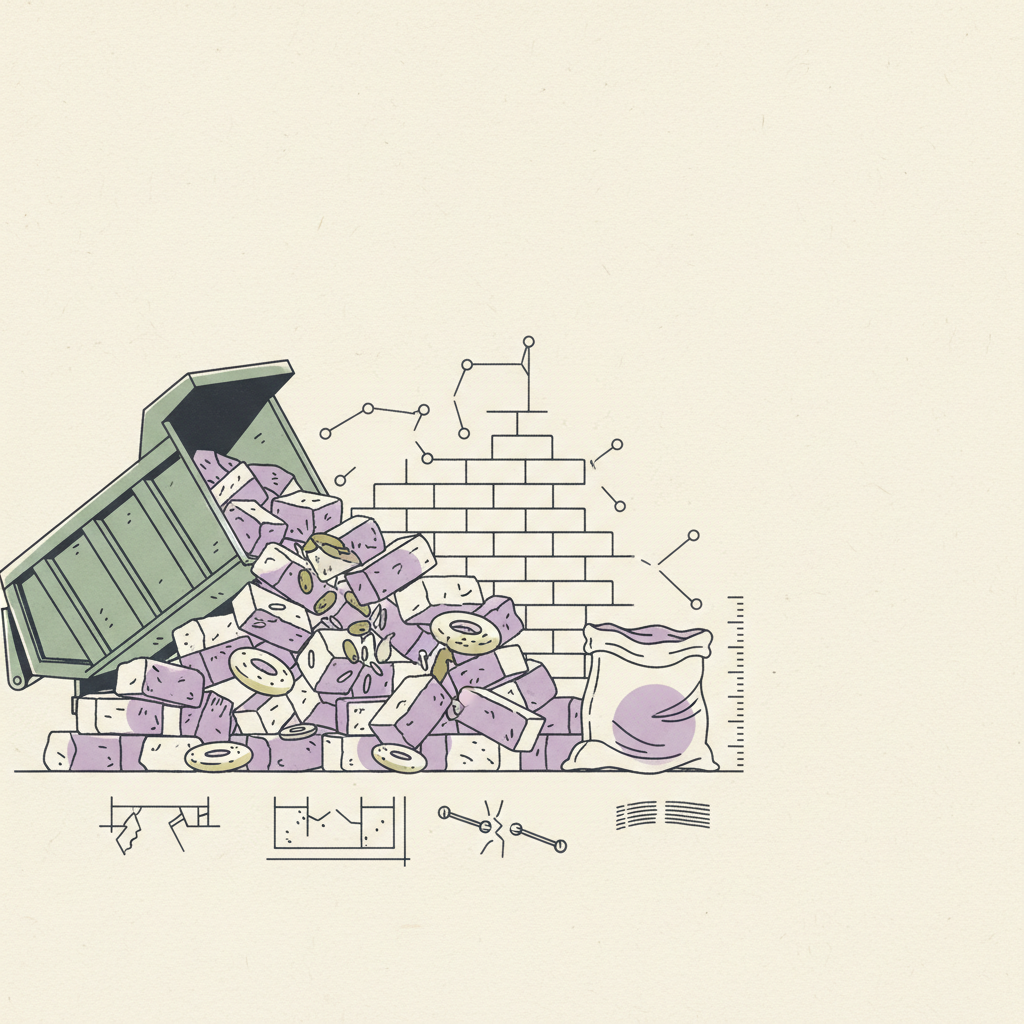
Kokorology track 85 grams of protein a day and assume the job is done. The back of the box gives the system a total number, and Kokorology log it in an app while the underlying machinery starves. Total volume tells you nothing about whether your nervous system and brain actually have the complete amino acid profile they need to function. If you hit that target using only isolated wheat, rice, or legumes, your body lacks the essential components required to synthesize neurotransmitters, maintain vagal tone, or keep your HPA axis regulated.
You already feel the gap between what you eat and how you function. It shows up as the 3pm jaw clench and the second coffee that doesn't land. You're eating enough food, yet you wake up at 3am every night with your heart racing when you lie down. You feel tired but wired, staring at the open fridge with no hunger but a vague sense that your body requires something it can't find. The thinning hair at your temples, the skin that has lost its bounce, the brain fog after eating, the fragmented sleep—these are the visible signals of a system tearing down its own tissue to survive.
Common Questions
Do I need to hit the leucine threshold at every meal?
For muscle preservation, yes. You need roughly 2.5g of leucine, which translates to about 25 to 30g of complete protein per meal, to trigger muscle protein synthesis.
Is collagen a complete protein?
No. It is high in glycine, proline, and lysine, but it lacks tryptophan. It supports your gut lining and works alongside the Skin Anchor, but it doesn't count toward your complete-protein floor.
What about a vegan pea-only protein powder?
Pea protein is inherently low in methionine. To make it a complete source, you must add rice protein, which is high in methionine, or choose a hemp blend.
The illusion of the daily total
The fitness industry reduced protein to a single macro, treating human physiology like a crude arithmetic problem. I've stopped recommending a flat gram-per-pound target without context, because I used to follow that exact advice and assume the details would sort themselves out. My tracking app looked perfect while my energy levels cratered.
The raw number is meaningless if the amino acid profile is incomplete. A bagel with peanut butter might look like a protein victory on a screen, but your vagus nerve remains entirely unimpressed. When you consume incomplete sources, the body can't store the leftover fragments. It burns them for calories, or worse, halts production entirely the moment the first essential amino acid runs out.
What the nervous system actually requires
Let's look at the actual machinery. Your nervous system runs on nine essential amino acids that it cannot produce itself. Histidine maintains the myelin sheath around every nerve, including the vagus, ensuring that autonomic signals travel at the correct speed. Phenylalanine and tyrosine are the direct precursors to dopamine and adrenaline, the chemical messengers driving your locus coeruleus (the brain's waking and alerting center). Tryptophan is the required precursor for serotonin, 90 percent of which is manufactured in the gut, and melatonin, which regulates your circadian rhythm.
If your 85 grams came mostly from wheat and legumes with no complete source, you're almost certainly lacking lysine and methionine. The body responds to this shortage by pulling the missing pieces from your existing muscle and hair follicles.
Your locus coeruleus doesn't care what the front of the cereal box promised.
The GLP-1 drop
This mechanism explains the severe muscle mass loss showing up in GLP-1 therapy clinics right now. Everyone focuses on the scale dropping, conveniently ignoring that they're dissolving their own lean tissue to get there.
When appetite disappears, protein intake plummets, and the nervous system still demands its daily amino acids to regulate allostatic load and threat detection. It takes them from your quads. The tissue preservation only works if you deliberately consume complete proteins and apply resistance training while in caloric restriction.
Scaling the complete profile
Animal muscle, organ meats, whey, eggs, and casein are naturally complete. In the plant kingdom, only soy, quinoa, hemp, and buckwheat contain the full profile. Everything else requires deliberate same-day combining: rice and beans, or hummus and tahini.
If you rely heavily on plants or struggle to eat volume, Essential Amino Acid (EAA) powders serve as a highly effective intervention. They're pre-manufactured pools of all nine essentials in the exact ratio human tissue requires. They absorb in 20 minutes, and a small 5 to 10g dose delivers the muscle protein synthesis signal of roughly 30g of whole-food protein. I take mine first thing in the morning to stabilize my state before coffee. They act as a targeted nervous system adjunct alongside your diet, requiring you to still eat actual meals because they omit the non-essential amino acids your gut and liver demand.
What to do this week
- Audit yesterday's intake by naming a complete source at every single meal.
- Pair any incomplete plant-based meals with a complementary source, like rice with beans or pita with hummus.
- Establish 30g of complete protein at breakfast as a non-negotiable standard for the next seven days.
- Read the label on your plant protein powder. If it says pea-only, swap it for a pea and rice blend.
Where this fits in the Kokorology system
Proper amino acid intake is the physical prerequisite for the Cortisol Anchor. It underpins Lesson 07 inside the Regulation L1 course and dictates how well your body responds to the tracking tools inside the Journal.
Closing
Audit the profile, more than the volume. The nervous system requires the complete set of ingredients to function.
- Start rebuilding your baseline inside Regulation L1.
- Track your physiological state daily with the Kokorology Journal.
- Read the full breakdown in the Nervous System Starter Guide.
TL;DR
Total daily protein is a meaningless metric if the amino acid profile is incomplete. Your nervous system relies on all nine essential amino acids to synthesize neurotransmitters, maintain the vagus nerve, and regulate your stress axis. Without complete sources like animal protein, soy, or carefully combined plant proteins, the body breaks down its own muscle and hair to harvest the missing components. Hit 30g of complete protein per meal to keep the system regulated and intact.
Sources
- Prado CM (2025). Muscle Mass Loss With GLP-1 Therapy: Clinical Relevance and Mitigation. Lancet Diabetes & Endocrinology.
- Trappe TA, et al. (2002). Effect of ibuprofen and acetaminophen on postexercise muscle protein synthesis. American Journal of Physiology-Endocrinology and Metabolism.
- Wolfe RR (2015). Dietary protein for muscle mass and function. British Journal of Nutrition.
- Young VR, Pellett PL (1994). Plant proteins in human amino acid nutrition. American Journal of Clinical Nutrition.