news
Your brain rewrites memories to favor peaks and endings
Veritasium's latest video on Psyche explores the 'peak-end rule,' a cognitive bias where we judge past experiences, especially painful ones, based primarily on their most intense point and how they finish, not the total duration. This means a longer, less painful procedure with a gentler ending can feel worse than a shorter, more intense one that resolves quickly.
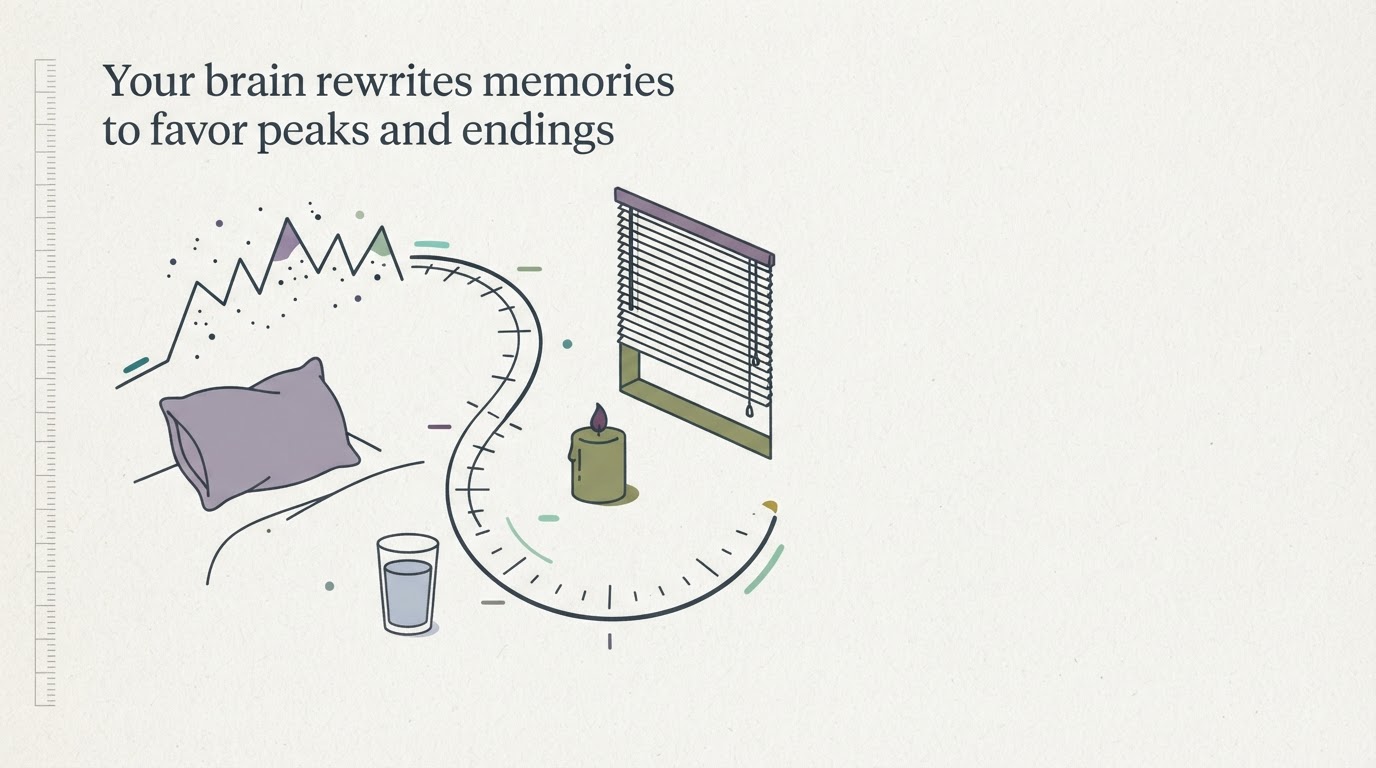
Veritasium's latest video on Psyche explores the 'peak-end rule,' a cognitive bias where we judge past experiences, especially painful ones, based primarily on their most intense point and how they finish, not the total duration. This means a longer, less painful procedure with a gentler ending can feel worse than a shorter, more intense one that resolves quickly.
The architecture take
So, your brain's not keeping a perfect log of everything. It's more of a highlight reel, heavily edited by your amygdala, especially when pain is involved. This isn't just an interesting quirk; it's how you decide whether you'll do something again, or avoid it entirely. The mechanism at play here is how your nervous system encodes emotional intensity and resolution, not just raw sensory input. A bad ending spikes cortisol, a good one activates reward pathways. What this means for daily life is you can hack your own recall. Finish that tough workout with a solid cool-down, or end a stressful workday with something genuinely pleasant, even if small. Your memory of the whole thing will be better, influencing your willingness to repeat the good habit. My last dental cleaning felt way better than the one before it, and I know it was because the hygienist just eased up at the end instead of rushing. It's not about avoiding all pain; it's about staging the resolution.