news
Wrist Trackers Reveal Anxious Sleepers Get More Sleep Than They Think
A study tracking self-reported sleep against wrist actigraphy found participants with high neuroticism reported significantly fewer sleep hours despite registering normal objective sleep duration. The mismatch shows that chronic worry skews sleep perception rather than actual sleep time. For anyone spiraling over sleep logs, the finding points to daytime hyperarousal rather than biological sleep deprivation.
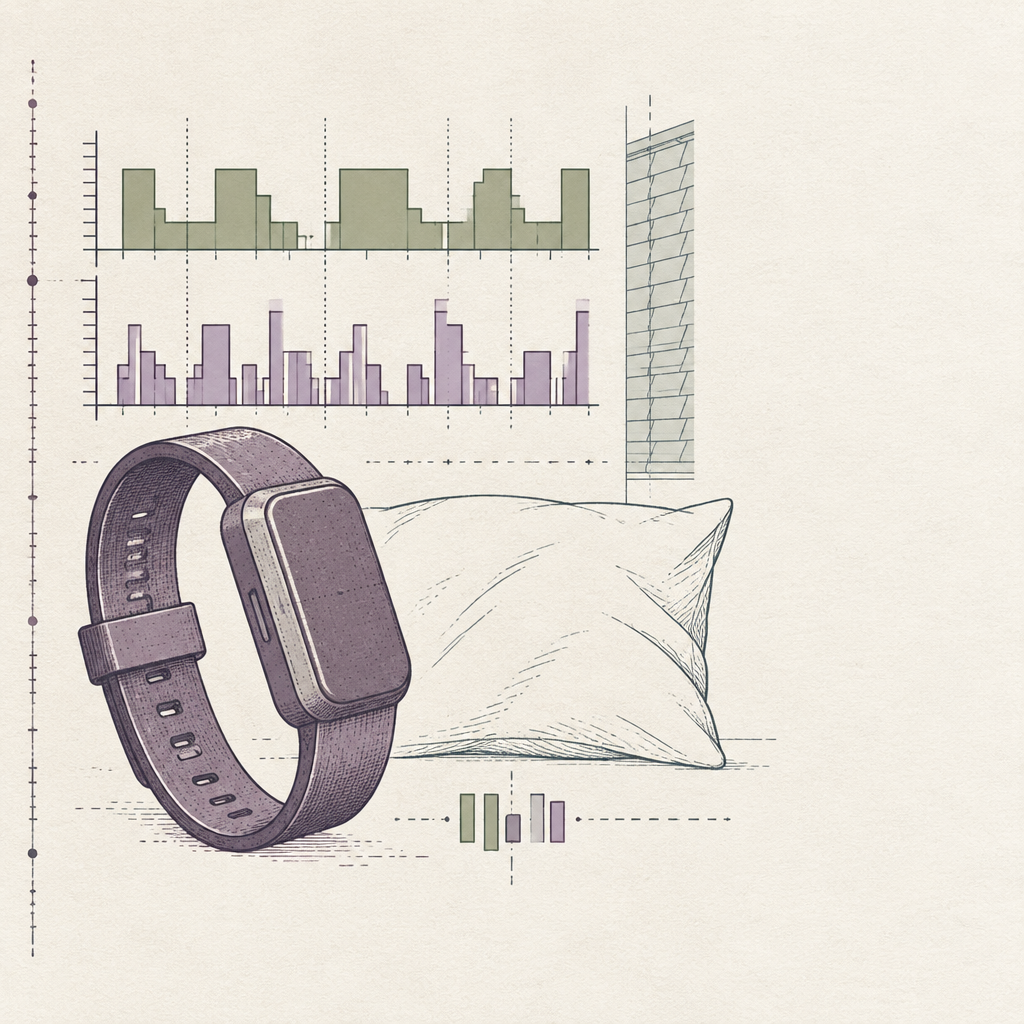
A study tracking self-reported sleep against wrist actigraphy found participants with high neuroticism reported significantly fewer sleep hours despite registering normal objective sleep duration. The mismatch shows that chronic worry skews sleep perception rather than actual sleep time. For anyone spiraling over sleep logs, the finding points to daytime hyperarousal rather than biological sleep deprivation.
The architecture take
I spent years convinced my nervous system was waking me up every ninety minutes. My sleep diary was a chronicle of misery, full of 3 a.m. ceiling stares and frantic calculations. I used to swear my circadian rhythm was wrecked beyond repair. Then I strapped on an actigraphy monitor for three weeks and discovered I had slept seven hours and twelve minutes on a night I swore was four. That gap has a name. Clinicians call it sleep state misperception. When sympathetic arousal runs hot, your brain logs light stage-one sleep as conscious wakefulness because the threat scanner never completely powered down. Your muscles relax, your brain waves slow, but your internal narrator stays convinced it watched the night pass in real time. If you feel permanently unrested despite decent sensor data, the lever to pull usually sits in daytime hypervigilance, not midnight melatonin.