news
Winter blood tests misjudge true vitamin D status in older adults
A PLOS Medicine study of 12,301 Swedish adults led by Karl Michaëlsson shows that blood draw season heavily skews vitamin D readings and their link to mortality and bone fractures. Standard deficiency cutoffs fail to account for normal winter troughs, classifying healthy people as clinically deficient.
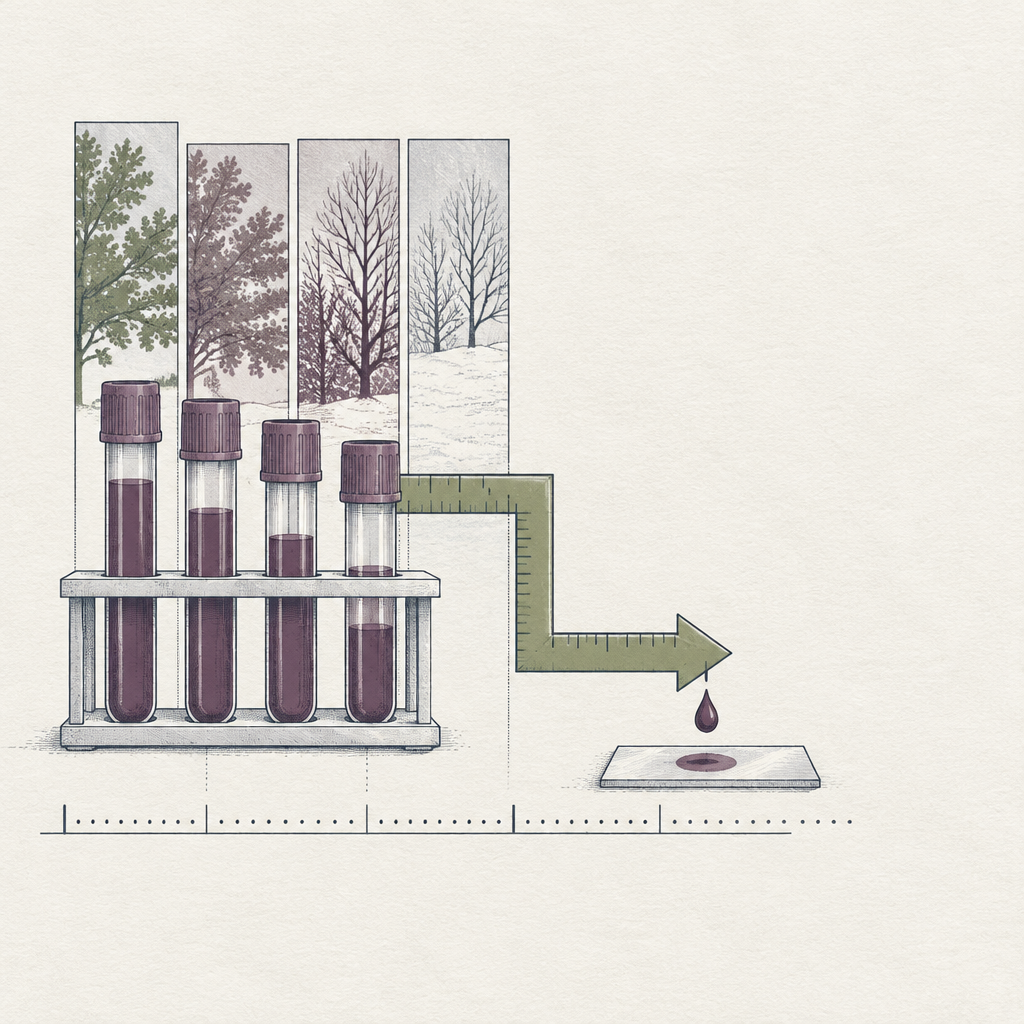
A PLOS Medicine study of 12,301 Swedish adults led by Karl Michaëlsson shows that blood draw season heavily skews vitamin D readings and their link to mortality and bone fractures. Standard deficiency cutoffs fail to account for normal winter troughs, classifying healthy people as clinically deficient.
The architecture take
Your winter vitamin D lab panel is probably lying to you. Or at least your doctor's reference range is. I used to panic every February when my serum 25-hydroxyvitamin D plummeted, swallowing massive oil gelcaps to chase an August baseline. Biology does not run flat. Michaëlsson and his team tracked 12,301 Swedish adults and found that an identical vitamin D concentration carries entirely different risks for fractures and mortality depending on whether blood was drawn in July or January. Sunlight drives cutaneous synthesis, meaning levels naturally drop to an annual low in late winter without signaling metabolic failure. When commercial labs apply one static cutoff year-round, they turn ordinary seasonal rhythms into a deficiency crisis. That drives billions in high-dose supplement sales, even as large randomized trials consistently show those pills fail to move the needle on long-term survival. Check the calendar first.