news
White House Feud Over Ultra-Processed Food Stalls Labeling Rules
Federal officials and policy advisers are locked in a dispute over how the United States legally defines ultra-processed food. The fight centers on whether to target specific industrial additives or adopt broad classification systems that flag up to 73% of packaged grocery items. The eventual rule will determine whether brands face mandatory front-of-package warnings for gut-disrupting ingredients.
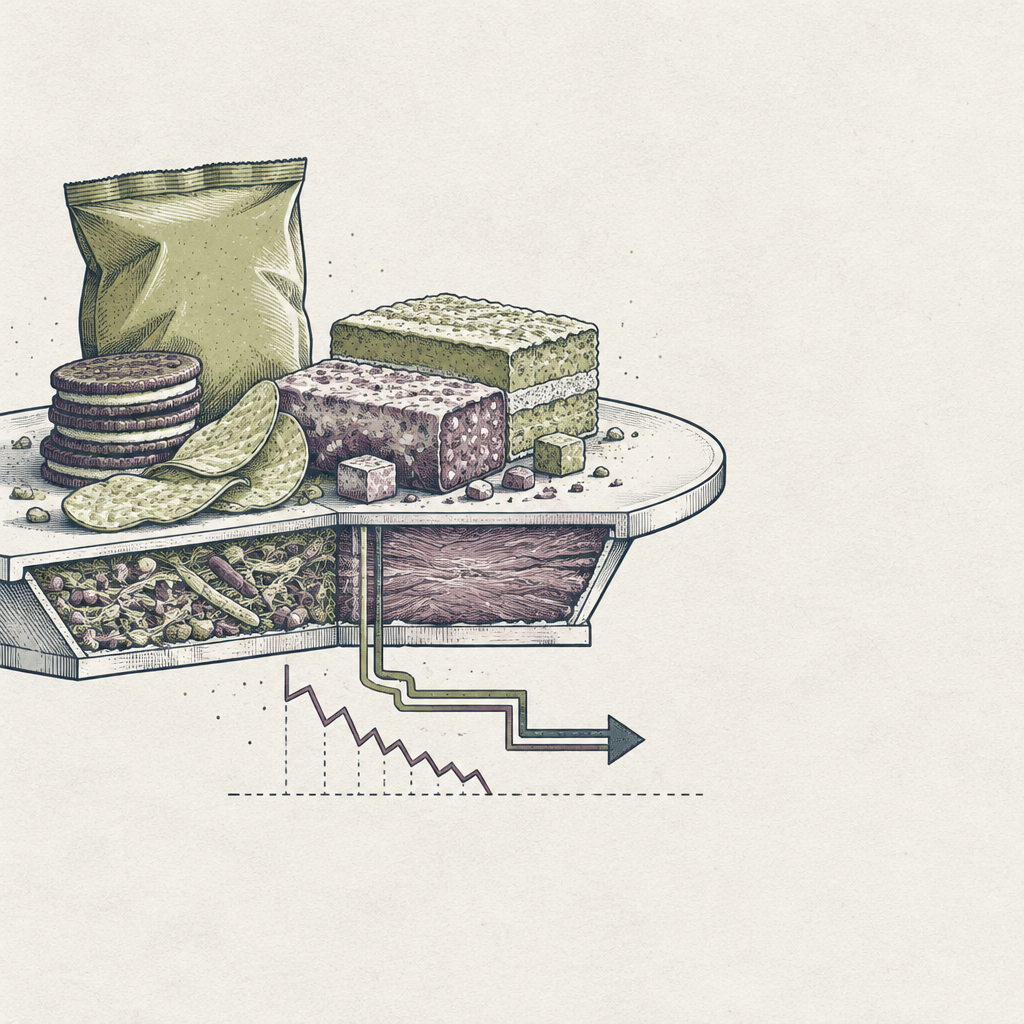
Federal officials and policy advisers are locked in a dispute over how the United States legally defines ultra-processed food. The fight centers on whether to target specific industrial additives or adopt broad classification systems that flag up to 73% of packaged grocery items. The eventual rule will determine whether brands face mandatory front-of-package warnings for gut-disrupting ingredients.
The architecture take
The fight over what counts as an ultra-processed food is really about who gets blamed for a wrecked metabolic baseline. I spent an afternoon reading the policy briefs, and the political friction is obvious. If you define processed food strictly by NOVA classification, roughly 73% of the American grocery supply suddenly qualifies as hazardous. That terrifies industrial food manufacturers. The mechanism here is simple. Emulsifiers like polysorbate 80 and carboxymethylcellulose strip the protective mucus layer in your gut, spiking systemic inflammation and scrambling insulin sensitivity long before refined sugar hits your liver. I used to think federal dietary guidelines were harmless noise, but a binding legal definition triggers front-of-package warnings and forced recipe changes. Stripping out chemical stabilizers costs real money. (Nobody wants to reformulate a snack that currently survives six months in a vending machine.) I bet food conglomerates will try to narrow the blame to single isolated ingredients rather than industrial processing itself. Watch that compromise happen.