news
VR Eye-Tracking Therapy Relieves Persistent Concussion Symptoms in Trial
Researchers in Frontiers in Neuroscience tested virtual reality oculomotor rehabilitation on 40 adults with concussion symptoms lasting over 30 days. Participants completed six VR gaze-tracking sessions paired with mobile app drills against standard rest-and-education care. The protocol showed high compliance for targeting eye tracking and vestibular coordination after head impacts.
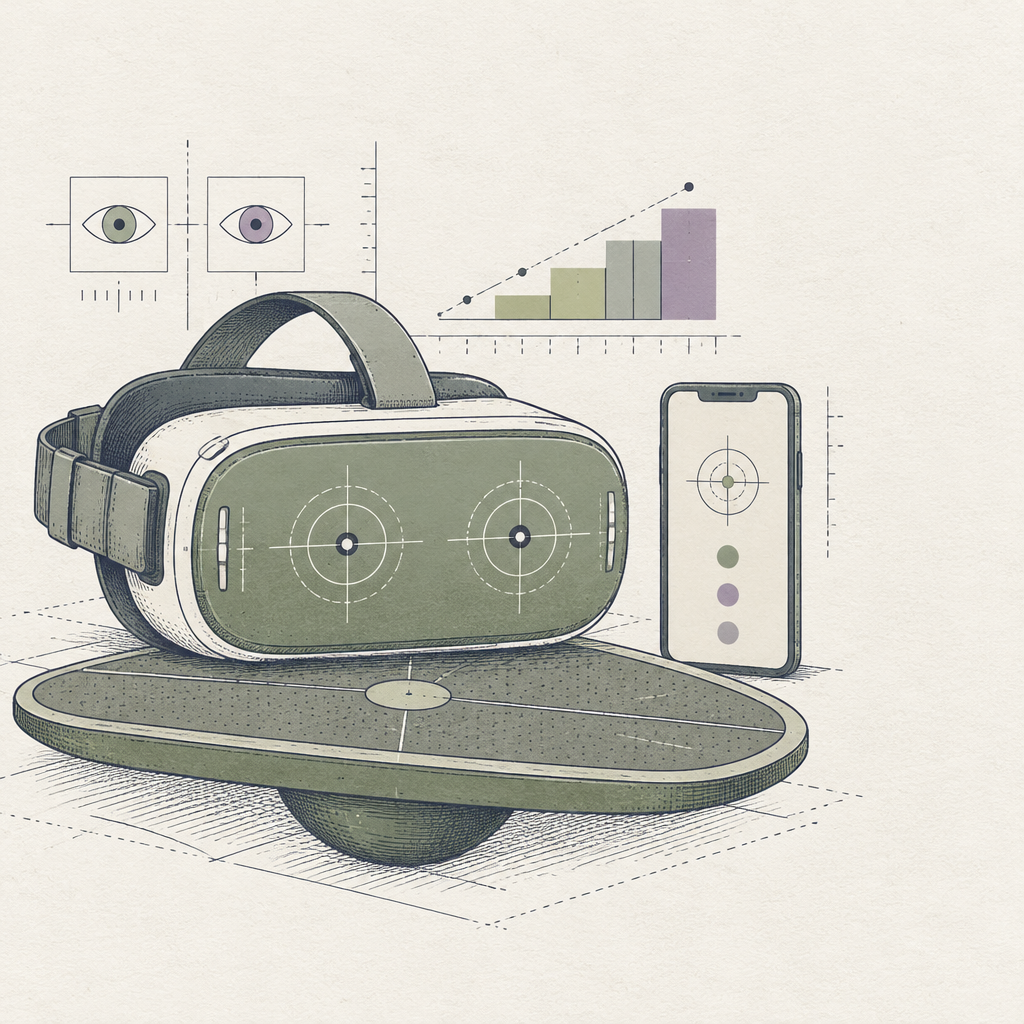
Researchers in Frontiers in Neuroscience tested virtual reality oculomotor rehabilitation on 40 adults with concussion symptoms lasting over 30 days. Participants completed six VR gaze-tracking sessions paired with mobile app drills against standard rest-and-education care. The protocol showed high compliance for targeting eye tracking and vestibular coordination after head impacts.
The architecture take
I used to believe dark rooms and strict sensory rest were the only sensible response to a bad head knock. I was wrong, and sports neurology has spent five years quietly walking that advice back. When up to 85% of concussed adults deal with visual tracking failures, telling someone to sit quietly doesn't fix the vestibular and ocular mismatch driving their nausea and brain fog. In the trial, forty adults aged 18 to 42 used six sessions of virtual reality gaze-tracking drills alongside smartphone homework. The protocol recalibrated smooth pursuit eye movements and vergence, which directly calms the sympathetic flare triggered whenever visual processing goes haywire. I track this space closely because vestibular clinics charge $300 an hour for these exact eye drills in major cities (usually on clunky analog balance boards). Consumer headsets will absorb this entire clinical protocol within eighteen months. Active retraining beats dark rooms.