news
Virginia Tech trial finds ultra-processed food blunts brain reward in young adults
A Virginia Tech pilot trial tracked 22 young adults to see how ultra-processed diets shift neural responses to eating. Brain imaging showed blunted reward circuitry activation during food cues, matching developmental windows where prefrontal control is still settling. It suggests industrial formulations can recalibrate dopamine response before adult metabolic habits even take hold.
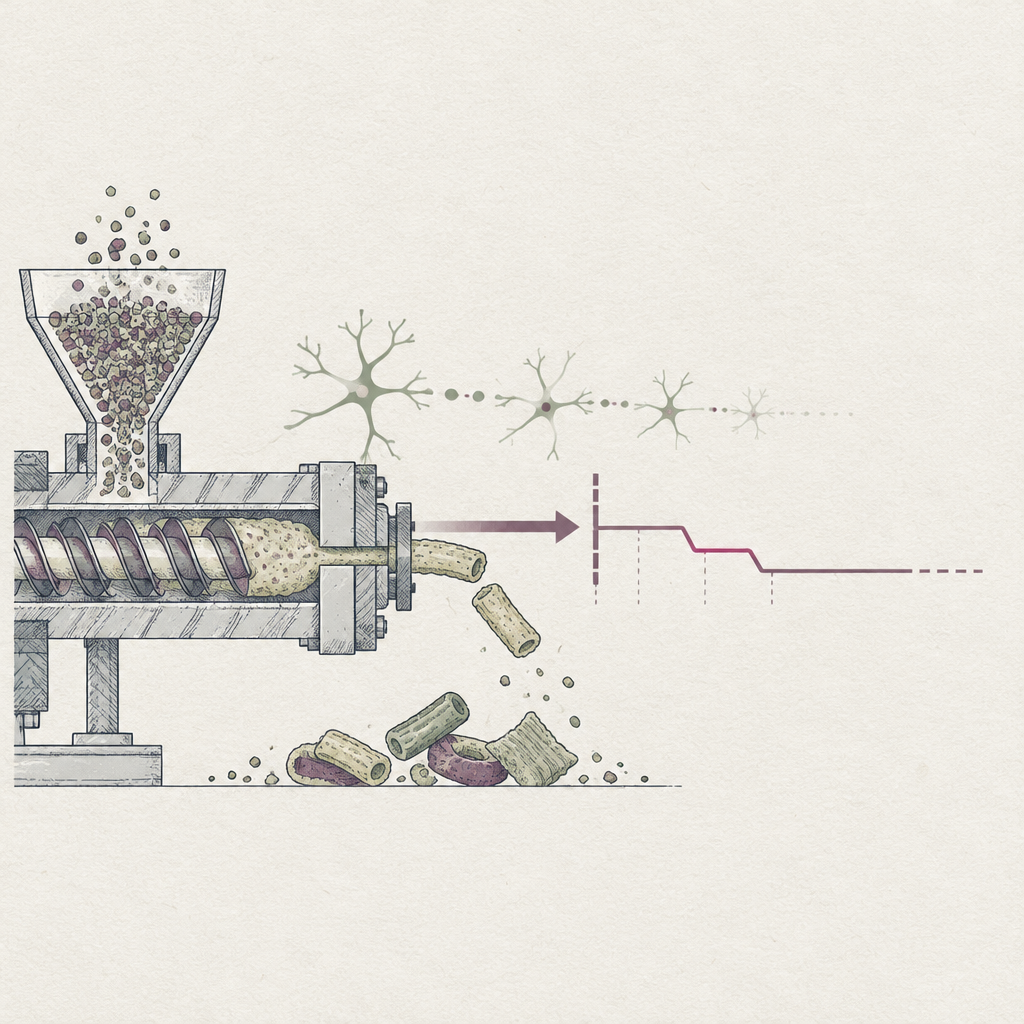
A Virginia Tech pilot trial tracked 22 young adults to see how ultra-processed diets shift neural responses to eating. Brain imaging showed blunted reward circuitry activation during food cues, matching developmental windows where prefrontal control is still settling. It suggests industrial formulations can recalibrate dopamine response before adult metabolic habits even take hold.
The architecture take
I spent years assuming chronic snack cravings were just a lack of focus on my part. I only changed my mind once I started reading the neuroimaging data on hyper-palatable formulations. In this 22-person Virginia Tech trial, researchers found that young adult brains eating ultra-processed diets show blunted reward circuitry when presented with food. That sounds like you'd care less about eating, but that's not how the circuit works. When dopamine signaling in the striatum gets muted, you need louder sensory inputs and higher caloric density just to register baseline satisfaction. Big food brands know this. By dialing sodium, fat, and refined starch to bypass natural gut satiety peptides like GLP-1, they teach an adolescent nervous system to chase volume over genuine nourishment. I suspect we're looking at an acquired sensory tolerance rather than poor habits. An eighteen-year-old brain simply stops registering real meals as rewarding.