news
Viral Proteins Hijack Airway Sensory Nerves Directly to Trigger Coughing
Researchers discovered that SARS-CoV-2 enzymes directly stimulate TRPA1 receptors on airway sensory nerves, triggering coughing and sneezing without requiring immune inflammation first. The mechanism explains why standard anti-inflammatories often fail to quiet a lingering post-viral tickle. It also identifies the specific ion channel responsible for transmitting the reflex straight to the brainstem.
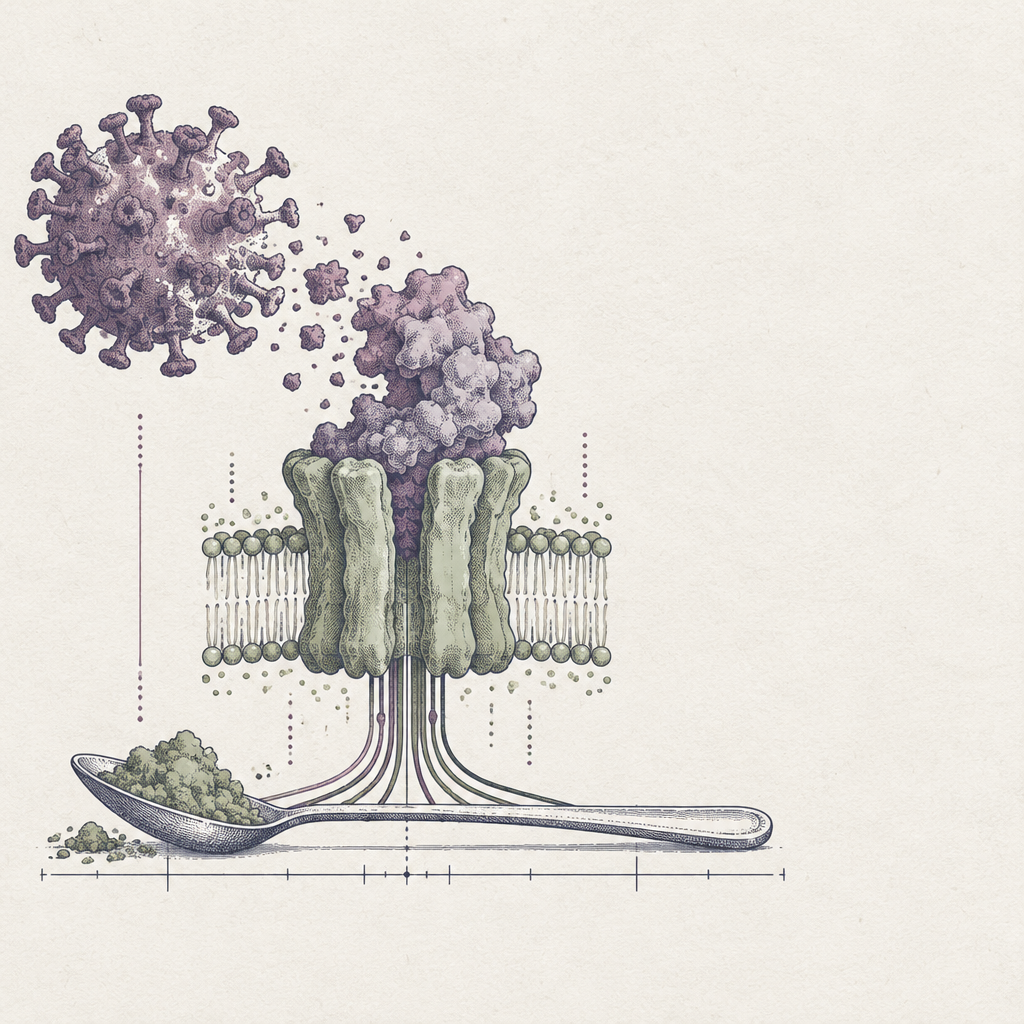
Researchers discovered that SARS-CoV-2 enzymes directly stimulate TRPA1 receptors on airway sensory nerves, triggering coughing and sneezing without requiring immune inflammation first. The mechanism explains why standard anti-inflammatories often fail to quiet a lingering post-viral tickle. It also identifies the specific ion channel responsible for transmitting the reflex straight to the brainstem.
The architecture take
Every time I catch a respiratory bug, the cough outlasts the actual sickness by three weeks, and steroid inhalers never touch it. This study explains why. Viral proteases dock directly onto TRPA1—the exact ion channel that fires when you eat raw horseradish—and force your airway sensory neurons to fire instantly. Your nervous system gets hot-wired right at the peripheral nerve terminal, running entirely parallel to the immune cascades you treat with ibuprofen or zinc.
That explains the stubborn frustration of post-viral neuropathic cough. Your vagal sensory branches are stuck in an agitated firing loop long after the active infection clears. I used to assume the persistent tickle was residual bronchial irritation, but it behaves much more like a sensitized pain nerve. Drugmakers already have TRPA1 antagonists sitting in early-stage pipelines for asthma and neuropathic itch. Expect clinical trials to pivot those molecules toward post-COVID airway hypersensitivity, because right now medicine has zero tools to quiet an overstimulated airway nerve.