news
Vagus nerve stimulation helps older adults transfer balance skills to new surfaces
A randomized trial in GeroScience tested 40 older adults doing balance training with either transcutaneous vagus nerve stimulation (tVNS) or a sham device. Participants receiving active ear-based stimulation showed significantly greater stability when tested the next day on an untrained foam surface. The pulses facilitated cortical network reorganization, helping the brain generalize balance skills instead of just memorizing one specific drill.
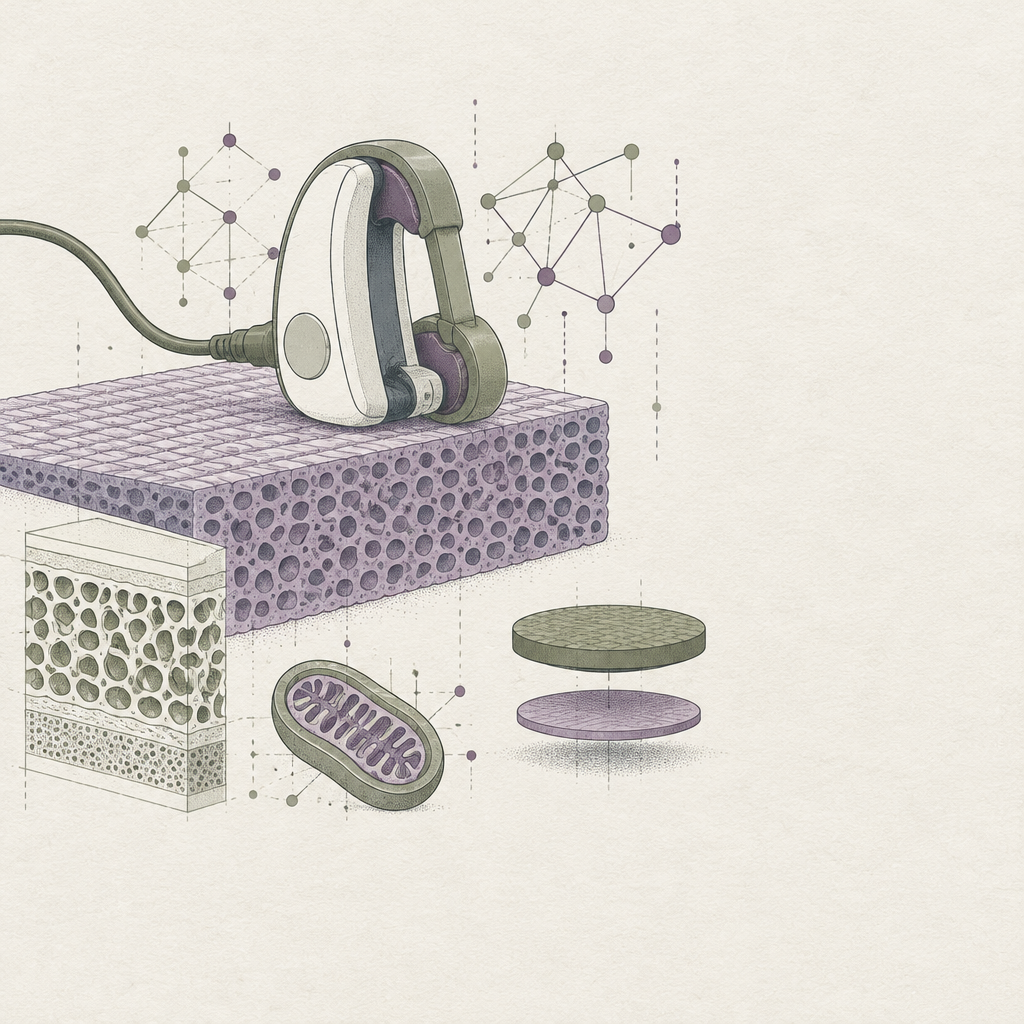
A randomized trial in GeroScience tested 40 older adults doing balance training with either transcutaneous vagus nerve stimulation (tVNS) or a sham device. Participants receiving active ear-based stimulation showed significantly greater stability when tested the next day on an untrained foam surface. The pulses facilitated cortical network reorganization, helping the brain generalize balance skills instead of just memorizing one specific drill.
The architecture take
I used to dismiss ear-clip vagus nerve zappers as expensive placebo gear for biohackers who like feeling slightly electrocuted at their desks. Then trials like this show up with concrete motor outcomes. The researchers paired electrical vagus stimulation at the ear with unstable platform training in 40 older adults. When they tested them on a squishy foam pad the next day, the stimulated group didn't just hold their balance better; their brains reorganized beta-band cortical connectivity overnight. What excites me is generalization. Aging nervous systems struggle to transfer a skill learned on solid ground over to a slick sidewalk or an icy curb. Vagal stimulation triggers a flood of acetylcholine and norepinephrine, effectively telling motor circuits to lock in the adaptation across different contexts. I still think consumer tVNS hardware is mostly clunky hype, but the clinical signal is undeniable. Expect longevity clinics to start strapping electrodes to your tragus while you stand on a balance board by autumn.