news
Unfair Chores Raise Relationship Stress, Says New Study
New research from the University of Queensland, published in Scientific Reports, links uneven distribution of household chores to increased cognitive, emotional, and physical strain in relationships. They argue these burdens are key to assessing relationship health, beyond just fairness. I read it as another data point for why chronic stress erodes everything.
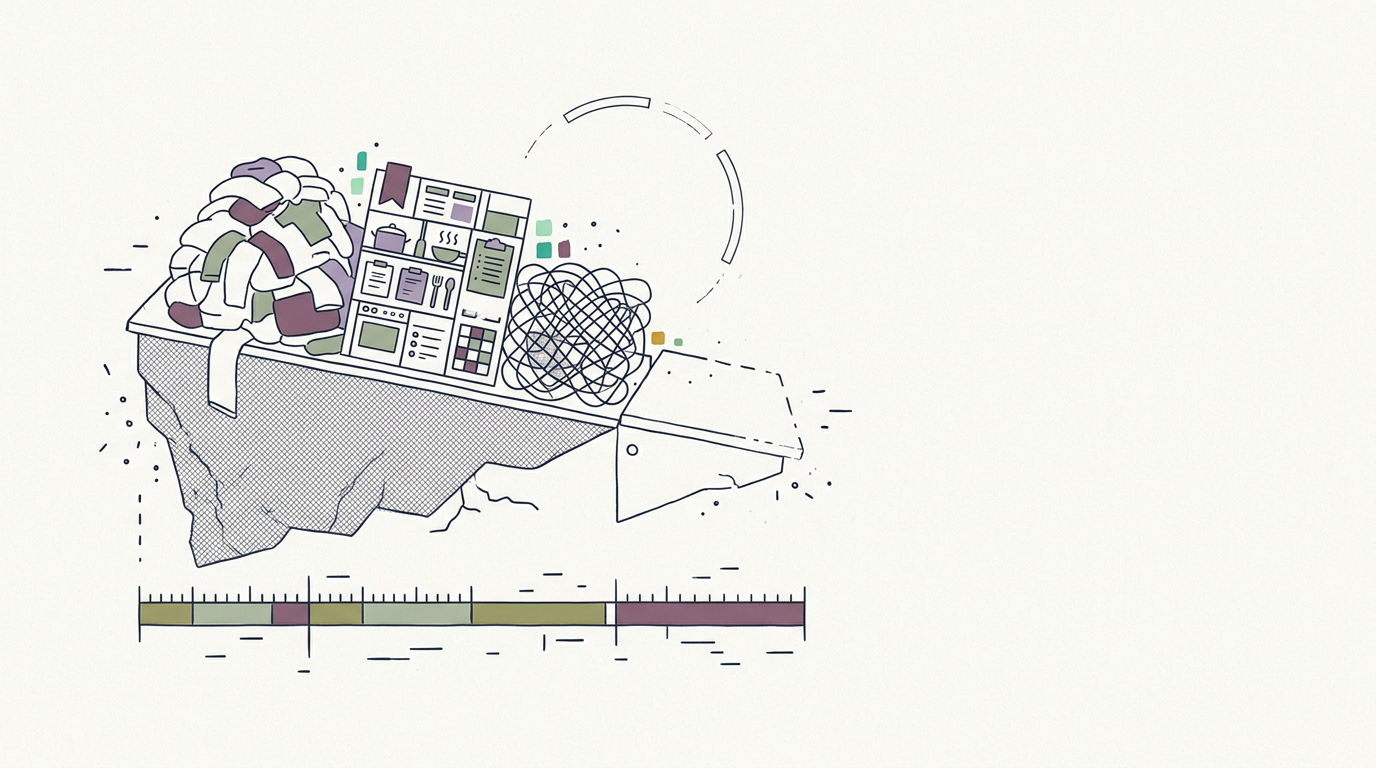
New research from the University of Queensland, published in Scientific Reports, links uneven distribution of household chores to increased cognitive, emotional, and physical strain in relationships. They argue these burdens are key to assessing relationship health, beyond just fairness. I read it as another data point for why chronic stress erodes everything.
The architecture take
I’m not sure we needed a study to tell us that an unfair division of labor makes you resentful, but here we are. This paper points out the cognitive load, emotional burden, and physical exhaustion that come with managing a home, and how that stress chips away at a partnership. It's not just the act of cleaning, it's the thinking about cleaning, the mental burden of remembering who needs new socks, or planning dinner for five, or finding time for grocery runs. That sustained, low-level stress keeps the nervous system on edge, impacting sleep quality and mood, even when you're not actively arguing. It’s a subtle but constant drip of cortisol. If your baseline is already 'tired but wired' from work, adding an uneven pile of domestic tasks just pushes you further into dysregulation. Your body picks up on the imbalance long before your conscious mind forms a complaint. Unfair systems make us sick. Full stop.