news
Swapping Table Salt for Potassium Blends Could Prevent Nearly 3M Deaths
Global modeling data shows that replacing standard kitchen salt with a potassium-enriched substitute could avert roughly 2.9 million deaths annually from stroke and cardiovascular events. The low-cost swap cuts excess sodium while replenishing chronically depleted potassium across broad populations. It offers a rare, high-impact dietary adjustment that requires no willpower or complex habit overhauls.
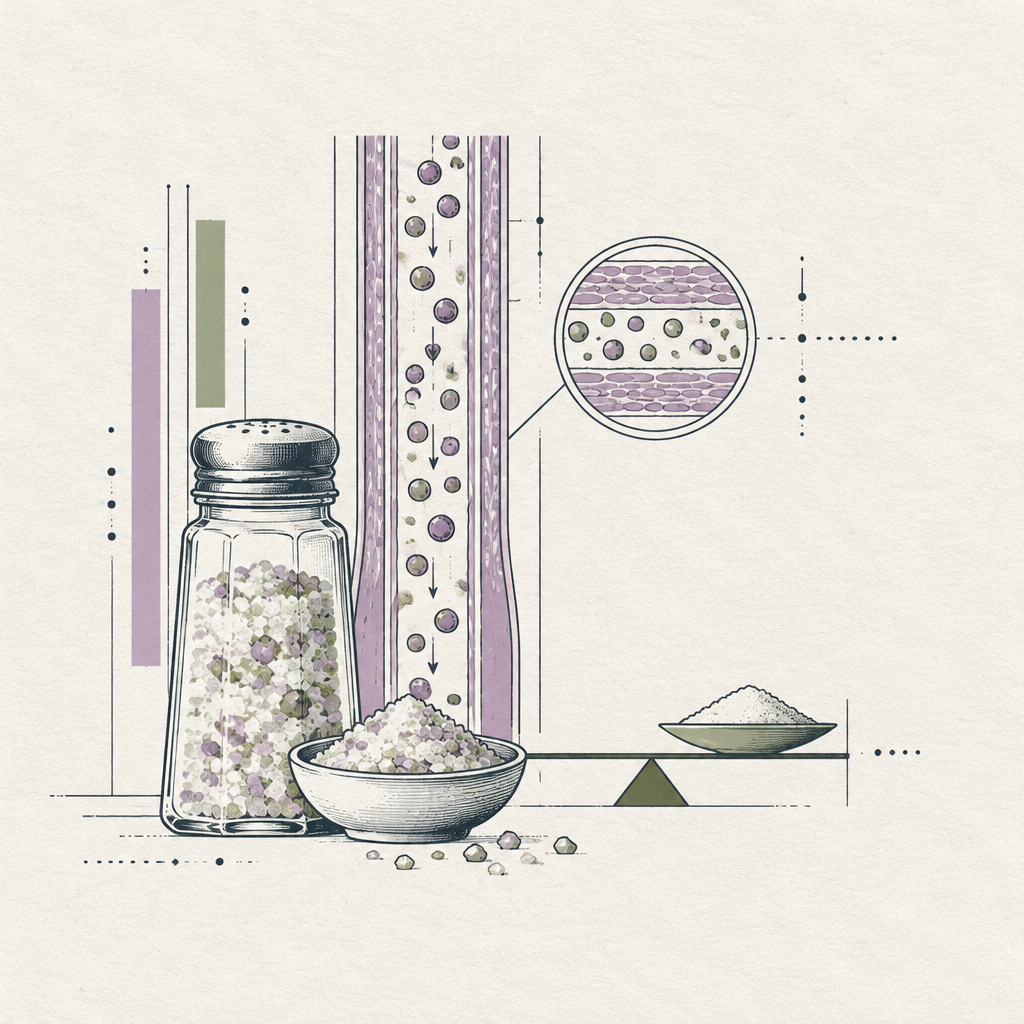
Global modeling data shows that replacing standard kitchen salt with a potassium-enriched substitute could avert roughly 2.9 million deaths annually from stroke and cardiovascular events. The low-cost swap cuts excess sodium while replenishing chronically depleted potassium across broad populations. It offers a rare, high-impact dietary adjustment that requires no willpower or complex habit overhauls.
The architecture take
I used to roll my eyes at salt-substitute headlines until I looked at the actual electrolyte physiology. The human body evolved on high potassium and minimal sodium; modern grocery food flipped that ratio, keeping vascular tone tight and the sympathetic nervous system on constant alert. Switching table salt to a 75/25 sodium-to-potassium chloride blend does two things at once. It pulls excess sodium off the vascular walls and restores intracellular potassium without asking people to chew through four cups of boiled chard every evening. Chronic arterial strain stiffens blood vessels, blunts vagal baroreflex sensitivity, and keeps baseline vascular pressure simmering on low heat. Commercial food companies drag their feet because industrial sodium chloride acts as an ultra-cheap preservative, so the swap has to happen in home shakers first. I switched my shaker. It tastes slightly sharper than pure sea salt, but giving your heart and nervous system an automatic break is worth the small adjustment.