news
Study of 9 Million Records Links Taxi Driving to Lower Alzheimer's
An analysis of 9 million death certificates revealed that taxi drivers experience significantly lower rates of Alzheimer's disease mortality than the general population. The protective factor stems from decades of active spatial navigation, which continuously challenges hippocampal grey matter. For anyone managing long-term brain health, turning off automated directions offers a surprisingly potent cognitive training drill.
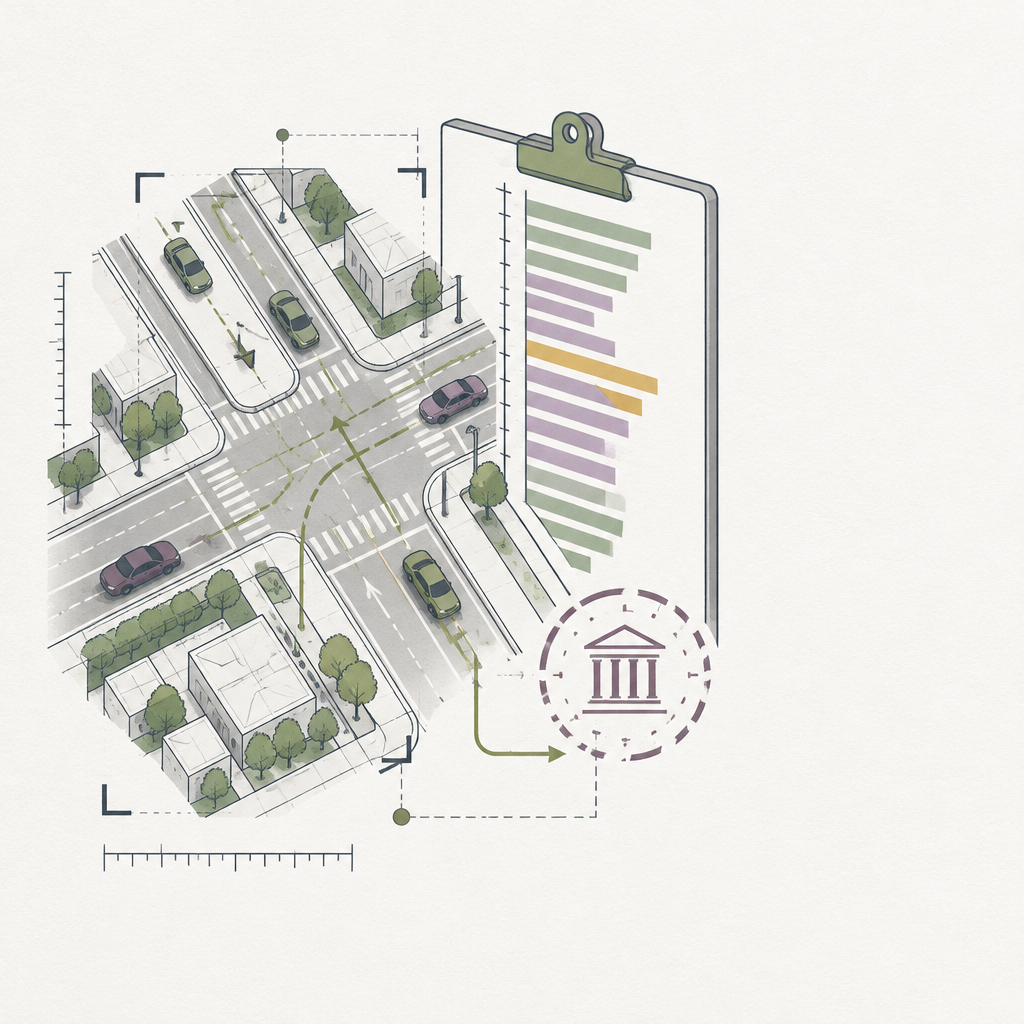
An analysis of 9 million death certificates revealed that taxi drivers experience significantly lower rates of Alzheimer's disease mortality than the general population. The protective factor stems from decades of active spatial navigation, which continuously challenges hippocampal grey matter. For anyone managing long-term brain health, turning off automated directions offers a surprisingly potent cognitive training drill.
The architecture take
I spent years assuming crossword puzzles and phone apps kept my brain sharp, but active navigation does something entirely different to the hippocampus. When researchers sifted through 9 million death certificates, taxi drivers showed unusually low Alzheimer's mortality rates. Constantly calculating routes in three dimensions without automated audio prompts demands intense hippocampal work, driving blood flow and synaptic growth straight to the brain's internal map. Those happen to be the first areas that degenerate in dementia. Passive screen directions turn that spatial circuitry off, letting our baseline cognitive capacity go soft while algorithms do the heavy lifting. I stopped relying on turn-by-turn GPS for familiar drives last month. I got lost twice on my own commute (and my pride took a hit), but that disorientation is the exact state where neuroplasticity happens. Navigating by memory forces real spatial orientation. It costs zero dollars.