news
Study Links Over 50,000 European City Deaths to Extreme Heat
Epidemiologists analyzed excess mortality across 854 European cities and attributed over 50,000 urban deaths to severe summer heat waves. The data shows nighttime heat drove the highest mortality spikes because urban centers stayed hot after dark. The numbers reframe extreme temperature from a daytime outdoor issue into an overnight cardiovascular event.
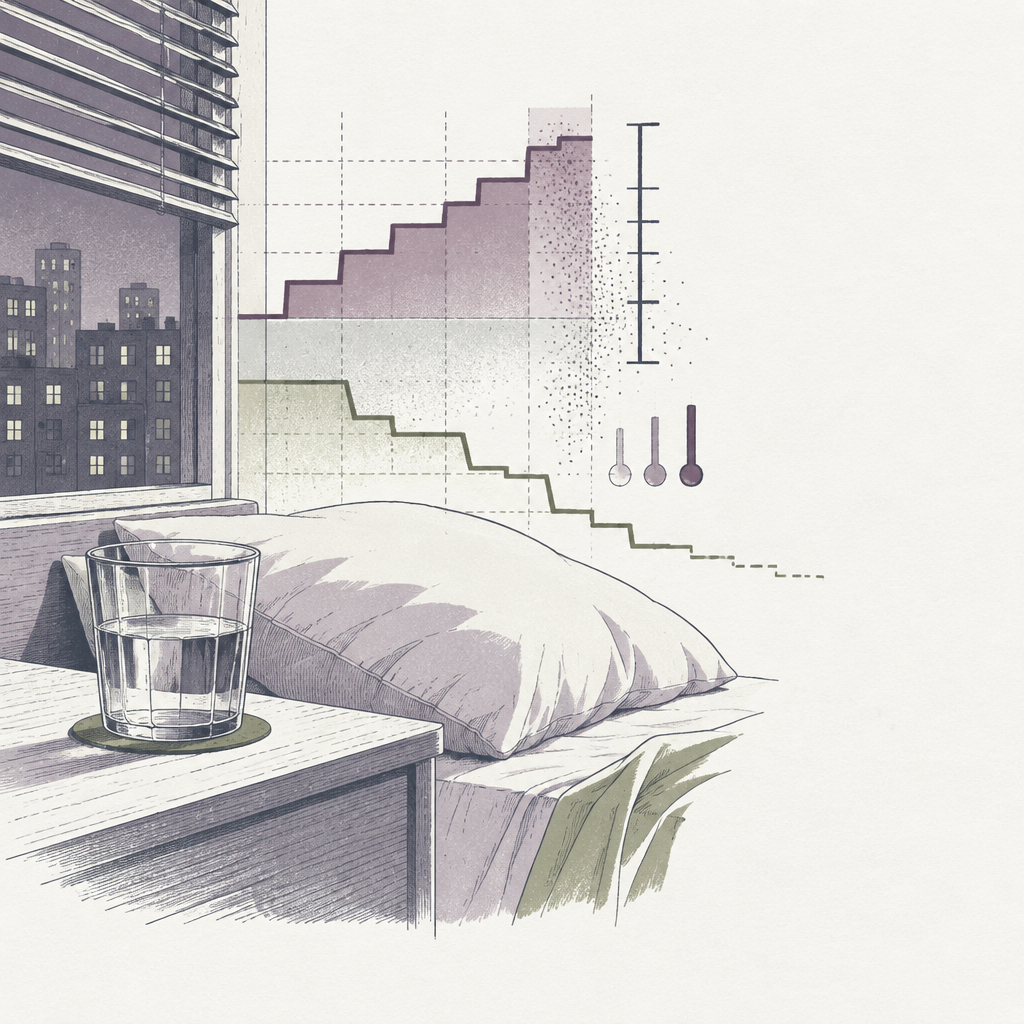
Epidemiologists analyzed excess mortality across 854 European cities and attributed over 50,000 urban deaths to severe summer heat waves. The data shows nighttime heat drove the highest mortality spikes because urban centers stayed hot after dark. The numbers reframe extreme temperature from a daytime outdoor issue into an overnight cardiovascular event.
The architecture take
I used to think heat warnings were mostly about drinking water and dodging midday sun until I spent a sticky July in Madrid watching my resting heart rate jump ten beats overnight. Night heat breaks bodies quietly. When urban concrete traps warmth and the room won't drop below 20°C, your core body temperature can't shed the degree required to drop into slow-wave sleep. Instead of shifting into parasympathetic recovery, your heart works overtime pumping blood to the skin to radiate heat. I spent years viewing air conditioning or a cooling pad as an indulgence rather than baseline autonomic care. I track indoor temperature obsessively now. If you live in a dense neighborhood, using cold water on your forearms or pulling room temperatures down after sunset is what prevents that cardiovascular load from compounding into exhaustion by day four.