news
Sports Medicine Review Backs Supramaximal Eccentric Lifting for Low-Volume Strength
A narrative review in Sports Medicine synthesizes the case for supramaximal accentuated eccentric loading, where lifters lower over 100% of their concentric maximum and lift less than 100%. The protocol targets type II muscle fibers and satellite cells with significantly lower volume than traditional lifting sets. It offers a way to generate high mechanical tension without burying your recovery capacity.
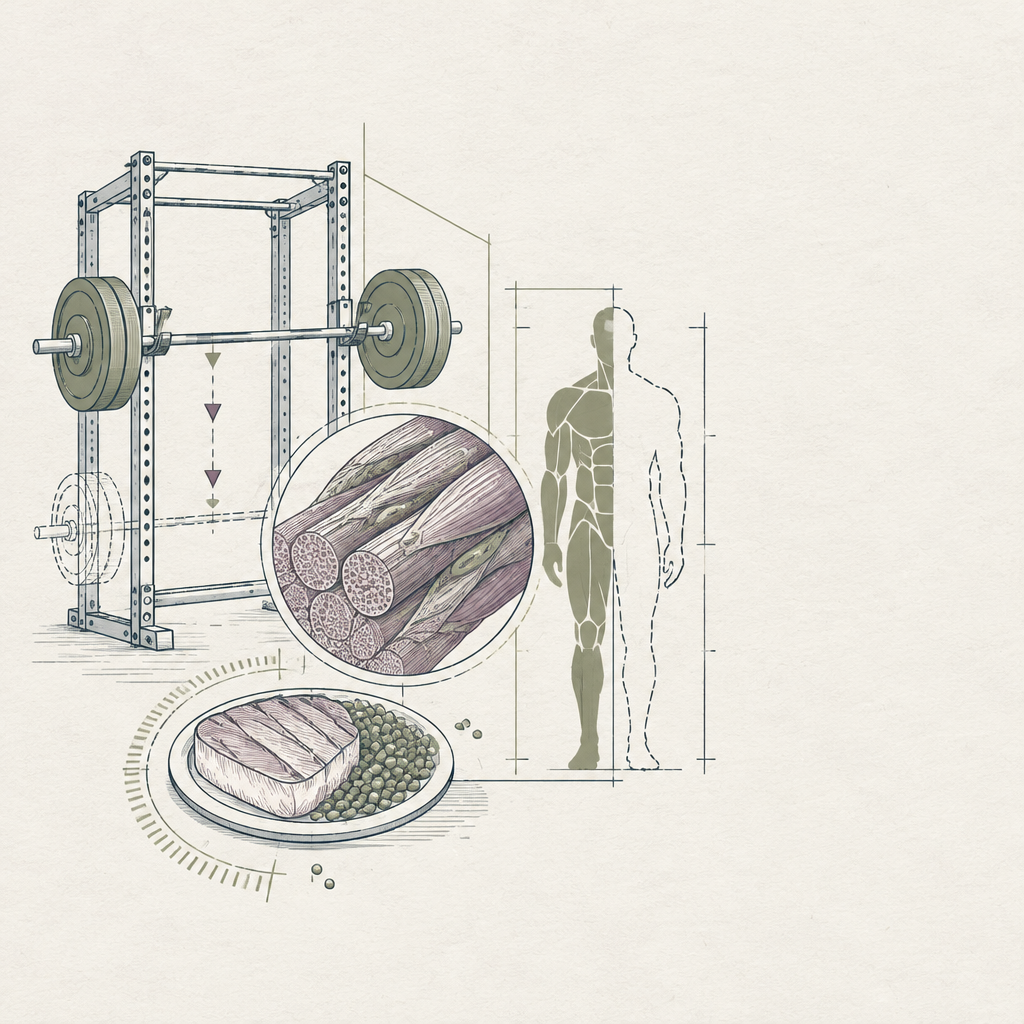
A narrative review in Sports Medicine synthesizes the case for supramaximal accentuated eccentric loading, where lifters lower over 100% of their concentric maximum and lift less than 100%. The protocol targets type II muscle fibers and satellite cells with significantly lower volume than traditional lifting sets. It offers a way to generate high mechanical tension without burying your recovery capacity.
The architecture take
I spent years convinced that volume was the only dial that mattered for getting stronger. I was wrong. If you overload just the lowering phase past 100% of your maximum, your type II fibers and satellite cells get the signal to adapt in two or three brutal reps instead of five grueling sets. You get high mechanical tension without the metabolic waste that leaves your nervous system fried for days. The catch is practical. Loading 110% on a barbell descent usually requires clunky weight releasers or two attentive spotters who actually like you. Digital resistance machines are already quietly automating this, letting a motor add thirty pounds only on the way down. I suspect that within two years, eccentric overload will be the default setting on every premium gym floor. For now, I stick to four-second negatives with dumbbells to keep my joints happy.