news
Specific tRNA Influences Prostate Cancer Therapy Resistance
New research shows how a particular transfer-RNA (tRNA1Arg(UCU)) can alter prostate cancer cells' sensitivity to androgen receptor therapies. Scientists restored this tRNA in experimental models, making previously resistant cells responsive to treatment again. This discovery offers a new angle for tackling drug resistance in prostate cancer patients.
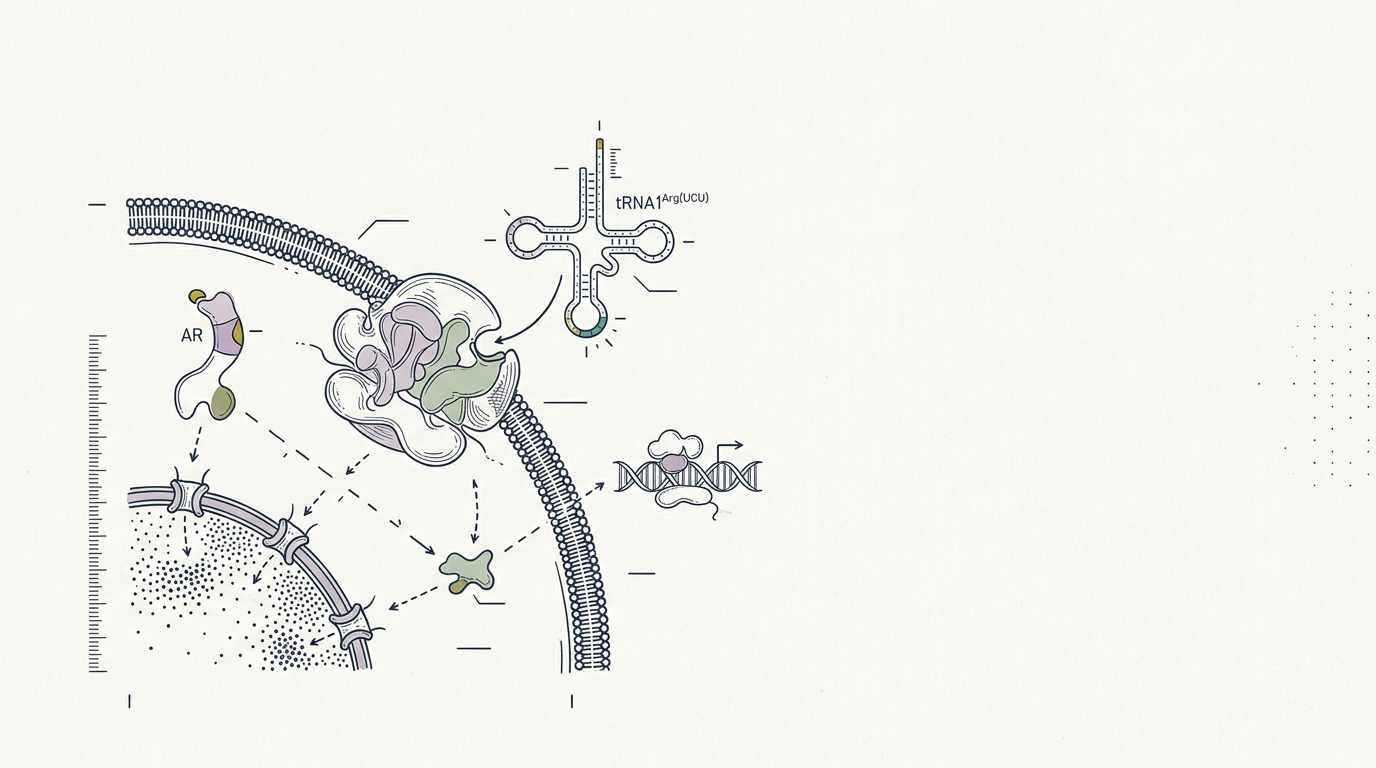
New research shows how a particular transfer-RNA (tRNA1Arg(UCU)) can alter prostate cancer cells' sensitivity to androgen receptor therapies. Scientists restored this tRNA in experimental models, making previously resistant cells responsive to treatment again. This discovery offers a new angle for tackling drug resistance in prostate cancer patients.
The architecture take
The body is a wild tangle of mechanisms, and this is a good reminder. We think of cancer as a clear adversary, but here the battle is happening at the level of specific transfer-RNAs influencing how cells respond to drugs. It's not just about blocking a pathway; it's about making sure the cell's internal machinery is actually listening. Imagine your cells are refusing to take a call — this tRNA might be the signal booster. For a patient, this could mean avoiding or reversing treatment resistance, which is a major hurdle in many hormone-sensitive cancers. What I'm watching next is how quickly this goes from 'experimental models' to human trials, and if similar tRNA-mediated resistance factors show up in other diseases where targeted therapies hit a wall. It's about bringing the cells back to a state where they can actually respond.