news
Sour Taste Buds Release Serotonin on the Tongue to Mute Sweet Signals
Taste buds act as miniature neural processing hubs, releasing serotonin when exposed to sour acid to mute competing sweet, salty, and bitter signals before signals reach the brain. The finding overturns the model of taste receptors functioning as passive wiring. It explains why a wedge of lemon instantly cancels intense sweetness or palate fatigue.
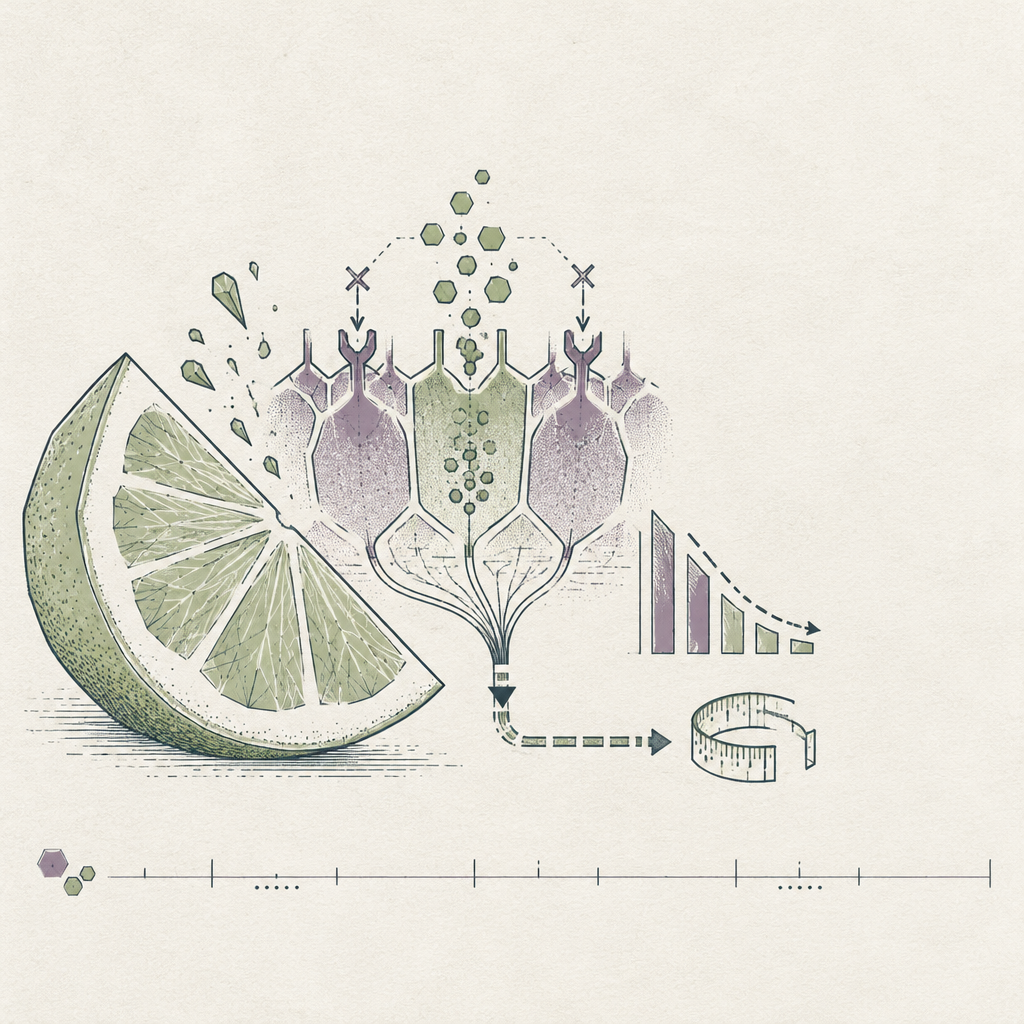
Taste buds act as miniature neural processing hubs, releasing serotonin when exposed to sour acid to mute competing sweet, salty, and bitter signals before signals reach the brain. The finding overturns the model of taste receptors functioning as passive wiring. It explains why a wedge of lemon instantly cancels intense sweetness or palate fatigue.
The architecture take
I used to think my tongue was just a dumb microphone relaying chemistry to my brain. I was wrong. The discovery that sour-sensing cells actively pump out serotonin to suppress neighboring sweet and bitter receptors turns the mouth into a tiny local sorting office. That explains why biting a lemon wedge or sipping raw apple cider vinegar cuts through a runaway sugar craving in two seconds flat. You are not willing yourself out of a dopamine loop; you are literally bathing sweet receptors in local serotonin before the message climbs the cranial nerves. I keep lemons in my fridge door specifically for the 4 p.m. snack slump, and now the biology backs it up. Watch functional beverage startups seize this to formulate anti-craving bitter-sour tonics without synthetic GLP-1 mimicry claims. The mouth handles the gatekeeping (saving your frontal cortex the hassle). Simple chemistry beats willpower every time.