news
Smart contact lens measures tear serotonin to track real-time stress
Researchers at the Terasaki Institute for Biomedical Innovation developed a contact lens sensor that measures serotonin in tear fluid to monitor stress levels. Tear film provides a continuous biochemical readout without the needles required for blood tests or the subjective bias of daily mood logs. The prototype aims to turn ocular fluid into an objective gauge for autonomic strain.
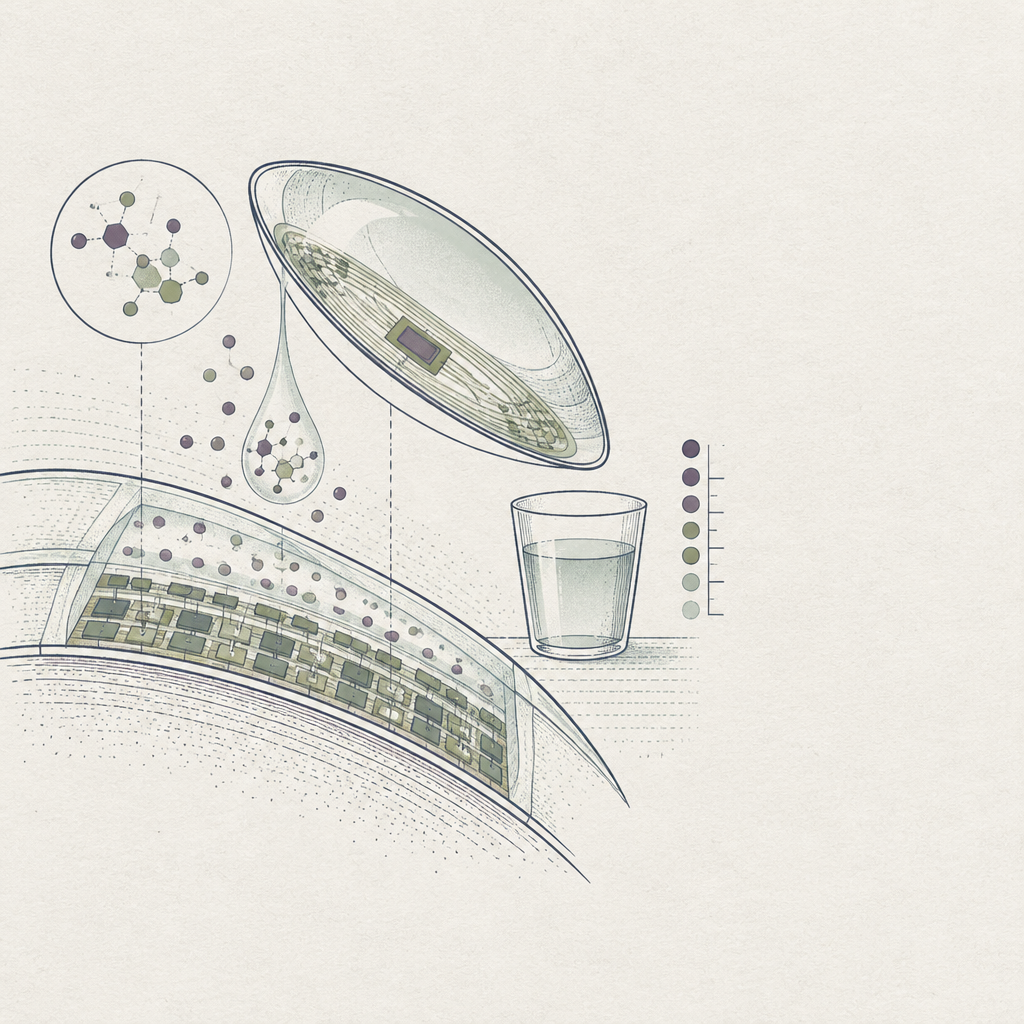
Researchers at the Terasaki Institute for Biomedical Innovation developed a contact lens sensor that measures serotonin in tear fluid to monitor stress levels. Tear film provides a continuous biochemical readout without the needles required for blood tests or the subjective bias of daily mood logs. The prototype aims to turn ocular fluid into an objective gauge for autonomic strain.
The architecture take
I spent three years tracking HRV on a ring before I accepted that most wearables measure my panic about being stressed rather than the biological event itself. Swapping optical pulse data for biochemical monitoring in tear fluid is a serious technical leap. The Terasaki Institute team targets serotonin, a neurotransmitter governing mood and gut signaling that diffuses into tears at nanomolar concentrations. The pitch is clean: continuous neurochemical readouts without a needle, bypassing the subjective fog of symptom diaries. I still wonder whether tear-film serotonin reflects central brain state during an acute cortisol spike, or if it mostly catches local ocular surface shifts. But nudging biosensing away from simple heart-rate algorithms and toward fluid biochemistry is where the category gets interesting. If their team can prevent biofouling from tear proteins across an eight-hour workday, noninvasive neurochemical tracking stops being theoretical.