news
Sixteen Blood Proteins Track Menopause Brain Fog and Dementia Risk
Researchers identified 16 serum proteins that shift during the menopausal transition, linking estrogen decline to synaptic changes and neuroinflammation. The blood markers help explain why midlife brain fog frequently tracks with metabolic and cognitive dips. It points toward earlier clinical detection for women navigating hormonal brain shifts.
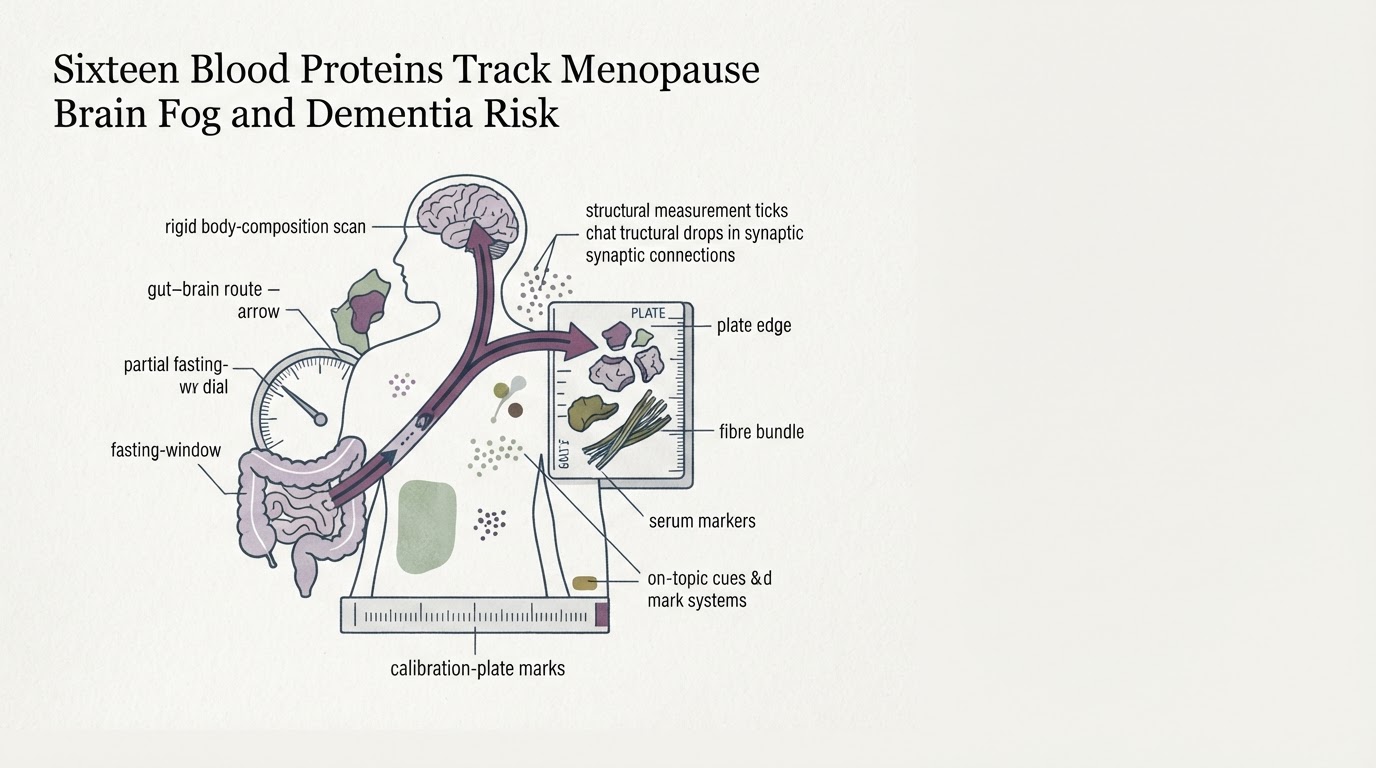
Researchers identified 16 serum proteins that shift during the menopausal transition, linking estrogen decline to synaptic changes and neuroinflammation. The blood markers help explain why midlife brain fog frequently tracks with metabolic and cognitive dips. It points toward earlier clinical detection for women navigating hormonal brain shifts.
The architecture take
I used to write off perimenopause brain fog as sleep deprivation and bad luck. That was lazy thinking. When circulating 17β-estradiol tanks, neurons lose a primary glucose-uptake signal, and microglia flip into a sustained inflammatory state. This proteomic screen tracked 16 specific serum markers, showing that synaptic proteins drop right as metabolic and neuroinflammatory signals spike. That explains why forgetting a colleague’s name at 48 feels so physical. I find this research grounding because it moves the conversation away from vague wellness dread toward measurable immune load. I bet diagnostic labs like Quest or Labcorp roll out a midlife neuro-panel within two years. Until then, you do not need to wait on a specialty blood panel to respond. If your head feels muffled post-45, protect your baseline with steady blood sugar, deep sleep, and heavy lifting.