news
Sheffield Study Finds Gamers Gain 90 Milliseconds in Visual Decisions
University of Sheffield researchers tested over 300 video game players and found a 90-millisecond visual processing speed edge over non-gamers. The advantage was strictly isolated to visual reaction time, showing zero transfer to multitasking or broader executive control.
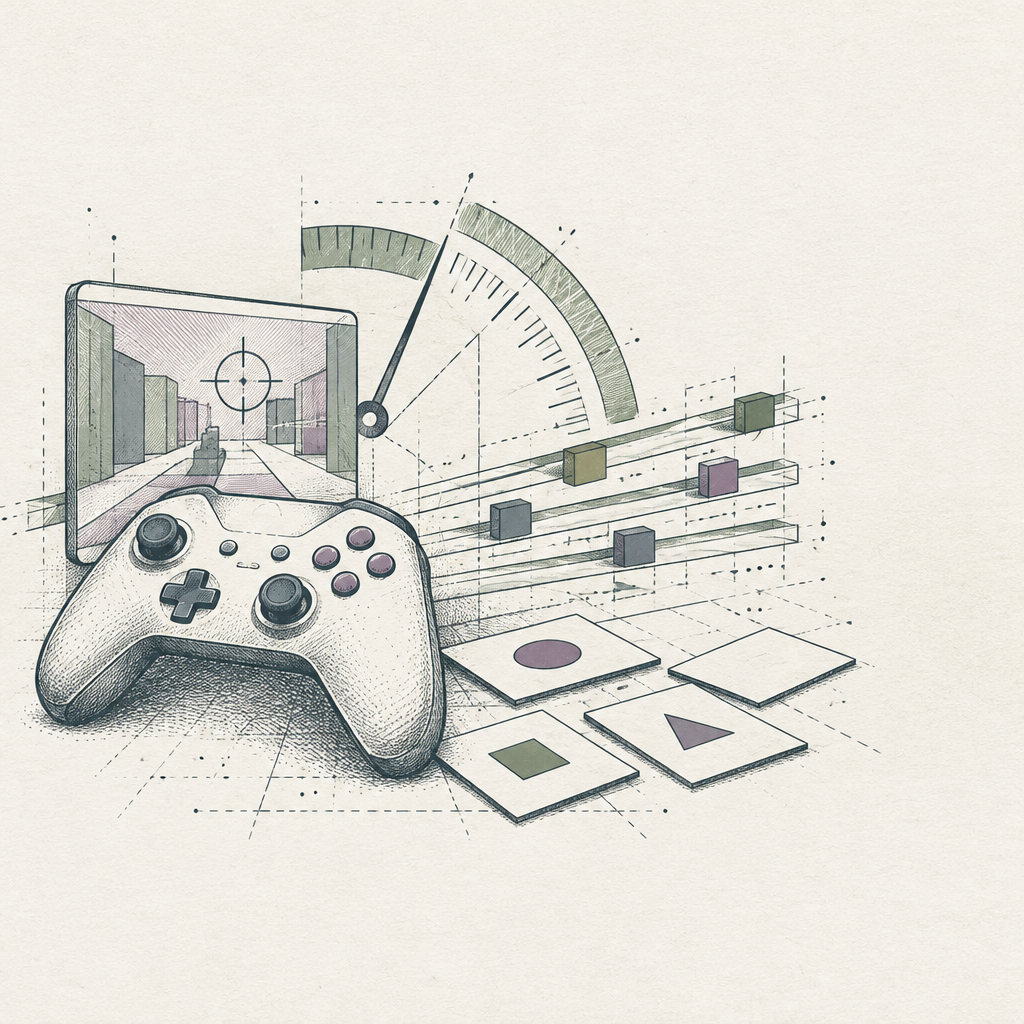
University of Sheffield researchers tested over 300 video game players and found a 90-millisecond visual processing speed edge over non-gamers. The advantage was strictly isolated to visual reaction time, showing zero transfer to multitasking or broader executive control.
The architecture take
I used to tell myself that playing fast-paced games was secretly sharpening my executive function. I was wrong. The University of Sheffield tested over 300 players and found they shave 90 milliseconds off visual decision time, but gain zero advantage in multitasking capacity. The nervous system simply learns the exact visual loop you feed it. Your brain trims latency between visual cortex recognition and motor output, yet your broader baseline remains untouched. I find that distinction deeply grounding. Processing speed is strictly a narrow physical reflex. When tech founders boast about gaming to train split-second focus under high cognitive load, they're confusing twitch reflexes with state control. You can dodge a virtual sniper faster (handy if you live in an arena shooter), but your ability to handle two demanding tasks at once stays completely flat. Real mental capacity doesn't work through cross-training shortcuts.