news
Severe PMS Splits Into Three Distinct Subtypes In New Research
Researchers analyzing symptom patterns across thousands of menstrual cycles found that severe premenstrual syndrome falls into three distinct biological subtypes rather than a single condition. The groupings separate acute mood plunges, physical inflammatory pain with fatigue, and mixed rolling symptoms. The finding explains why standard birth control pills and SSRIs routinely fail two out of three patients who try them.
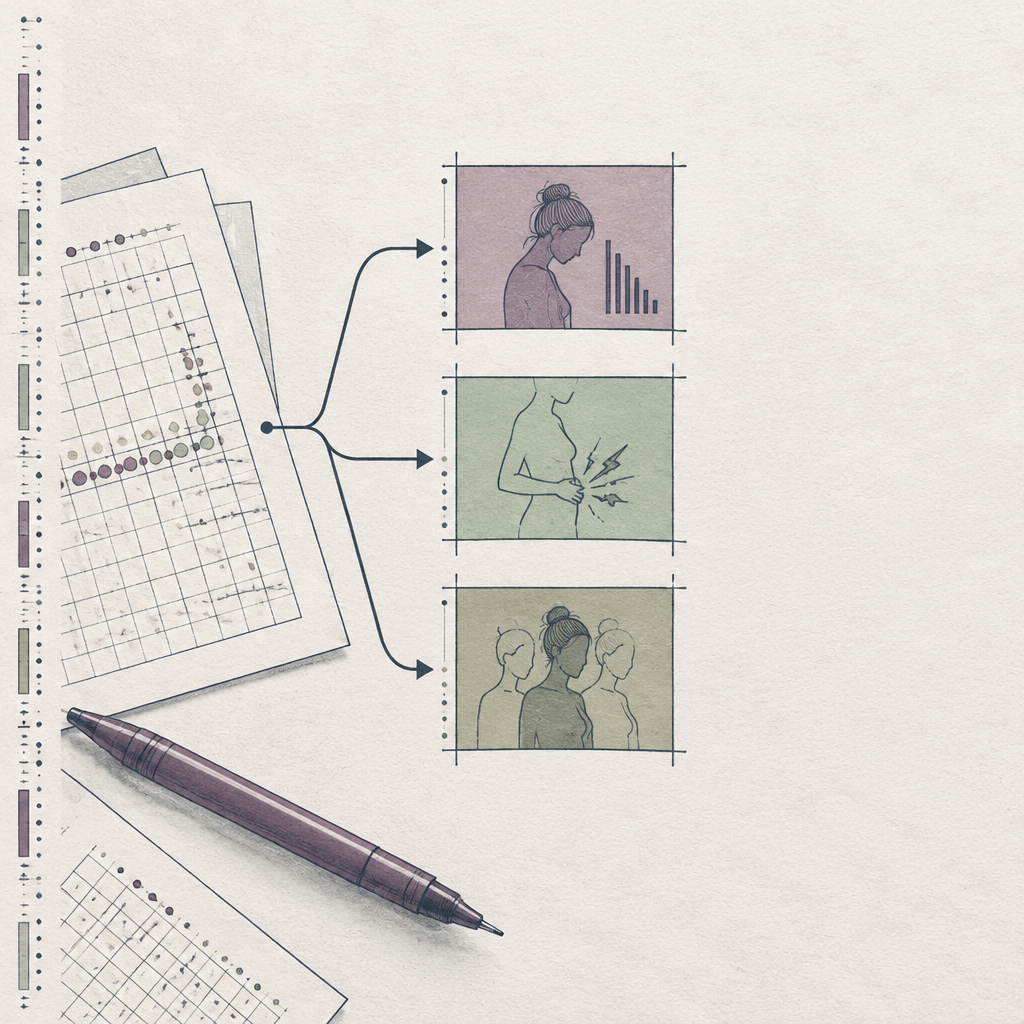
Researchers analyzing symptom patterns across thousands of menstrual cycles found that severe premenstrual syndrome falls into three distinct biological subtypes rather than a single condition. The groupings separate acute mood plunges, physical inflammatory pain with fatigue, and mixed rolling symptoms. The finding explains why standard birth control pills and SSRIs routinely fail two out of three patients who try them.
The architecture take
Lumping every miserable luteal phase into one bucket called PMS or PMDD has always struck me as lazy medicine. The biology never matched the catch-all diagnosis. In one subtype, a woman's brain is hypersensitive to allopregnanolone fluctuating at GABA-A receptors, triggering sudden panic or rage 48 hours before bleeding starts. In another, the driver is primarily systemic inflammation and prostaglandin surges, creating severe joint pain, migraines, and gut stalling while mood stays intact. When clinics hand out the same low-dose contraceptive or SSRI to everyone, they are treating completely different neuroendocrine cascades as if they were identical twins. I spent years watching friends swap prescriptions like trading cards because their doctors treated luteal distress as a generic mood glitch. Classifying these cases into clear sub-phenotypes means clinicians can finally target the actual mechanism instead of guessing. Watch cycle-tracking platforms and reproductive psychiatrists start sorting patients by symptom clusters before writing a single script.