news
Scientists need AI to flag overlooked research, not just confirm it
A Bio-IT World piece argues that AI in drug discovery often confirms existing biases instead of challenging them. The real value is an AI that surfaces contradictory findings and forces scientists to confront uncomfortable data, not just what supports a hypothesis. This could reshape how we develop new therapies, from GLP-1s to psychedelics, by catching critical errors early.
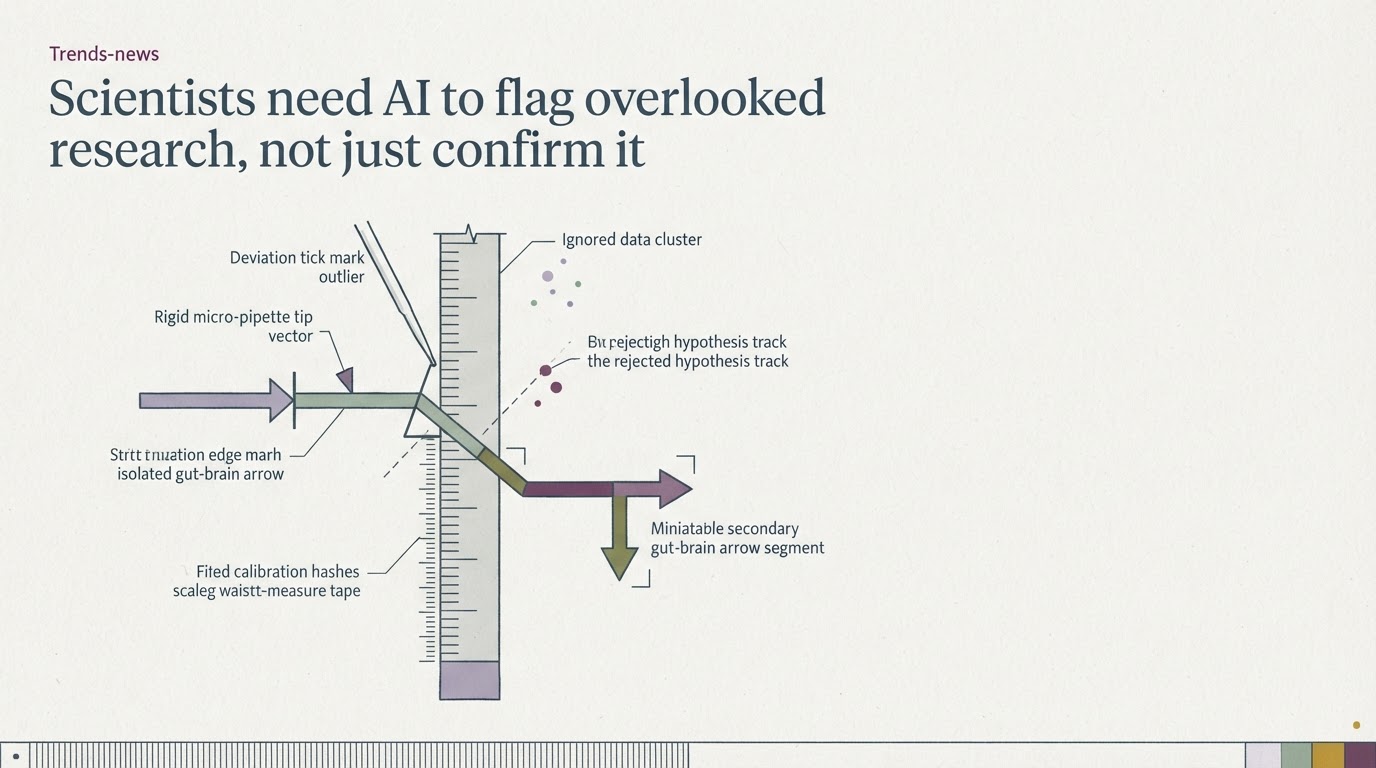
A Bio-IT World piece argues that AI in drug discovery often confirms existing biases instead of challenging them. The real value is an AI that surfaces contradictory findings and forces scientists to confront uncomfortable data, not just what supports a hypothesis. This could reshape how we develop new therapies, from GLP-1s to psychedelics, by catching critical errors early.
The architecture take
I've seen this play out so many times in labs: the data that doesn't fit gets filed away, or worse, just ignored. This piece on AI in drug discovery isn't just about big pharma; it's about how confirmation bias can torpedo even the most promising science, costing years and billions. What scientists really need isn't an AI that makes a 'stronger case' for what they already believe. They need one that actively looks for the inconvenient truths – the outlier results, the contradictory studies. Imagine an AI that specifically flags why a potential peptide, or a new mechanism for blood sugar regulation, might actually fail downstream. It's about building a better 'nervous system' for R&D, not just a faster one. We'd see fewer failed trials, less wasted research, and maybe get to effective treatments for the gut, brain, and hormones way quicker. It forces you to look at the whole picture, not just the pretty parts.