news
Researchers Turn Human Hair Into Conductive EEG Electrodes
Bioengineers at Ghent and Linköping universities developed conductive polymer hair dyes that turn hair into EEG sensors. The coating detects cortical brain waves without sticky electrolyte gels or shaved patches. It aims to make long-term neural monitoring wearable outside medical clinics.
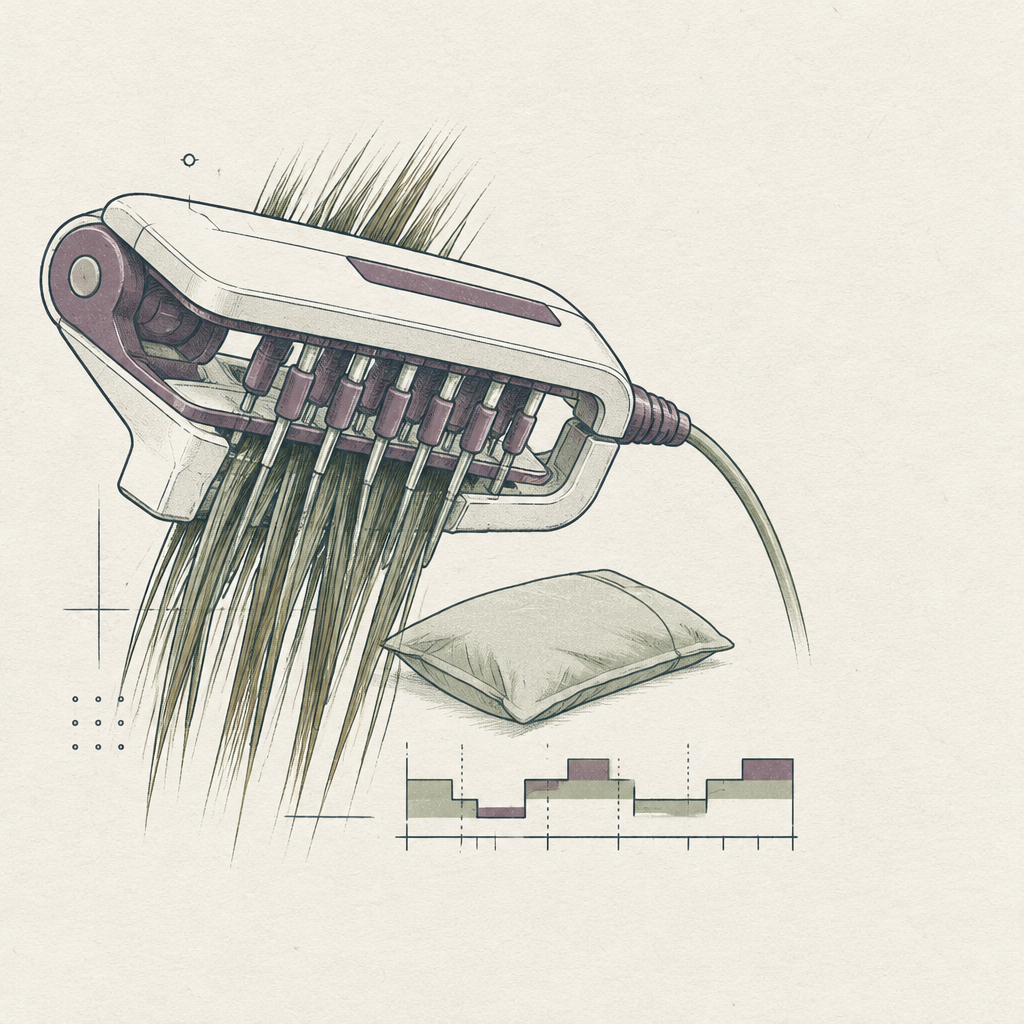
Bioengineers at Ghent and Linköping universities developed conductive polymer hair dyes that turn hair into EEG sensors. The coating detects cortical brain waves without sticky electrolyte gels or shaved patches. It aims to make long-term neural monitoring wearable outside medical clinics.
The architecture take
Turning your hair into a conductive electrode beats having cold electrolyte gel scrubbed into your scalp for forty minutes. I spent half a day in a university sleep lab three years ago picking dried conductive paste out of my roots, convinced non-invasive EEG was permanently stuck in clinical purgatory. I was wrong about the form factor. Georgios Spyropoulos at Ghent and Xenofon Strakosas at Linköping figured out that polymer dyes can make individual hair shafts carry microvolt signals from the cerebral cortex directly to a lightweight receiver. That bypasses the high electrical resistance of dry skin without needing abrasive pastes that crust over after six hours. The real prize here is continuous sleep architecture and baseline neurological monitoring in normal life. I track my sleep data every morning, but consumer headbands like Muse fail because humans hate sleeping in rigid plastic halos. If an afternoon dye job can track evening alpha waves and deep slow-wave transitions without a single sensor pressing into your skull, at-home brain tracking stops being an ordeal.